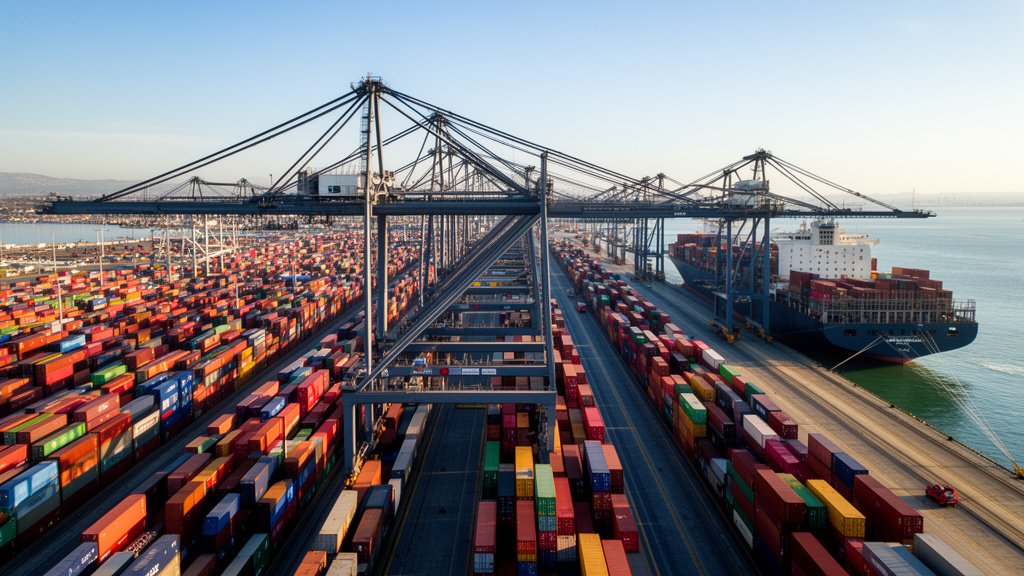
The Port of Long Beach has officially cemented its status as a critical artery of the global supply chain, recording its second-busiest July in history. While navigating the complex macroeconomic currents of mid-2025, the gateway successfully moved 928,508 Twenty-Foot Equivalent Units (TEUs). This performance, though marking a minor 1.7% contraction compared to July 2025’s record-setting pace, underscores a robust industrial capacity and an extended peak shipping season that continues to defy broader economic headwinds.
The Anatomy of Throughput: Deciphering the 928,508 TEU Milestone
To understand the magnitude of 928,508 TEUs, one must look beyond the raw data. This figure represents more than just boxes moved; it reflects the synchronized efficiency of marine terminals, intermodal rail networks, and a resilient labor force. The Port of Long Beach remains a bellwether for the broader Trans-Pacific trade route. Even with a marginal year-over-year decrease of 1.7%, the port’s ability to sustain volume near the million-TEU threshold suggests that cargo owners and logistics providers are front-loading inventory in anticipation of potential volatility or further demand surges. This strategic positioning indicates that the traditional ‘peak season’—historically confined to late summer and early autumn—is evolving into a year-round operational challenge that demands constant, high-level throughput.
Consumer Resilience and the Macroeconomic Ripple Effect
At the heart of these shipping numbers lies the American consumer. Despite persistent inflationary pressures and shifting interest rate environments, the appetite for imported goods remains remarkably inelastic. The movement of 928,508 TEUs indicates that retail inventories are being replenished at a high velocity. This is not merely a sign of immediate demand but a forward-looking indicator of retailer confidence heading into the final quarter of the year. When the Port of Long Beach maintains such high levels of activity, it ripples outward: trucking fleets are utilized at capacity, warehousing facilities in the Inland Empire see sustained occupancy, and the intermodal rail network connecting the West Coast to the Midwest operates at peak efficiency. The port’s resilience is, by extension, the economy’s resilience.
Operational Evolution: Sustaining the Pace
Maintaining a volume of over 928,000 TEUs in a single month requires significant technological and operational prowess. The Port of Long Beach has invested heavily in digital infrastructure to manage the complexities of modern container logistics. From AI-driven gate operations to the coordination of ‘big ship’ docking procedures, the port’s management team has utilized data analytics to prevent the bottlenecks that once plagued West Coast logistics. By optimizing the flow of goods, the port ensures that terminal yards do not reach critical density, which allows for the rapid turnaround of vessels. This technological adoption is not optional; it is a structural necessity to remain competitive in a landscape where supply chain visibility is as valuable as the cargo itself.
Historical Context and Future Outlook
Looking back, the trajectory of the Port of Long Beach has been one of constant adaptation. The shift from pandemic-era surges to the current normalized, yet high-volume environment, demonstrates a maturity in supply chain management. While the 1.7% dip may draw headlines, industry analysts view this as a ‘return to strength’ rather than a decline. The year-to-date throughput remains net positive, providing a buffer against the uncertainties of global maritime politics and trade regulations. As we move further into the second half of the year, the port’s ability to absorb volume will be tested by upcoming holiday inventory cycles. If July’s performance is any indicator, the facility is well-positioned to meet these demands, provided the labor-management dynamic remains stable and terminal operations continue to prioritize fluid throughput.
FAQ: People Also Ask
What is a TEU and why does it matter?
TEU stands for ‘Twenty-Foot Equivalent Unit.’ It is the standard unit of measurement used in the shipping industry to calculate container throughput. One TEU represents the volume of a standard 20-foot shipping container. It is the primary metric for measuring the capacity and activity levels of global ports.
Why is the July throughput figure at the Port of Long Beach significant?
It serves as a leading indicator for the health of the U.S. economy. Because the Port of Long Beach is one of the largest gateways for Asian imports, a high volume of TEUs—like the 928,508 recorded—suggests that retail demand remains strong and that businesses are confident in stocking inventory for the coming months.
What contributed to the 1.7% dip compared to the previous year?
While the figure is still the second-best on record, the slight 1.7% dip is attributed to normal fluctuations in shipping cycles, potential shifts in global trade routes, and the complex balancing of inventory levels by major retailers following the record-breaking shipping environment observed in July 2025.
How does this affect the supply chain for the rest of the year?
With year-to-date throughput remaining positive, the port is well-prepared for the peak holiday shipping season. High volumes in July typically indicate that the supply chain is moving steadily, reducing the likelihood of major ‘choke points’ as we head toward the high-demand months of October and November.