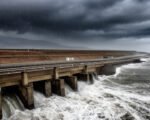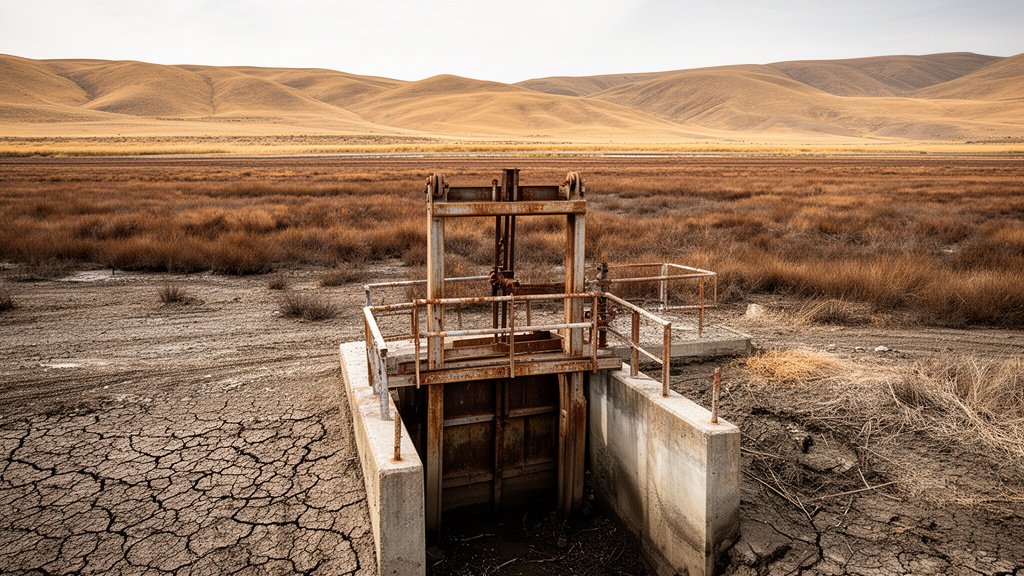
The Department of Government Efficiency (DOGE) initiatives and broader federal hiring freezes have created an unintended casualty: the delicate hydraulic systems of California’s National Wildlife Refuges. At the San Joaquin River National Wildlife Refuge, once-abundant wetlands are drying up, not because of a lack of water supply, but due to a critical lack of personnel authorized to manage the complex irrigation and flooding infrastructure required to maintain these habitats. This crisis represents a dangerous disconnect between federal fiscal policy and the hands-on, daily stewardship required to sustain North America’s vital environmental corridors.
Key Highlights
- Federal staffing cutbacks have restricted the US Fish and Wildlife Service’s (USFWS) ability to operate water control structures essential for seasonal wetland flooding.
- The San Joaquin River National Wildlife Refuge is experiencing significant habitat degradation, specifically impacting stopover points for migratory birds.
- The Pacific Flyway, a major north-south migratory route, faces potential long-term biodiversity loss as crucial “pit stops” turn to arid dust.
- There is a widening gap between administrative efficiency mandates and the on-the-ground operational requirements of specialized ecological land management.
The Hydraulic Crisis of the Pacific Flyway
The Operational Vacuum
The management of a National Wildlife Refuge is not a passive endeavor; it is an exercise in complex hydraulic engineering and biological timing. At the San Joaquin River National Wildlife Refuge, the staff does not simply “turn on a tap” to flood a field. It requires a meticulous process: monitoring water quality, adjusting mechanical levees, inspecting water control structures for blockages, and managing vegetation to prevent invasive overgrowth.
Recent federal hiring freezes and staffing cutbacks—frequently cited under the umbrella of DOGE efficiency measures—have stripped the refuge of the personnel necessary to perform these physical tasks. When positions go unfilled, the institutional knowledge of how to manipulate these systems vanishes. The resulting operational vacuum means that water rights go unused, and seasonal wetlands remain dry, failing to support the millions of migratory birds that rely on the Pacific Flyway. This flyway is not a luxury; it is a primary arterial route for waterfowl, shorebirds, and songbirds, connecting breeding grounds in the Arctic to wintering grounds in South America. By failing to maintain these stopovers, the federal government is effectively severing a link in a continental chain of biological survival.
The Ecological Cost of Efficiency
The ripple effects of dry wetlands extend far beyond the immediate geography of the San Joaquin River basin. The birds that use these stopovers—including the Aleutian cackling goose and various sandhill crane populations—are opportunistic feeders that rely on the nutrient-rich, shallow-water environments provided by managed wetlands. Without the ability to manipulate water levels, these sites become prone to encroachment by non-native plant species, which choke out the biodiversity of the ecosystem.
Ecologists warn that once a wetland is allowed to dry and becomes infested with upland weeds, it is not merely a matter of “adding water” to fix it. The cost to restore the habitat—involving heavy machinery, labor-intensive removal of invasive biomass, and significant time—far exceeds the cost of active, year-round maintenance. The current fiscal strategy of “doing more with less” is producing a debt of ecological degradation that future administrations will be forced to pay at a significant premium.
Secondary Angles: The Unseen Consequences
1. The Economic Ripple of Eco-Tourism
While federal policy focuses on the budget sheet, the local economy suffers from the degradation of the refuge system. Birdwatching, waterfowl hunting, and educational tourism provide significant revenue to rural California communities bordering the refuges. When the refuges lose their ecological utility, the tourism economy contracts, creating a secondary economic downturn in areas that are already struggling to maintain infrastructure.
2. The Historical Erosion of Conservation Stewardship
It is vital to view this current shortfall through a historical lens. The establishment of the National Wildlife Refuge system in the United States was predicated on the understanding that federal land requires active, skilled, and professional management. By viewing USFWS staff as overhead that can be slashed without consequence, the current policy shift challenges the core mission statement of the Department of the Interior: to protect the nation’s natural resources. We are witnessing a transition from “active stewardship” to “passive neglect.”
3. Future Predictions: The Biodiversity Cliff
The trajectory of the current staff cuts suggests a “biodiversity cliff.” As more refuges become understaffed, we will likely see the displacement of migratory species into agricultural or urban lands to survive. This increases the likelihood of human-wildlife conflict, the spread of avian diseases in crowded, sub-optimal conditions, and a rapid decline in population numbers for species already teetering on the edge of protected status. The long-term prediction is a diminished Pacific Flyway that can no longer support the avian volume it has hosted for the last century.
FAQ: People Also Ask
Q: Why are federal staff cutbacks specifically affecting the San Joaquin River National Wildlife Refuge?
A: The refuge relies on highly technical water management. With hiring freezes and staff reductions, there are not enough qualified personnel to physically operate the pumps, levees, and sluice gates required to manage water levels effectively, leading to dried-up wetlands.
Q: What is the Pacific Flyway?
A: The Pacific Flyway is a major north-south flyway for migratory birds in America, extending from Alaska to Patagonia. It is a critical network of wetlands that provides food and rest for millions of birds annually.
Q: Can’t the US Fish and Wildlife Service just contract this work out to private companies?
A: While private contracting is sometimes used, wetland management is a specialized skill set requiring deep knowledge of the specific biology and hydrology of the refuge. Contracting out these roles often leads to a loss of institutional continuity and oversight, and current budget constraints have limited even the use of external contractors.
Q: How does this align with DOGE efficiency goals?
A: The DOGE (Department of Government Efficiency) goals focus on slashing bureaucracy and headcount. However, in the context of the USFWS, the “bureaucracy” being cut is often the essential labor force responsible for direct habitat conservation, leading to a conflict between administrative cost-cutting and essential ecological maintenance.