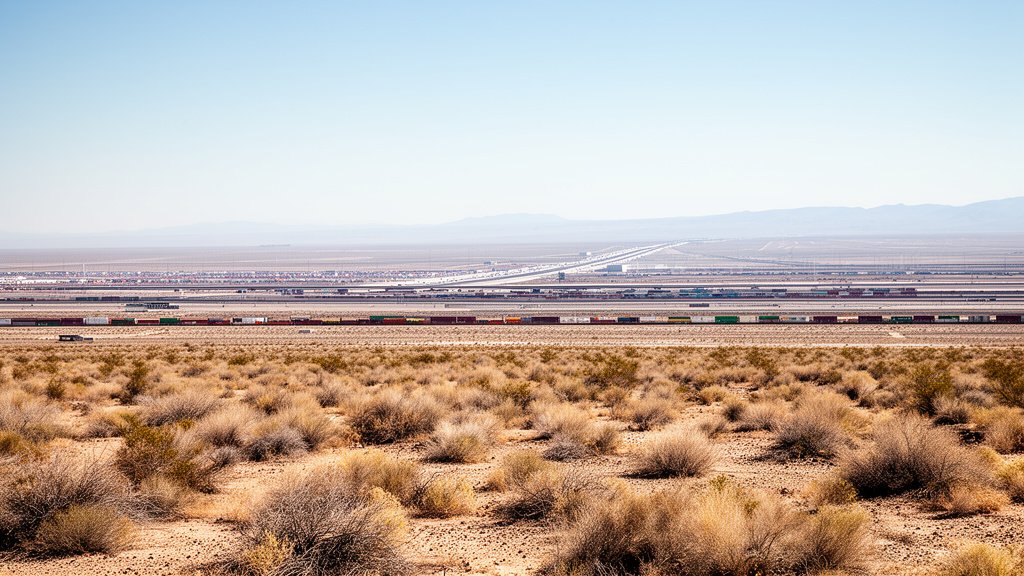
The massive $4 billion Barstow International Gateway project, a cornerstone of BNSF Railway’s strategy to modernize transcontinental freight logistics, has slammed into a significant judicial roadblock. A coalition of environmental organizations has officially filed a lawsuit in the San Bernardino County Superior Court, contesting the validity of the two-year environmental review process that cleared the way for the massive facility. This legal action, which seeks to stall or potentially force a comprehensive redo of the environmental assessment, highlights the widening chasm between rapid infrastructure expansion and the stringent environmental regulatory landscape of Southern California.
The Heart of the Legal Challenge
At the center of the dispute lies the California Environmental Quality Act (CEQA). Environmental groups argue that the environmental impact review conducted for the Barstow International Gateway failed to adequately address the cumulative impacts of the project on the surrounding High Desert communities. The primary contention centers on concerns regarding air quality degradation, increased truck traffic on local highways, and the long-term noise pollution associated with a facility of this magnitude. By filing in the San Bernardino County Superior Court, the coalition aims to halt the commencement of construction, arguing that the lead agencies involved in the environmental review process did not provide a transparent or rigorous enough analysis of the potential hazards.
Strategic Importance of the Barstow Hub
To understand the gravity of this litigation, one must look at the scope of the project. The Barstow International Gateway is designed to be a premier 4,500-acre intermodal facility. BNSF envisions the site as a critical inland hub that would shift container handling away from the congested ports of Los Angeles and Long Beach. By processing containers in Barstow—approximately 130 miles inland—BNSF intends to reduce truck congestion at the ports and create a more efficient flow of goods across the United States. The project promises to create thousands of jobs, ranging from construction roles to permanent operational positions, serving as a potential economic engine for the High Desert region. For BNSF, the project represents a multi-billion dollar investment in supply chain resilience; for the plaintiffs, it represents a threat to local public health that they believe was glossed over in the planning phase.
The CEQA Conundrum in Infrastructure Development
This lawsuit underscores a recurring theme in major California infrastructure projects: the vulnerability to lengthy litigation under state environmental laws. Because the Barstow International Gateway is a massive undertaking, the administrative record is vast and complex. Challengers often find success in court by identifying specific procedural omissions in the Environmental Impact Report (EIR). If the court determines that the EIR was deficient, it may grant a writ of mandate, requiring the project proponents to conduct supplemental studies or revisions. This process can add months, if not years, to a project timeline, escalating costs and creating uncertainty for investors and contractors. The BNSF legal team now faces the task of defending the adequacy of the administrative process while the project remains in a state of suspended animation.
Balancing Economic Growth and Environmental Stewardship
The conflict presents a classic “jobs versus environment” dilemma that characterizes many of the West Coast’s largest logistical developments. Proponents of the gateway argue that by moving the freight bottleneck inland, the project could actually reduce the overall carbon footprint of regional logistics by optimizing rail-to-truck transfers. Conversely, local activists worry that the centralization of heavy-duty diesel truck traffic in the Barstow area will create a localized environmental justice crisis. The court’s decision will likely hinge on whether BNSF and the participating regulatory bodies met their burden of proof in analyzing these trade-offs, or if the environmental coalition can prove that the mitigation strategies proposed are insufficient to protect the health of residents in San Bernardino County.
What Lies Ahead for the Gateway
As the litigation moves through the court system, the immediate impact is a pause on any groundbreaking or site preparation that depends on the validity of the current environmental certification. The business community, particularly those reliant on the transcontinental rail network, is watching closely. Delays to the Barstow International Gateway could reverberate through the domestic supply chain, affecting the efficiency with which goods move from the coast to the interior. The outcome will likely set a significant precedent for how future inland ports are permitted, balanced, and contested in the state of California, potentially influencing the viability of similar mega-projects in the coming decade.
FAQ: People Also Ask
Q: What is the primary reason environmental groups are suing BNSF?
A: The coalition is challenging the sufficiency of the environmental review process under the California Environmental Quality Act (CEQA). They argue the current impact report fails to adequately account for air pollution, noise, and traffic impacts on local communities.
Q: How much is the Barstow International Gateway project worth?
A: The project is a $4 billion investment, aimed at creating a massive 4,500-acre intermodal facility to streamline freight movement from the Ports of Los Angeles and Long Beach.
Q: Where was the lawsuit filed?
A: The lawsuit was filed in the San Bernardino County Superior Court, the jurisdiction encompassing the proposed location of the Barstow facility.
Q: What happens if the court rules in favor of the environmental groups?
A: If the court rules the environmental review was inadequate, it could order BNSF to halt work and force a redo of the assessment, potentially adding significant delays and costs to the construction timeline.