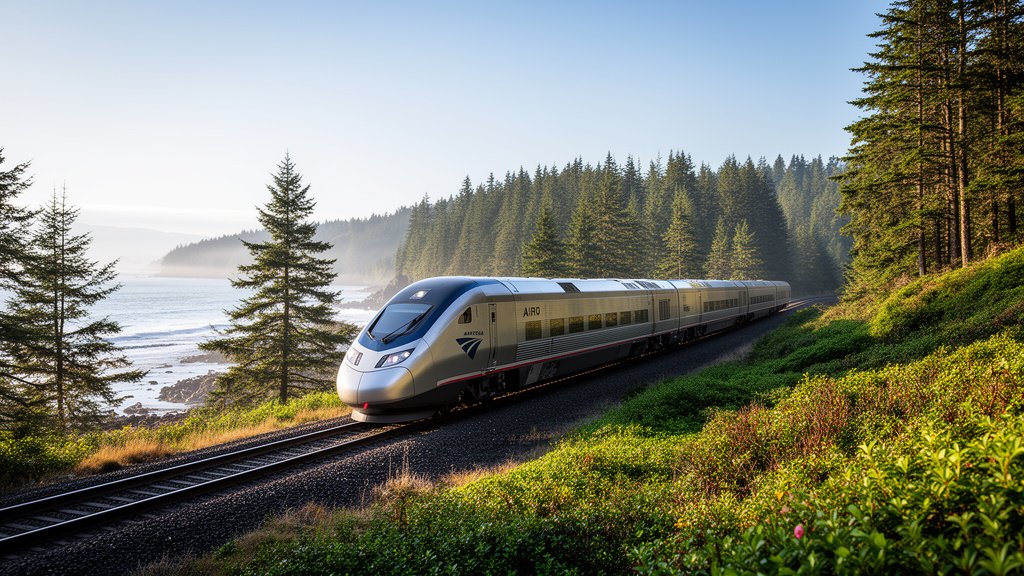
The Pacific Northwest travel landscape is on the verge of a significant transformation. Starting September 30, 2026, Amtrak will officially deploy its next-generation Airo trainsets on the vital Cascades route, connecting the sprawling urban centers of Vancouver, British Columbia, and Eugene, Oregon. This rollout marks more than just an equipment upgrade; it represents a comprehensive overhaul of the passenger experience, emphasizing accessibility, digital integration, and, crucially, domestic industrial manufacturing. These trains are not imported; they are the product of California-based engineering and labor, emerging directly from Siemens Mobility’s manufacturing plant in Sacramento.
The Engineering Behind the Airo Fleet
The transition to the Airo fleet is a technological leap for a route that serves thousands of commuters and tourists annually. Unlike the aging equipment currently servicing the Cascades line, the Airo trainsets are designed with a modular interior configuration. This allows Amtrak to swap seating arrangements and amenity layouts based on demand fluctuations, effectively future-proofing the rolling stock.
Central to the upgrade is the focus on accessibility. The Airo cars feature level boarding, a significant improvement over current methods that often require assistance for passengers with reduced mobility. Every car is equipped with enhanced digital information systems, real-time tracking, and power outlets at every seat, addressing the primary complaints of the modern traveler. The Siemens-built locomotives are also designed for dual-power capabilities, which reduces emissions and improves fuel efficiency, marking a strategic move toward more sustainable transportation infrastructure in the Pacific Northwest corridor.
Why Sacramento Matters
The narrative of these trains is deeply tied to the Californian industrial sector. For years, domestic rail manufacturing has faced stiff competition from overseas markets. However, the production of these Airo sets at the Siemens Mobility facility in Sacramento reinforces the viability of American manufacturing in the green technology sector. This facility is a massive economic driver for the region, employing thousands of skilled workers ranging from electrical engineers to metal fabricators.
By keeping the supply chain within the United States, Amtrak is not only ensuring closer quality control but also adhering to Buy America requirements, which are increasingly pivotal in federally funded transportation projects. The Sacramento plant has essentially become the heartbeat of Amtrak’s national fleet modernization strategy, serving as the blueprint for similar deployments in other regions across the country. The debut on the Cascades route is viewed as a high-visibility proof of concept that will be scrutinized by transit authorities nationwide.
Elevating the Cascades Experience
The Cascades route is unique; it traverses coastal plains, urban bottlenecks, and scenic mountain corridors. Currently, the service connects Vancouver, BC, to Eugene, OR, with major stops in Seattle, Tacoma, and Portland. The introduction of the Airo trainsets is expected to mitigate the persistent issue of delays. The new power units are designed for faster acceleration and deceleration, allowing for more precise scheduling and, potentially, more reliable arrival times at major transit hubs.
Beyond technical specs, the interior design focuses on the “premium” passenger experience. We are talking about improved Wi-Fi connectivity, business class sections with greater recline and table space, and a refined cafe car experience that emphasizes local PNW food and beverage vendors. For the passenger, the goal is to make rail travel not just an alternative to flying or driving, but a preferred lifestyle choice. By aligning the physical environment of the train with the aesthetic and functional needs of modern commuters, Amtrak is aiming to capture a higher percentage of regional travel market share.
A Shift Toward Integrated Connectivity
Looking toward the future, the integration of these trainsets into the existing infrastructure suggests a broader vision for the Pacific Northwest. There is talk of future-proofing the tracks and signaling systems to accommodate higher speeds, though the immediate focus remains on the reliability and comfort of the Airo fleet. The deployment serves as a catalyst for local city planning, with municipalities along the I-5 corridor already rethinking their station designs to better interface with the streamlined boarding capabilities of the new Airo cars. This is not just a train update; it is an infrastructure project that ripples through every city it touches.