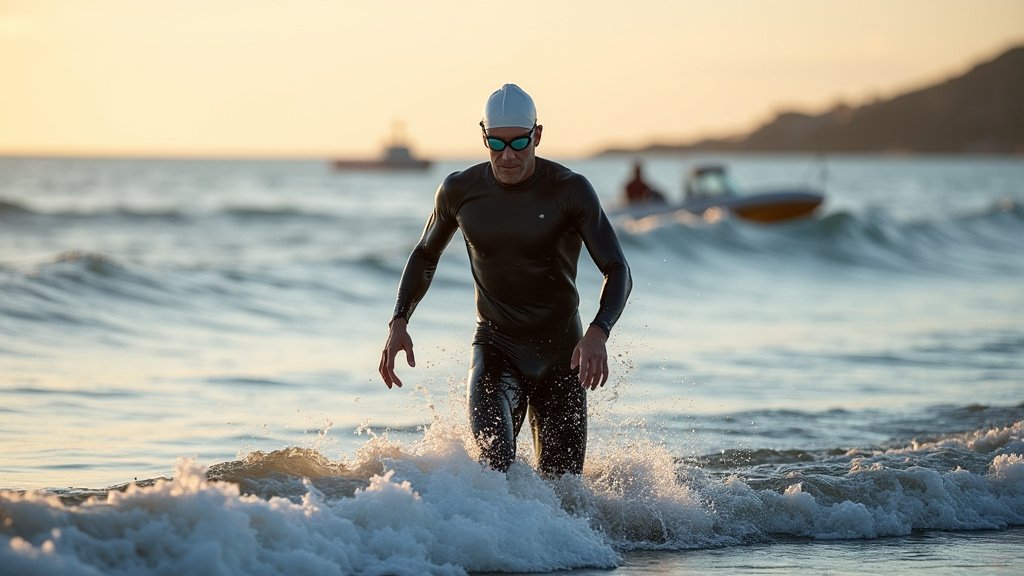
On October 21, 2026, the boundaries of human endurance were redefined as a marathon swimmer officially completed the unprecedented 900-mile journey along the entire length of the California coastline. This Herculean effort, which spanned weeks of navigating unpredictable currents, hazardous marine life, and the physical toll of constant exposure to the Pacific, stands as a landmark achievement in the world of open-water athletics. The successful completion of this route marks not just a personal victory, but a significant case study in the resilience of the human spirit against the raw, unbridled power of the natural world.
Key Highlights
- Total Distance: 900 miles, covering the entire California coastline from the Oregon border to the Mexican border.
- Historic Significance: First documented successful completion of the full longitudinal swim of California, solidifying the swimmer’s place in extreme sports history.
- Environmental Challenges: Faced constant navigation of shifting rip currents, varying water temperatures, and essential marine safety protocols.
- Human-Interest Impact: The expedition served to raise awareness regarding ocean conservation and the necessity of protected coastal ecosystems.
The Anatomy of an Epic: Navigating the 900-Mile Crossing
The decision to swim the entire length of California is not merely an athletic choice; it is a tactical, logistical, and psychological commitment of the highest order. Unlike swimming in a controlled channel, the California coastline presents a dynamic environment. The swimmer had to contend with the California Current, a massive, slow-moving current that significantly influences the temperature and stability of the near-shore waters.
Mapping the Route
Planning the 900-mile trek required precise collaboration with oceanographers and navigation experts. The route was segmented into specific zones, each with unique challenges. Northern California waters, notoriously colder and prone to rougher surf due to the lack of a protective continental shelf in certain areas, required specific thermal protection strategies. As the swimmer progressed south, the challenges shifted from cold-water management to navigation through high-traffic maritime zones near major ports, such as the San Francisco Bay Area and the approaches to Los Angeles.
Logistic Resilience
Success in this endeavor was reliant on a support crew that monitored the swimmer 24/7. This team acted as the ‘eyes’ from the water, managing food intake—which required high-caloric liquid nutrition—and monitoring vitals. The team had to account for tidal shifts, ensuring that the swimmer stayed within the ‘safe’ water zone while avoiding kelp forests that can pose entanglement risks and navigational hazards.
The Physical and Psychological Toll
To maintain momentum for such a journey, the swimmer employed a rigid structure of interval training and recovery periods. While many would assume the greatest risk is physical—such as hypothermia or muscle fatigue—the psychological aspect of spending days in the open ocean is often the silent killer of such expeditions. The vast emptiness, the repetitive stroke cycle, and the sensory deprivation of water immersion require an intense level of mental conditioning.
The Science of Endurance
During the swim, the body undergoes a continuous caloric deficit. Maintaining core temperature, even in a wetsuit, consumes enormous energy stores. Experts in sports physiology observing the event noted that the swimmer’s ability to stabilize metabolic rate despite erratic sleep patterns and the physical demands of swimming for hours each day was a primary factor in the success of the mission. This data contributes to broader studies on how the human body reacts to prolonged, non-stop, or near-continuous aquatic exertion.
Environmental Stewardship and the Pacific
Beyond the personal glory, the swim served as a platform for environmental advocacy. Traversing the entire coast provided a unique, first-hand perspective on the current state of California’s marine health.
A View from the Surface
Floating at sea level, the swimmer witnessed the health of kelp forests, the presence of plastic pollution in offshore eddies, and the shifting density of marine life. This perspective is rarely captured by researchers or activists in such a sustained manner. The expedition highlighted the critical importance of the California Coastal Commission’s efforts to maintain water quality and preserve marine habitats. By connecting the coastal regions, the swim emphasized that the ocean is a singular, interconnected system that requires holistic protection.
Future Implications for Open-Water Athletics
This 900-mile completion sets a high bar for future extreme athletes. It raises questions about the ‘next frontier’ of coastal swimming. Can such a feat be done faster? Can it be done with less support? The success of this 2026 endeavor will likely spawn a new wave of long-distance coastal challenges, pushing the boundaries of what is possible in non-motorized, human-powered ocean exploration.
FAQ: People Also Ask
Q: How did the swimmer handle marine life threats like sharks?
A: The support team utilized specialized shark-mitigation technology, including electronic deterrents attached to the support craft and constant acoustic monitoring. The goal was always deterrence, ensuring the environment remained undisturbed while maintaining a safety perimeter.
Q: What was the primary motivation for this 900-mile swim?
A: The primary motivation was to test the absolute limits of human endurance while highlighting the beauty and vulnerability of the California coastline. It was a fusion of athletic performance and environmental advocacy.
Q: Was there a specific time limit for this journey?
A: No official record existed for this specific route prior to this, so the swimmer set their own pace. The journey was determined by weather windows and safety conditions, focusing on completion rather than a speed record.
Q: How much training was required for this feat?
A: The swimmer underwent years of specific marathon swimming training, including ‘back-to-back’ endurance swims and cold-water acclimation, essentially treating the preparation as a full-time professional career.