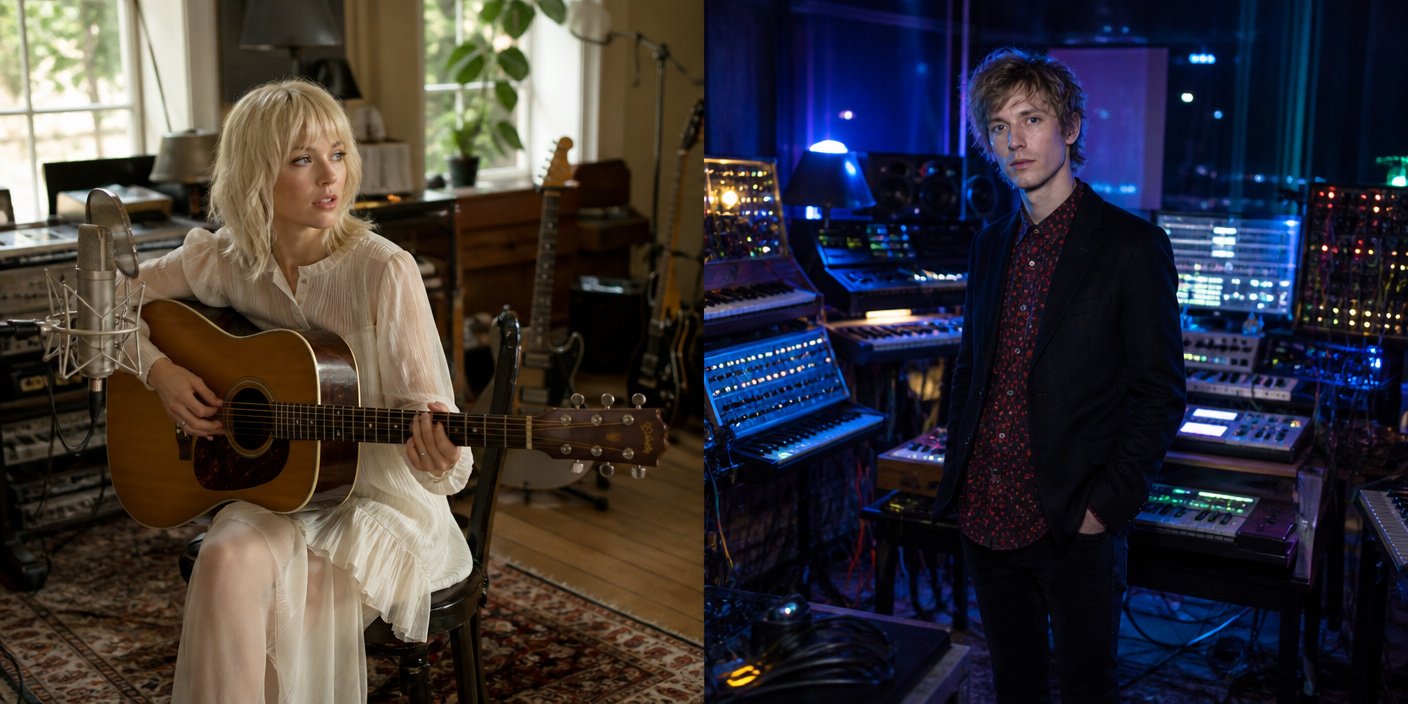
In a singular, monumental day for music consumption, two distinct titans of the industry have reshaped the landscape with high-profile releases. Pop architect Carly Rae Jepsen has unveiled her latest project, the ambitious 24-track double album titled ‘Day and Night,’ marking a significant deviation from the standard album format. Simultaneously, experimental alt-rock icon Beck has broken his seven-year silence, dropping his 15th studio album, ‘Ride Lonesome.’ These concurrent releases signal a busy release calendar and highlight the diverging paths currently being taken by established artists to maintain relevance and creative autonomy in the streaming era.
Key Highlights
- Carly Rae Jepsen’s ‘Day and Night’ consists of 24 tracks, uniquely bisected into two distinct sonic palettes: organic, instrument-driven tracks and high-energy synth-pop.
- Beck’s ‘Ride Lonesome’ marks his 15th studio album and represents his first major project in seven years, ending a significant hiatus.
- The dual release demonstrates a fascinating trend in modern music, where artists are balancing the desire for expanded, ‘complete-universe’ album experiences against the industry’s push for shorter, single-focused releases.
The Dual Sonic Worlds of Carly Rae Jepsen
Carly Rae Jepsen has always been a master of the pop craft, but with ‘Day and Night,’ she attempts to map the full breadth of her artistic capabilities. The 24-track count is a bold move, effectively challenging the industry’s current preference for concise, algorithm-friendly 10-to-12 track LPs. By explicitly splitting the album into two thematic movements—’Day’ and ‘Night’—Jepsen provides a narrative structure that guides the listener through her dual artistic personas.
Organic Foundations
The ‘Day’ segment of the album serves as an exploration of organic instrumentation. Eschewing the heavily processed, hyper-produced aesthetic that has dominated pop radio for the last decade, Jepsen opts for raw percussion, live bass, and acoustic guitars. This choice highlights a maturation in her sound, favoring lyrical dexterity and harmonic complexity over the wall-of-sound production style that made her a global superstar. Critics and early listeners are noting a ‘live-room’ quality to the recording, suggesting that Jepsen intended these tracks to feel intimate, immediate, and human.
The Synth-Pop Evolution
Contrasting the ‘Day’ session, the ‘Night’ segment serves as a deliberate return to her established strengths: neon-drenched, high-tempo synth-pop. However, this is not merely a retread of the Emotion or The Loneliest Time eras. The production here is tighter, influenced by current European dance-pop trends, featuring side-chained basslines and ethereal vocal layering that creates a sense of late-night, urban loneliness. By positioning these two distinct styles back-to-back, Jepsen forces the audience to reconcile her acoustic sensibilities with her club-ready hooks, creating a comprehensive, holistic listening experience that is rarely achieved in today’s fragmentation-heavy digital environment.
Beck: The Long-Awaited Return of an Alt-Rock Luminary
While Jepsen expands her discography through sheer volume and thematic contrast, Beck has taken a more introspective route with ‘Ride Lonesome.’ Releasing his 15th studio album after a seven-year absence, the stakes for this record were undeniably high. Beck has historically defined the mid-career shift for the modern rock star—moving from the slacker-rock irony of the 90s to the introspective, genre-defying production masterclasses of the 2000s and 2010s.
Decoding ‘Ride Lonesome’
‘Ride Lonesome’ feels, in many ways, like a refinement of the themes Beck touched upon in ‘Morning Phase,’ but with a darker, more cynical edge. The production is sparse, allowing the songwriting to take the foreground. Throughout the 15th album of his career, Beck addresses the passage of time, the isolation of fame, and the cyclical nature of creative relevance. The album has been described by early industry reviewers as a ‘road-trip record for the end of the world,’ utilizing a mix of folk-inspired Americana and subtle, glitchy electronic textures that have become his signature.
The Legacy Challenge
Seven years is an eternity in the current pop cycle. By stepping away from the spotlight for such a prolonged period, Beck risked being eclipsed by the very sounds he helped popularize. However, ‘Ride Lonesome’ suggests that he was not chasing trends during his hiatus, but rather observing them. The album doesn’t aim to top the charts via radio-play; instead, it targets the ‘album-listener’ demographic—the audience that values deep cuts, thematic cohesion, and lyrical depth over viral, fifteen-second soundbites.
The Changing Market Dynamics of Global Releases
The arrival of these two records on the same day offers a compelling case study into the modern music industry’s economics. We are currently witnessing an interesting polarization in release strategies.
Streaming vs. The Long-Play Format
Streaming algorithms favor frequency. Releasing a single every six weeks is the current industry gold standard. Jepsen’s strategy of dropping a 24-track ‘Day and Night’ is, in many ways, an act of defiance against the ‘single-first’ culture. By saturating the market with two hours of music, she is incentivizing a long-term listening relationship with her core fan base, even if it creates friction for the casual listener who prefers bite-sized playlists.
The Sustainability of the Artist
Beck’s strategy, conversely, is about brand longevity. For a legacy artist, the goal is not to compete with the current TikTok-driven trends but to maintain the cultural capital that keeps their ticket sales high and their legacy intact. Both approaches—Jepsen’s aggressive saturation and Beck’s selective sparsity—highlight the two viable paths for successful artists in the 2020s. Both artists understand that the album is still the primary vehicle for artistic expression, even if the industry’s economic incentives are increasingly pushing them toward shorter, more disposable content.
FAQ: People Also Ask
Q: How does the split between ‘Day’ and ‘Night’ work on Carly Rae Jepsen’s new album?
A: The album is structured as a double LP experience. The ‘Day’ portion focuses on organic, live instrumentation, while the ‘Night’ portion leans heavily into Jepsen’s signature synth-pop and electronic soundscapes, creating a binary thematic experience.
Q: Is ‘Ride Lonesome’ Beck’s final album?
A: There has been no official confirmation regarding his retirement. ‘Ride Lonesome’ is his 15th studio album and marks a return to the public eye after a seven-year hiatus, suggesting he is continuing his career rather than concluding it.
Q: Are Jepsen and Beck collaborating on these records?
A: No, these are independent projects. Jepsen’s ‘Day and Night’ and Beck’s ‘Ride Lonesome’ were released simultaneously as separate entities.
Q: Why do artists like Jepsen choose to release 24-track double albums today?
A: In the streaming era, double albums help artists dominate platform algorithms by increasing the total time a user spends listening to their catalog, while also providing a comprehensive ‘event’ for fans, effectively bucking the trend of singular, fleeting track drops.