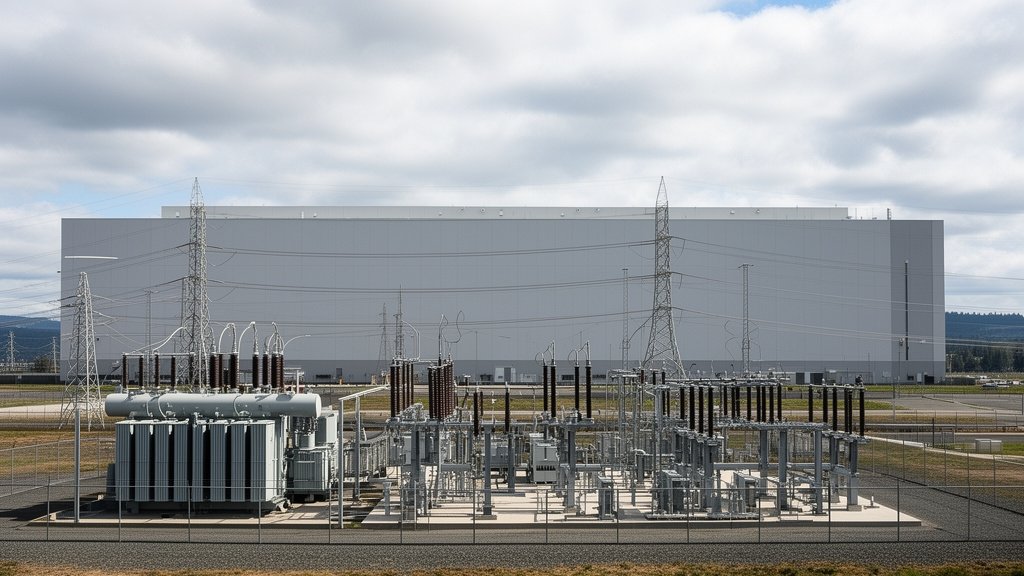
Oregon’s rapid ascension as a premier hub for digital infrastructure has brought its power grid into sharp focus. A comprehensive new report reveals that 111 data centers now operate across the state, collectively consuming nearly 23% of Oregon’s total electricity. This statistic underscores the intense energy footprint required to support the region’s expanding innovation-economy infrastructure, forcing policymakers and utility providers to rethink grid management in an age of insatiable cloud computing demand.
Key Highlights
- Surging Demand: The state’s 111 operational data centers are responsible for approximately 23% of total statewide electricity consumption.
- The Hillsboro Hub: Much of this infrastructure is concentrated in the Hillsboro area, creating a localized “hot zone” for power demand that tests local substation limits.
- Grid Resilience: Utility providers are increasingly prioritizing grid upgrades to manage the persistent, high-volume load these facilities place on the state’s transmission lines.
- Future Balancing Act: Policymakers are actively debating how to reconcile high-volume energy consumption with Oregon’s ambitious renewable energy standards.
The Digital-Physical Paradox: Oregon’s Energy Dilemma
The transformation of Oregon from a timber-and-agriculture powerhouse to a high-tech nerve center has been rapid. By leveraging the Pacific Northwest’s relatively cool climate—which significantly reduces the need for energy-intensive cooling systems—and benefiting from access to low-cost, abundant hydroelectric power, companies have flocked to the region. However, the latest figures regarding the 111 facilities currently in operation illustrate the environmental and logistical cost of this digital boom.
The Grid’s Heavy Lifting
For the Oregon power grid, data centers represent a “base load” unlike any other industry. Unlike manufacturing plants that often fluctuate with production cycles, data centers run 24/7. When combined, these 111 facilities create a floor of energy consumption that utility companies must guarantee at all times. The 23% figure is not merely a statistic; it is a signal of the infrastructure strain that utility providers, such as Portland General Electric and the Bonneville Power Administration (BPA), are currently tasked with managing. As demand increases, the margin for error in transmission decreases, necessitating significant investment in smart-grid technologies and redundant substation capacity.
The Innovation-Economy Trade-off
There is a palpable tension between the economic value generated by these facilities and the carbon-footprint concerns they provoke. Data centers bring high-paying specialized jobs, local tax revenue, and the promise of a “digital-first” economy. However, as the state moves toward aggressive decarbonization targets, the energy-intensity of the digital sector poses a significant hurdle.
Critics and proponents alike are now looking closely at the efficiency metrics of these 111 facilities. The industry standard metric, Power Usage Effectiveness (PUE), measures how much energy is used by the computing equipment versus the cooling and lighting. While many operators in Oregon maintain competitive PUE ratios, the aggregate 23% usage rate suggests that efficiency gains are being outpaced by the sheer volume of server capacity being installed.
Technological Shifts and Efficiency
To mitigate the strain on the grid, the industry is pivoting toward more advanced cooling technologies, such as liquid cooling and immersion systems, which offer better efficiency than traditional air conditioning. Furthermore, some operators are exploring on-site renewable energy generation or battery storage systems to shave peak demand during high-load periods.
Looking forward, the regulatory landscape is likely to shift. We can expect to see stricter siting requirements and energy-impact assessments for new facilities. The goal is to sustain Oregon’s position as a competitive innovation hub while ensuring that the grid remains reliable for residential and traditional commercial users. The 23% figure serves as a clear baseline; future reports will likely track whether this percentage continues to climb or plateaus as operational efficiencies mature.
FAQ: People Also Ask
1. Why are there so many data centers in Oregon?
Oregon’s climate is ideal for “free cooling,” which reduces the electricity needed to cool servers. Additionally, the state offers competitive electricity rates and a favorable regulatory environment for large-scale infrastructure projects.
2. Is 23% of total electricity consumption sustainable for Oregon?
It is a significant load. Utilities are currently investing in infrastructure upgrades and, in some cases, negotiating with data center operators to implement load-shifting strategies to prevent grid instability.
3. Will this energy consumption impact resident utility bills?
While large-scale industrial customers often pay different rates, the massive investment in new transmission lines and grid upgrades necessitated by this 23% consumption rate is a factor in broader rate-setting discussions, though the economic benefits of the industry are also a key part of that fiscal equation.
4. What does the term “innovation-economy infrastructure” mean in this context?
It refers to the physical foundation of the modern internet: the servers, cooling systems, and power facilities that host cloud computing, AI, streaming services, and e-commerce, all of which are central to current economic growth.