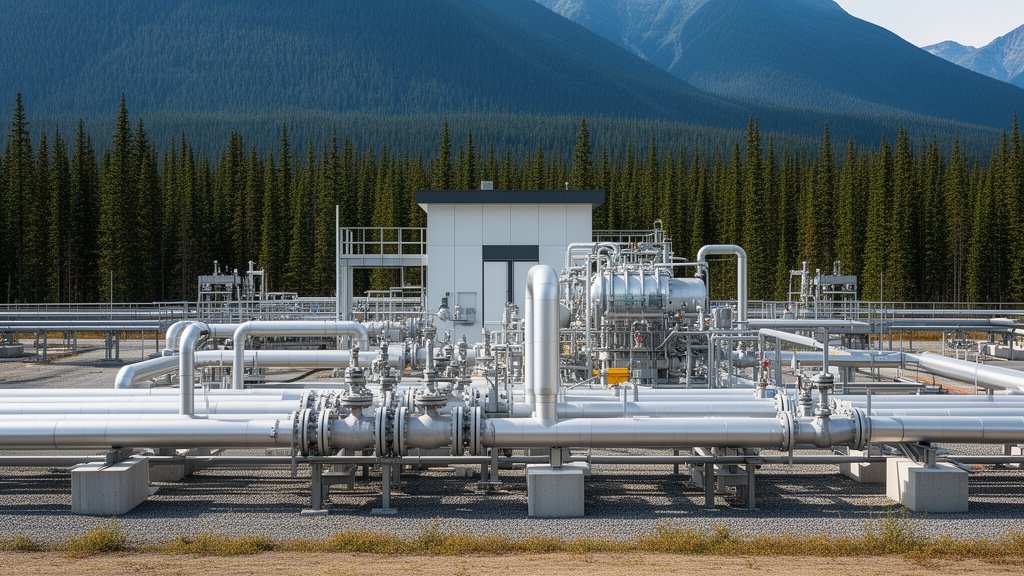
Enbridge Inc. has officially finalized a landmark joint venture agreement with investment giant KKR, offloading a 50% interest in its critical Westcoast Energy pipeline system to the firm in a transaction valued at C$2.7 billion. This strategic maneuver marks a significant pivot in how North American energy infrastructure projects are funded and operated. By bringing KKR into the fold—and aligning with broader capital market trends involving firms like Apollo—Enbridge is successfully executing a capital recycling strategy designed to shed non-core assets while retaining operational control. This influx of capital is earmarked for high-growth expansion projects, most notably the Aspen Point and Sunrise programs, which are essential for increasing capacity in Western Canada’s booming natural gas sector.
The Financial Mechanics of the Deal
The C$2.7 billion deal is more than a simple asset sale; it represents a sophisticated valuation of the Westcoast Energy pipeline system, which is now pegged at approximately C$7.5 billion when including debt. For Enbridge, the objective is liquidity. By selling half of the equity in one of its most reliable, cash-flowing assets, the company can reallocate capital toward its ongoing aggressive expansion in renewable energy and core liquid pipeline networks.
For KKR, the investment provides an immediate foothold in a high-barrier-to-entry energy asset. The Westcoast system is effectively a toll-road operation; it is the primary artery for natural gas moving from the prolific Montney play in northeastern British Columbia toward the lower mainland and export markets. This type of infrastructure investment appeals to private equity firms seeking stable, long-term yield that is largely uncorrelated with the volatility of commodity prices. The partnership effectively creates a “capital-light” operational model for Enbridge while ensuring that the physical maintenance and operational oversight of the pipeline remain under their proven management.
Fueling Expansion: Aspen Point and Sunrise Programs
The core justification for this partnership lies in the immediate operational needs of the pipeline system. The Aspen Point and Sunrise programs are not merely maintenance projects; they are critical capacity expansions. As the demand for Liquefied Natural Gas (LNG) grows on the Pacific Coast, particularly with the progression of projects like LNG Canada, the demand for reliable “gathering and processing” infrastructure has reached a fever pitch.
- The Aspen Point Program: This initiative is focused on debottlenecking key segments of the transmission line, allowing for increased throughput during peak demand periods.
- The Sunrise Program: This expansion centers on the upstream gathering infrastructure. As producers in the Montney formation increase their drilling activity to satisfy global energy demand, the Sunrise program ensures that this gas can reach the main transmission arteries without encountering the bottlenecks that have historically plagued remote production sites.
These projects represent a multi-year commitment to increasing the flow of gas from BC’s interior to export facilities. By securing the capital through the KKR joint venture, Enbridge ensures these expansions can proceed on schedule, avoiding the typical delays associated with raising debt in a high-interest-rate environment.
The Strategic Pivot: Why Now?
This partnership underscores a shifting paradigm in the North American energy midstream sector. For decades, companies like Enbridge held 100% of their assets. Today, the “asset-light” strategy—where companies share ownership to share the capital burden—is becoming the industry standard.
From a regulatory standpoint, this deal is a signal to the market that British Columbia remains a viable, if challenging, jurisdiction for energy infrastructure. By bringing in institutional capital like KKR, Enbridge is also diversifying the stakeholder base. Institutional investors bring a different level of scrutiny and efficiency to project management, which may help streamline the regulatory and environmental permitting processes that are notoriously complex in British Columbia. Furthermore, the collaboration is viewed as a vote of confidence in the long-term viability of Canadian natural gas. Despite the global push toward renewables, the practical reality of energy markets is that natural gas will serve as a crucial transition fuel for decades to come, particularly as a replacement for coal-fired power generation in Asian markets.
Secondary Angles: Future Implications
1. Capital Recycling as Growth Engine: This deal sets a template for other Enbridge assets. Expect to see the company continue to seek similar joint ventures for its older, stable pipeline assets to fund newer, greener, or more complex projects.
2. The Montney Play Evolution: The Westcoast system is the spine of the Montney play. With the backing of this new capital, producers in this region can now commit to longer-term drilling contracts with higher confidence that the midstream infrastructure will be available to move their product.
3. Regulatory and Environmental Oversight: As KKR (and potentially other partners like Apollo) takes a seat at the table, the governance structure of these joint ventures becomes a point of interest. Will these firms push for faster ESG compliance to satisfy their own institutional investors? The pressure on environmental performance likely increases when institutional capital is involved, potentially creating a “halo effect” of better environmental standards for the Westcoast system.
This deal is a clear indicator that the energy transition is not just about building solar farms; it is about aggressively optimizing the existing infrastructure that keeps the lights on while building the capacity for future energy demand. Enbridge has successfully balanced its balance sheet while doubling down on the infrastructure that will define the next decade of Canadian energy exports.
FAQ: People Also Ask
Q: What is the Westcoast Energy pipeline system?
A: The Westcoast Energy system is a major natural gas transmission network that traverses British Columbia. It connects the natural gas-rich fields in the Peace River region (the Montney play) to southern markets in BC and the US Pacific Northwest.
Q: How does this joint venture impact natural gas consumers?
A: In the short term, the deal is largely a corporate restructuring event. For consumers, the impact is indirect; by financing and expanding pipeline capacity through projects like Aspen Point and Sunrise, the industry aims to ensure a more stable and reliable supply of natural gas, which can help mitigate price volatility caused by capacity constraints.
Q: Why is KKR partnering with Enbridge on this project?
A: KKR, along with other institutional investors, is attracted to the “toll-road” nature of pipeline assets. These investments provide stable, predictable, long-term cash flows that are highly desirable for large-scale investment funds, even amidst broader market fluctuations.
Q: Does this deal signal an increase in gas production in British Columbia?
A: Yes. The Aspen Point and Sunrise programs are specifically designed to handle higher volumes of gas. This expansion is essential for producers to increase their output, as they require reliable transport infrastructure to move product to market.