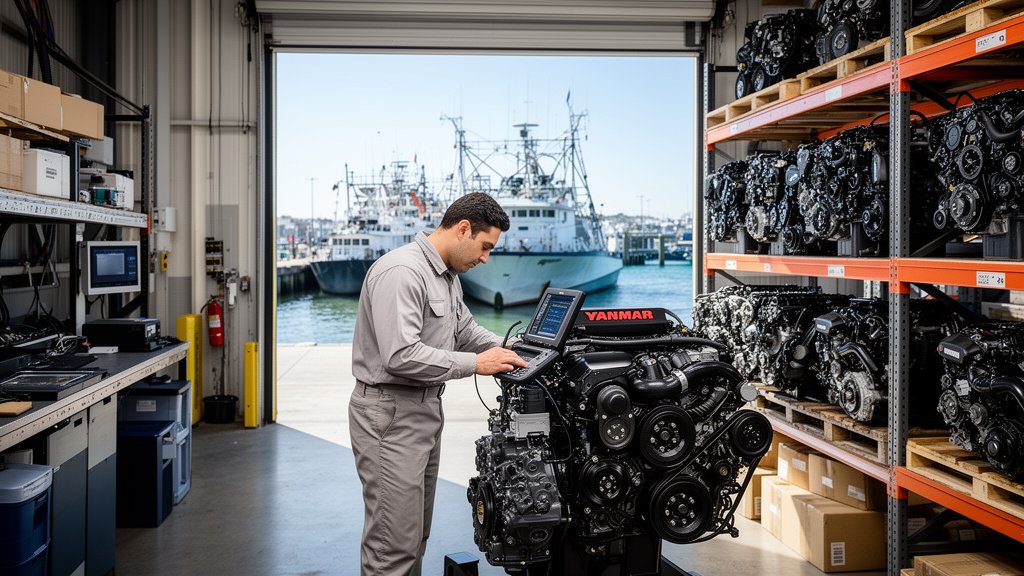
Yanmar Marine International (YMI), the globally recognized leader in marine engine technology, has officially finalized its acquisition of Boatswain’s Locker, Inc., a pivotal move that brings the long-standing U.S. West Coast distributor under the direct umbrella of the parent corporation. This transaction marks a critical evolution in Yanmar’s go-to-market strategy, aiming to unify regional sales, customer service, and technical support operations across a critical geographical swath of North America. By integrating the Boatswain’s Locker infrastructure, Yanmar is poised to exert more direct control over the distribution lifecycle, ensuring that their high-performance marine engines and propulsion systems are backed by a standardized, streamlined support network.
Key Highlights
- Direct Integration: The acquisition fully incorporates Boatswain’s Locker, Inc. into the Yanmar Marine International corporate structure, centralizing distribution for the U.S. West Coast.
- Regional Focus: Operations will encompass a vast, high-demand territory, specifically serving California, Washington, Oregon, Alaska, and Hawaii.
- Leadership Continuity: Robert Apted, the established President of Boatswain’s Locker, will retain his position during the transition, ensuring stability for dealers and customers.
- Strategic Objective: The merger aims to close the gap between the manufacturer and the end-user, enhancing technical service speed and supply chain reliability.
Advancing the Marine Supply Chain: The Strategic Logic of the Acquisition
The marine industry has seen a pronounced shift toward vertical integration over the last decade, and Yanmar’s acquisition of Boatswain’s Locker is a textbook example of this trend. For years, Yanmar relied on the distributor model to penetrate the complex and geographically dispersed U.S. West Coast market. Boatswain’s Locker had served this role effectively, establishing deep roots in key marine hubs ranging from the commercial fishing fleets of Alaska to the recreational yachting centers of California.
However, in today’s landscape, where technological complexity—ranging from advanced diesel engine management systems to hybridization—is the standard, the distance between the manufacturer’s R&D centers and the end-user has become a point of friction. By acquiring Boatswain’s Locker, Yanmar is removing that intermediate layer. This move allows the manufacturer to implement a uniform “Yanmar experience” for all clients, ensuring that technical training, warranty fulfillment, and parts availability are governed by corporate policy rather than regional distributor discretion.
Mapping the Regional Impact
The geography of this acquisition is particularly significant. The West Coast of the United States and the northern reaches of Alaska represent some of the most demanding marine environments in the world. Commercial vessels in Alaska face extreme cold and punishing workloads, while the yachting industry in California and Washington demands precision, aesthetics, and high-tier customer service.
Previously, managing supply lines across California, Washington, Oregon, Alaska, and Hawaii required immense logistical coordination. By bringing these operations under the direct YMI banner, the company can leverage global inventory systems to predict and preemptively stock regional warehouses. This is expected to significantly reduce lead times for critical engine parts, a metric that is vital for commercial operators where downtime directly equates to lost revenue.
The Role of Leadership Continuity
One of the most delicate aspects of any corporate acquisition is the human element—specifically, the potential for institutional knowledge loss. Recognizing the importance of maintaining trust within the existing dealer network, Yanmar has made the calculated decision to retain Robert Apted as President of the subsidiary. Apted’s leadership has been the backbone of Boatswain’s Locker, and his continued presence is a clear signal to the market that while ownership has changed, the commitment to service excellence remains consistent. This continuity is designed to prevent “integration shock,” ensuring that the transition is invisible to the end customer and that the established relationships with boat builders and repair yards remain intact.
The Future of Yanmar’s Distribution Network
This acquisition is not merely a regional adjustment; it is a indicator of Yanmar’s broader philosophy regarding the “Global Marine Strategy.” As the marine propulsion market moves toward greener technologies and more complex onboard digital ecosystems, manufacturers are realizing that the traditional “sell and forget” distributor model is obsolete.
Instead, Yanmar is betting on a model of continuous engagement. This involves closer integration with local dealers, more frequent technical training, and the implementation of digitized, real-time inventory management. For the end-user, this should result in a more responsive support environment. When a complex engine issue arises, the ability to escalate that inquiry directly to Yanmar corporate engineering—without navigating through legacy distributor bureaucracies—will likely become a competitive advantage that sets Yanmar apart from competitors who still rely heavily on fragmented third-party distribution channels.
Furthermore, by owning the distribution arm, Yanmar gains the ability to gather cleaner, more actionable data on how its engines are performing in the field. This feedback loop is invaluable for future R&D, allowing the company to make data-driven decisions about product modifications and new releases based on the specific usage patterns observed across different West Coast maritime sectors.
FAQ: People Also Ask
Q: Will this acquisition affect current warranty coverage for existing Boatswain’s Locker customers?
A: No. Yanmar Marine International has confirmed that the transition is designed to be seamless. All existing warranties, service agreements, and parts support will be honored and managed under the new corporate structure, with no interruption in coverage for existing customers.
Q: What specific regions will be served by the new integrated operations?
A: The integrated operation will maintain a comprehensive focus on the U.S. West Coast, covering California, Washington, Oregon, Alaska, and Hawaii.
Q: Why did Yanmar decide to keep Robert Apted in his leadership role?
A: Retaining Robert Apted as President of the subsidiary ensures continuity in leadership and operations. His experience is considered vital for maintaining the established dealer relationships and institutional knowledge required for a smooth integration of the two organizations.
Q: Will parts availability improve for West Coast customers?
A: The primary goal of the acquisition is to streamline the supply chain. By integrating directly into Yanmar’s global distribution network, the expectation is that regional warehouse capabilities will be optimized, potentially reducing lead times and improving the efficiency of parts delivery across the territory.