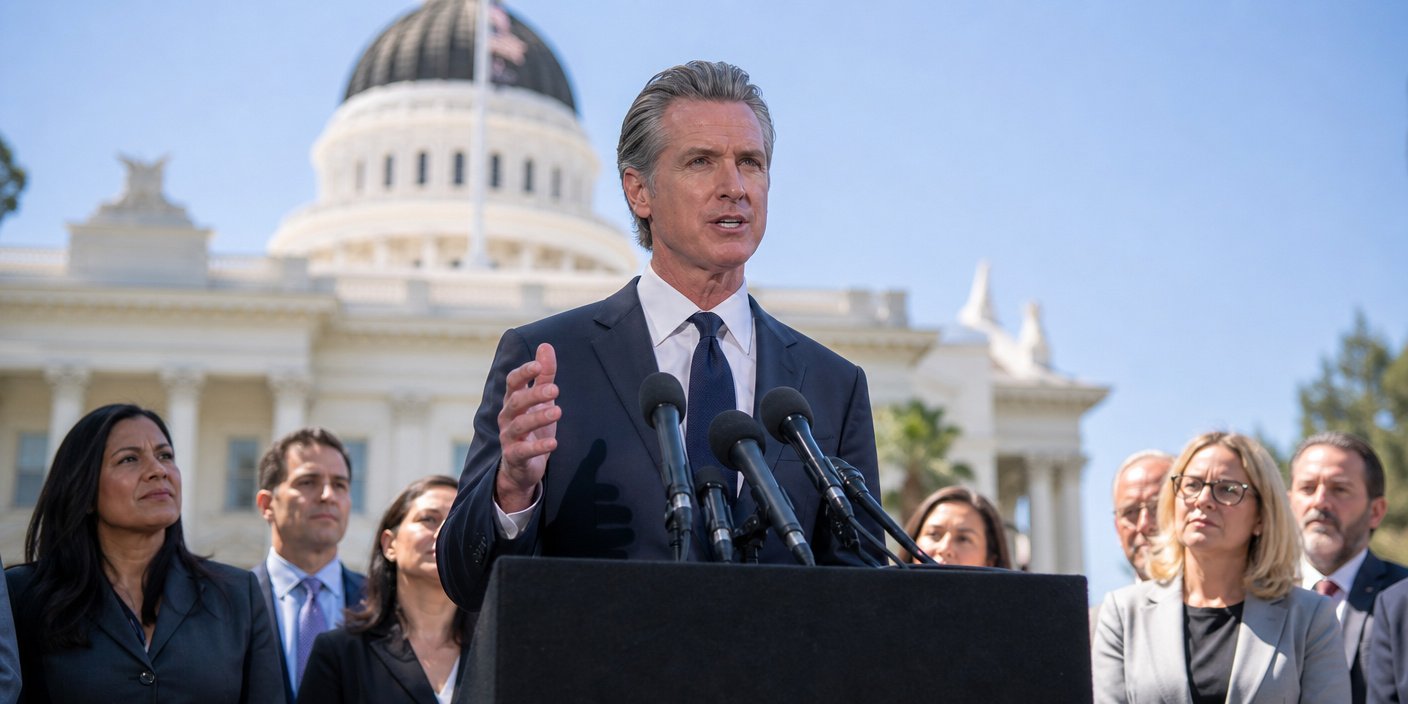
In a display of political friction that highlights the growing disconnect between national rhetoric and local electoral strategy, President Donald Trump’s recent assertions that Iran possesses the capability to ‘take out’ Los Angeles and San Diego have triggered a swift and sharp rebuke from across the political spectrum. The comments, delivered at a high-energy midterm rally, were intended to frame the administration’s foreign policy as a critical defense necessity. Instead, they ignited an immediate firestorm in California, forcing prominent Republicans, including congressional candidate Jim Desmond, to publicly decouple their local campaigns from the former President’s alarmist framing. California Governor Gavin Newsom, representing the Democratic counter-narrative, characterized the rhetoric as fear-mongering, underscoring the complexities of navigating national security narratives in a state that remains deeply skeptical of Trump’s political style.
Key Highlights
- Donald Trump claimed at a midterm rally that Iran has the specific capability to destroy Los Angeles and San Diego, sparking intense national debate.
- California Governor Gavin Newsom led the Democratic pushback, labeling the comments as dangerous and unfounded fear-mongering.
- Republican congressional candidate Jim Desmond publicly rebuked the rhetoric, signaling a strategic fracture within the GOP ranks regarding national security messaging.
- The incident highlights the widening chasm between national party figures and local candidates attempting to appeal to suburban California voters.
The Anatomy of the Rhetorical Clash
The incident began when, during a rally aimed at energizing the Republican base, Donald Trump utilized hyperbolic language regarding the Iranian threat landscape. In his assessment of foreign policy vulnerabilities, he posited that cities like Los Angeles and San Diego were within the potential crosshairs of hostile international actors. While intended to illustrate the stakes of his ‘America First’ platform, the specific mention of California municipalities backfired by alienating the very constituents targeted by the rhetoric.
Political analysts suggest that this moment serves as a case study in the risks of ‘rally rhetoric.’ When campaign discourse migrates from abstract policy discussions into concrete, specific threats against American civilian hubs, it shifts the focus from national geopolitical strategy to localized anxiety. By naming specific cities, the rhetoric crossed a threshold that forced local officials to react, not as party loyalists, but as protectors of their constituents’ sense of security. This has created a recurring strategic dilemma for Republican candidates in blue and purple districts who must navigate the influence of the national party brand while maintaining credibility with moderate local voters.
The Strategic Pivot: Local GOP vs. National Brand
For candidates like Jim Desmond, the fallout represented a critical inflection point. The Republican party has historically campaigned on the promise of strength and national security, yet the assertion that these specific California cities were defenseless against a foreign adversary contradicted the narrative of a robust, protected homeland. Desmond’s decision to openly rebuke the comments was not merely a difference of opinion; it was a necessary tactical maneuver to reassert local control over the campaign narrative.
This fracture highlights a secondary angle: the evolution of the California Republican Party. In an era where nationalization of local races is common, the ability to dissent—or at least deviate—from the national party leader is becoming a survival mechanism for down-ballot Republicans. By drawing a line between his platform and the rhetoric of the national stage, Desmond attempted to insulate his campaign from the broader party’s perceived volatility. This mirrors a broader trend observed in other competitive states where suburban voters are demanding a more nuanced approach to international affairs than the binary messaging often deployed at national rallies.
Geopolitical Realities and Foreign Policy Nuance
Beyond the electoral implications, the rhetoric reignited a debate regarding the actual nature of Iran’s conventional and non-conventional capabilities. While the international intelligence community has long debated the extent of Iran’s ballistic missile reach, the specific framing of Los Angeles and San Diego as immediate, vulnerable targets was viewed by security experts as an exaggeration of current threat assessments.
This discrepancy creates a third angle of analysis: the role of ‘truth-stretching’ in campaign environments. In the modern political arena, the distinction between threat assessment and rhetorical weaponization has blurred. When political figures utilize security intelligence to create immediate emotional responses, they often sacrifice the nuance required for a serious discussion on foreign policy. The criticism from Governor Newsom and other state leaders centered on this exact point—that such statements do more to destabilize public confidence than they do to clarify actual threats. As the electorate becomes increasingly inundated with hyperbolic messaging, the ability to discern legitimate security concerns from campaign theater remains a significant challenge for voters and journalists alike.
FAQ: People Also Ask
Q: Why did the mention of Los Angeles and San Diego specifically cause a backlash?
A: By naming specific major cities, the comments shifted from a general discussion of foreign policy to a direct existential concern for those residents. This created an immediate emotional response and forced local officials to address the claim, turning a national rally point into a local political liability.
Q: How do candidates like Jim Desmond balance party loyalty with local constituent concerns?
A: Candidates in competitive districts often use ‘strategic distancing.’ They support the broader party platform on economic or social issues but openly disagree on rhetoric or specific statements that clash with local sentiment, aiming to broaden their appeal to moderate voters.
Q: What is the broader impact of this rhetoric on California politics?
A: It reinforces the political divide in California, where national Republican messaging often struggles to gain traction. The pushback from both Democratic leadership and some GOP candidates demonstrates that local political identity in California is increasingly resistant to the standardized, high-intensity rhetoric of national midterm campaigns.