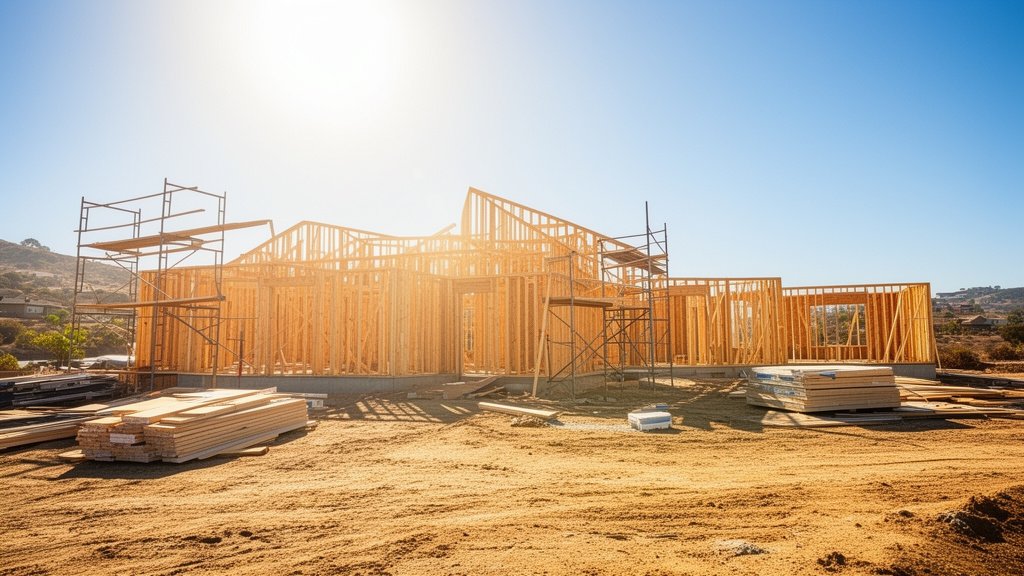
As a relentless, record-breaking heatwave continues to bake Southern California, outdoor workers in San Diego’s East County are finding themselves on the front lines of an escalating climate crisis. With the National Weather Service (NWS) extending an extreme heat warning through October 8, the region is experiencing unseasonable, triple-digit temperatures that are testing the physical limits of construction crews, agricultural laborers, and delivery personnel. For these workers, the directive is clear, but the reality is complex: prioritize safety in a climate that is rapidly changing, or succumb to the economic pressure that demands continuous labor.
Key Highlights
- Extended Heat Warning: The NWS has maintained an extreme heat advisory for San Diego County, with specific intensity localized in East County, lasting through October 8.
- The ‘No Option’ Dilemma: Economic necessity forces many workers to remain on job sites despite health risks, as day-to-day wages are essential for survival in the high-cost San Diego housing market.
- Regulatory Challenges: While Cal/OSHA mandates specific heat illness prevention plans, enforcement on smaller, disparate worksites remains inconsistent, leaving vulnerable laborers exposed.
- Rising Climate Trends: This October heat event underscores a broader shift in Southern California weather patterns, where late-season heatwaves are becoming both more frequent and more intense.
The Anatomy of an October Heatwave
The current weather event gripping East County—encompassing communities like El Cajon, Santee, and Lakeside—is not merely a passing seasonal fluctuation. It represents a significant deviation from historical averages. Meteorologists have noted that the atmospheric conditions currently trapped over Southern California are creating a ‘heat dome’ effect, preventing cooler coastal breezes from penetrating inland. This has turned construction sites and agricultural fields in the valleys into literal pressure cookers.
For the outdoor worker, this means the ‘traditional’ window of summer heat danger, typically ending in early September, has shifted. The heat is no longer just a mid-summer problem; it is now an autumn reality. This temporal shift complicates existing safety protocols, as many employers and workers alike are mentally unprepared for extreme heat alerts when the calendar suggests the arrival of fall. The persistence of the heat through October 8 is a stark reminder that the region’s climate resilience infrastructure is lagging behind the environmental reality.
The Economic Calculus: Why They Stay
When a worker says, ‘You don’t have an option,’ they are speaking to a foundational economic truth in the San Diego region. The cost of living in Southern California—driven primarily by housing prices—leaves little room for financial buffer. For day laborers and sub-contracted outdoor workers, skipping a day of work due to heat often means failing to meet rent payments, transportation costs, or basic utility bills.
This creates a perverse incentive structure. While health professionals urge breaks and hydration, the immediate threat of poverty often outweighs the distant, though real, threat of heatstroke. This is the ‘hidden cost’ of the heatwave: it disproportionately impacts those with the least amount of financial security. Our analysis indicates that while major, unionized construction firms have rigorous internal safety protocols, independent laborers in the residential construction and landscaping sectors often lack access to these protections, forced to operate under the assumption that ‘the job must get done.’
The Regulatory Gap
California maintains some of the most stringent labor laws regarding heat exposure in the nation, overseen by Cal/OSHA. Their ‘Heat Illness Prevention Plan’ requirements include mandatory access to shade, water, and rest breaks. However, on smaller job sites—a common feature of East County’s residential construction—oversight is inherently difficult.
Inspectors cannot be everywhere at once. When a foreman is pressured by a developer to hit a deadline, and the crew is pressured by the foreman to keep working, safety protocols are frequently the first casualty. The issue is not the lack of regulation, but the lack of localized enforcement and the culture of silence that surrounds independent labor. Workers who speak up about the heat often fear retaliation or being replaced by the next person in line. Until the risk of working in 100-degree heat is treated with the same severity as structural safety violations on a job site, the cycle of overexposure will continue.
Climate Adaptation or Crisis?
Looking ahead, the question for San Diego is not whether these heatwaves will happen, but how we adapt to them. Is it time for a ‘heat holiday’ policy, similar to how schools handle air quality emergencies? Should there be mandatory, enforced stoppages for outdoor labor when temperatures exceed a specific index, regardless of the industry? The current approach—advising caution—is insufficient in the face of what appears to be a permanent alteration in the region’s climate. As we navigate the remainder of the October 8 heat warning, it is clear that the status quo is failing those who build our infrastructure while standing in the sun.
FAQ: People Also Ask
1. What are the legal requirements for outdoor workers in California during heatwaves?
Employers must provide fresh water, access to shade, training on heat illness, and a written Heat Illness Prevention Plan (HIPP) if the temperature reaches 80 degrees Fahrenheit. High-heat procedures are triggered at 95 degrees, requiring additional observation and mandatory breaks.
2. Why is East County hotter than the rest of San Diego?
East County is geographically inland, blocked from the cooling, marine-layer influence of the Pacific Ocean by mountainous terrain. This allows temperatures to climb significantly higher and stay elevated longer during heat events, leading to more frequent ‘extreme heat’ designations.
3. What are the early signs of heatstroke?
Symptoms include a high body temperature (above 103°F), confusion, rapid pulse, dizziness, and hot, red, dry, or damp skin. Heatstroke is a medical emergency; if suspected, workers should seek immediate medical attention, move to a cool place, and attempt to lower body temperature with wet cloths or ice.
4. Is this heatwave related to climate change?
While specific weather events are complex, scientists consistently attribute the increased frequency, intensity, and duration of such ‘extreme’ heatwaves in Southern California to the broader, global trend of anthropogenic climate change.