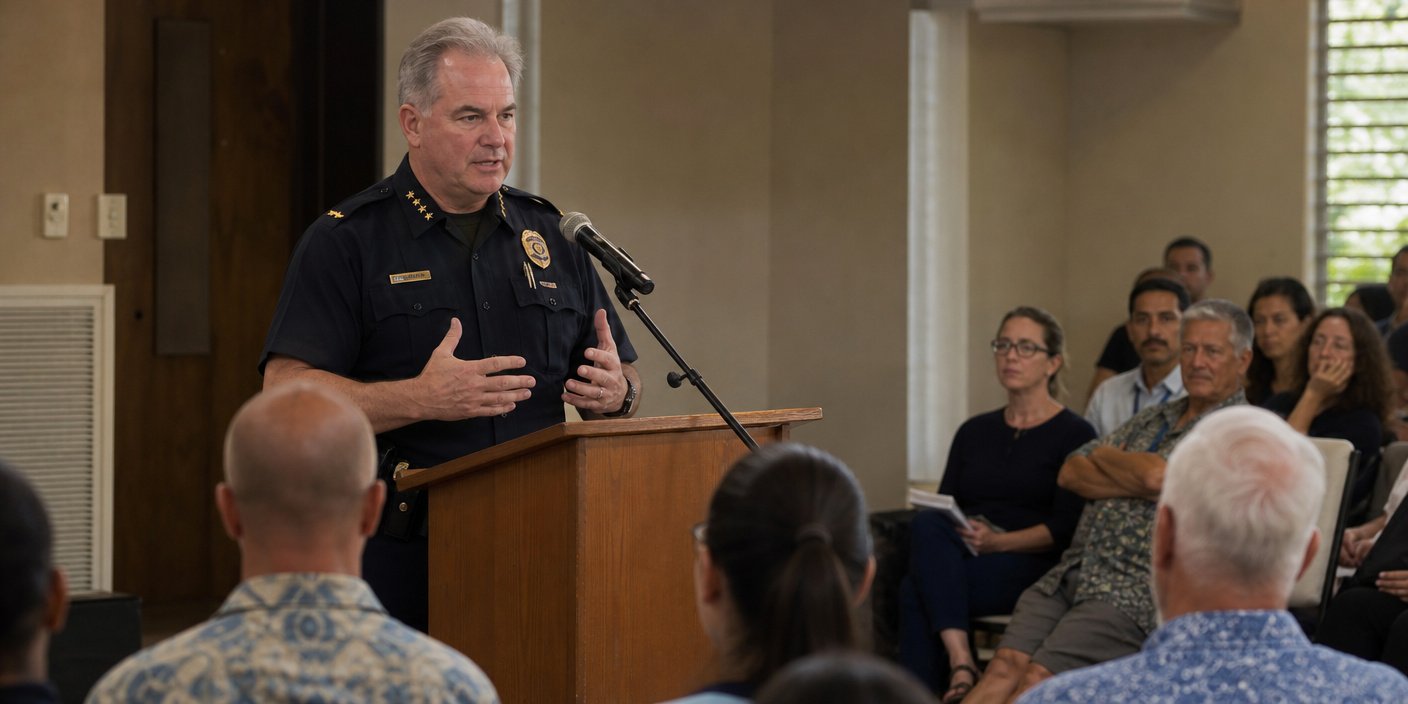
The Maui Police Department (MPD) stands at a critical juncture. Following a cascade of operational challenges and mounting public distrust, the department is currently navigating a period of intense scrutiny, with federal and local entities investigating allegations of corruption and procedural failures. Chief John Pelletier, who has been the focal point of these tensions, recently addressed these concerns in a public forum, attempting to pivot the department toward a new model of transparency. As the community demands greater accountability, the conversation has shifted from individual accountability to the fundamental necessity of external, independent oversight of the Maui Police Department.
The Anatomy of Current Investigations
The scrutiny facing the MPD is multi-layered, involving both internal reviews and external oversight bodies. The investigations are not monolithic; they represent a convergence of grievances ranging from departmental conduct to management efficacy. Federal inquiries often intersect with local concerns when civil rights or constitutional issues are raised, adding a layer of gravity that the department must navigate carefully. For Chief Pelletier, the challenge is twofold: managing the day-to-day operations of a force already stretched thin by post-disaster recovery efforts, and addressing the systemic allegations that threaten to erode the department’s legitimacy. These investigations are not merely administrative hurdles; they are potential catalysts for the most significant structural changes the department has seen in decades.
The Push for Independent Oversight
The calls for an independent police commission or a civilian oversight board have moved from the fringes of public discourse to the center of Maui County politics. Proponents of this shift argue that the current self-policing model—where the department investigates its own misconduct—lacks the requisite transparency to maintain public confidence. In other jurisdictions across the United States, independent oversight boards have been utilized to provide a necessary buffer between the police and the public. These boards often have the power to subpoena documents, review internal affairs findings, and make policy recommendations that the department is compelled to address. The debate in Maui is now centered on whether such an entity would strengthen the MPD by identifying blind spots or whether it would serve as an unnecessary layer of bureaucracy that hampers swift decision-making in high-pressure situations.
Cultural and Institutional Challenges
Beyond the legal and structural investigations, the MPD faces an internal battle regarding its culture and recruitment strategy. A department under the microscope often struggles with morale, leading to retention issues that can exacerbate the very problems the public is criticizing. If officers feel that leadership is defensive rather than proactive, the divide between the rank-and-file and the community deepens. The ongoing scrutiny is a stress test for the department’s culture. Chief Pelletier’s public statements suggest an awareness of this divide, yet the gap between policy changes and public perception remains wide. For meaningful reform to occur, the department must move beyond defensive press conferences and demonstrate tangible shifts in how allegations of misconduct are handled internally.
Strategic Shifts in Management
For the MPD, the path forward requires a balance between protecting the integrity of active investigations and responding to the public’s rightful demand for transparency. Chief Pelletier is tasked with steering the department through what may be its most difficult period in recent history. The proposed oversight mechanisms are not necessarily a condemnation of every officer on the force; rather, they are a recognition that modern policing requires modern checks and balances. Whether through an independent auditor or a civilian review panel, the trajectory of the MPD in the coming months will be defined by how the department chooses to engage with its critics. Ignoring these calls for oversight risks further isolation; embracing them, however, could provide the foundation for a renewed, more transparent partnership with the community.
FAQ: People Also Ask
What are the main allegations currently facing the Maui Police Department?
The allegations range from mismanagement and lack of transparency to specific instances of misconduct and procedural failures. These issues have been amplified by external inquiries that seek to determine whether the department’s internal disciplinary and operational processes meet legal and ethical standards.
Why is there a sudden surge in calls for external oversight?
The calls for oversight have intensified due to a loss of public confidence in the department’s ability to self-regulate. This sentiment has been fueled by the complexities of post-disaster recovery, where communication failures and perceived lack of transparency have highlighted the need for an independent body to provide accountability.
Can the Maui County Council enforce changes to the MPD?
Yes, the Maui County Council possesses legislative authority that can influence the MPD’s operations, particularly through budget approvals and the ability to mandate or support the creation of independent oversight boards or commissions. Their role is pivotal in transforming the current climate of scrutiny into actionable policy.