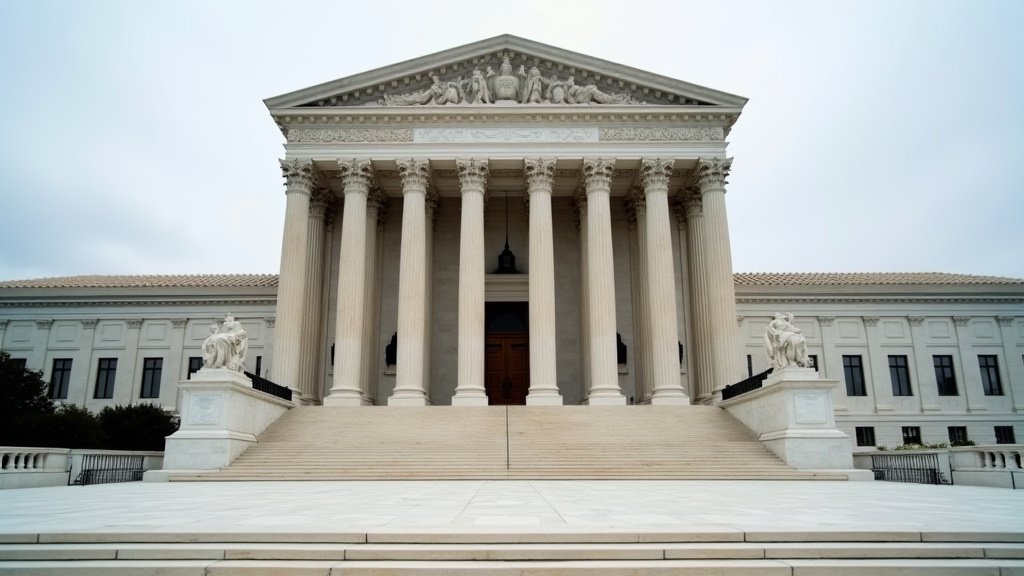
California has emerged at the forefront of a significant multi-state legal coalition, joining 21 other jurisdictions to file a federal lawsuit challenging the Trump administration’s controversial expansion of the ‘public charge’ rule. The litigation represents a direct confrontation over the boundaries of federal immigration authority and the preservation of social safety nets, asserting that the Department of Homeland Security (DHS) significantly exceeded its legal mandate under the Administrative Procedure Act (APA).
The Core Conflict: Expanding the Public Charge Definition
At the heart of the dispute is the federal government’s attempt to fundamentally redefine the criteria used to determine whether an immigrant is likely to become a ‘public charge’—a designation that can render an individual ineligible for legal permanent residency, commonly known as a green card. Historically, the public charge standard focused on whether an immigrant was primarily dependent on the government for subsistence, specifically long-term institutionalized care or cash assistance. The administration’s policy, however, broadened this definition to include the usage of non-cash benefits such as Medicaid (specifically for non-emergency services), the Supplemental Nutrition Assistance Program (SNAP), and various housing vouchers.
By including these essential services in the public charge calculus, the administration effectively turned the utilization of critical support systems into a negative factor in visa and residency applications. The plaintiffs argue that this shift creates an impossible dilemma for low-income immigrant families: choose between their immediate health and nutritional security or their long-term ability to remain legally in the United States.
The Legal Basis: The Administrative Procedure Act (APA)
The legal strategy employed by the coalition of states relies heavily on the Administrative Procedure Act. The plaintiffs contend that the Department of Homeland Security bypassed required statutory protocols when implementing the new rule. Specifically, the states argue that the rule is ‘arbitrary and capricious,’ failing to account for the actual economic and societal impacts of the policy change.
Legal experts note that this litigation hinges on whether the DHS possesses the authority to unilaterally alter definitions that have been stable for decades. By ignoring the established congressional intent regarding public assistance, the states argue, the administration fundamentally disrupted the balance of power between federal agencies and the legislative branch. The lawsuit claims that the DHS failed to provide adequate justification for the dramatic departure from long-standing immigration precedents, thus violating the procedural safeguards designed to prevent executive overreach in rulemaking.
The Human Element: Fear, Health, and Nutrition
The impact of the policy extends far beyond legal theory; it has created what public health officials refer to as a ‘chilling effect.’ Even prior to the finalization of the rule, reports across the 21 states indicated that immigrant families were disproportionately dis-enrolling from Medicaid and SNAP, despite many being eligible for these programs. The fear is palpable: families are opting to skip doctor visits or reduce nutritional intake to avoid being flagged as a potential public charge, fearing that accepting assistance would jeopardize their status or that of their family members.
From a public health perspective, this creates significant long-term costs. The states argue that by discouraging the use of preventative healthcare and nutrition programs, the policy will lead to increased emergency room visits and chronic health conditions that are more expensive to treat, ultimately shifting the financial burden back onto state and local governments. This ‘cost-shifting’ is a central pillar of the states’ argument against the rule.
The Broader Implications for Immigration Policy
The lawsuit underscores a fundamental tension in American immigration policy. On one side, proponents of the rule argue that immigration policies should ensure that new arrivals are self-sufficient and do not place an undue burden on taxpayers. On the other side, the coalition of states—led by California—advocates for a system that recognizes the contribution of immigrants and ensures that basic human needs, such as healthcare and food, are not weaponized against those pursuing legal status.
This legal battle is not merely about the specific benefits of Medicaid or SNAP; it is about the structural design of the U.S. immigration system. If agencies are permitted to re-interpret such foundational concepts without explicit congressional authorization, it sets a precedent that could allow future administrations to dramatically alter immigration pathways through regulatory action alone, bypassing the legislative process entirely.
The Role of States as Plaintiffs
The involvement of 21 states is a strategic move, showcasing the degree to which sub-national governments are now active participants in federal immigration litigation. By acting as a coalition, these states can pool resources, consolidate legal arguments, and demonstrate a widespread, unified opposition to federal policy. This coalition approach also serves to emphasize the ‘state interest’—the idea that federal immigration changes directly harm state budgets, public health systems, and social infrastructure. This ‘state interest’ is often a critical factor in swaying federal courts to issue injunctions, as judges are more likely to pause policies that cause demonstrable, irreparable harm to state-level operations.
The Precedent and the Future
As the litigation moves forward, the outcome will likely serve as a landmark case for administrative law. A victory for the states would reaffirm the constraints of the Administrative Procedure Act and potentially limit the ability of executive agencies to unilaterally rewrite immigration definitions. Conversely, a loss could embolden the use of executive rulemaking as a primary tool for reshaping the U.S. immigration landscape. Regardless of the immediate outcome, the case remains a testament to the complex, ongoing debate over how the U.S. integrates immigrants and how it defines the responsibilities of the state versus the individual.
FAQ: People Also Ask
What is the ‘Public Charge’ rule?
It is an immigration principle used to deny entry or residency to individuals deemed likely to become primarily dependent on the government for subsistence. The recent policy expanded this to include non-cash benefits like Medicaid, food stamps (SNAP), and housing assistance.
Why are California and other states suing?
The states argue the rule is illegal, claiming the Department of Homeland Security exceeded its authority under the Administrative Procedure Act and failed to consider the negative public health and economic impacts on local communities.
What is the Administrative Procedure Act (APA)?
The APA is a federal law that governs how administrative agencies, like the Department of Homeland Security, develop and issue regulations. It requires agencies to provide a reasoned justification for rules and prevents them from being ‘arbitrary and capricious.’
What is the potential impact on immigrant families?
Advocates report a ‘chilling effect,’ where immigrant families are avoiding necessary nutrition and healthcare assistance out of fear that doing so will harm their immigration status or lead to deportation, even if they are legally entitled to such aid.