The Chatsworth Tragedy: A Night of Mourning
On a Tuesday night that began as a routine reporting operation, the skies over Chatsworth, Los Angeles, became the site of a profound tragedy. An NBC4 news helicopter, identified as NewsChopper4, went down while providing aerial coverage of a fatal collision involving a Metro bus in the vicinity. The crash has resulted in three fatalities, sending shockwaves through the local news industry and the broader Los Angeles community. As the debris is cleared and the grieving process begins for the victims’ families, the aviation community and federal regulators are turning their eyes toward the site to determine the mechanical, environmental, or human factors that led to this catastrophic failure.
The Sequence of Events
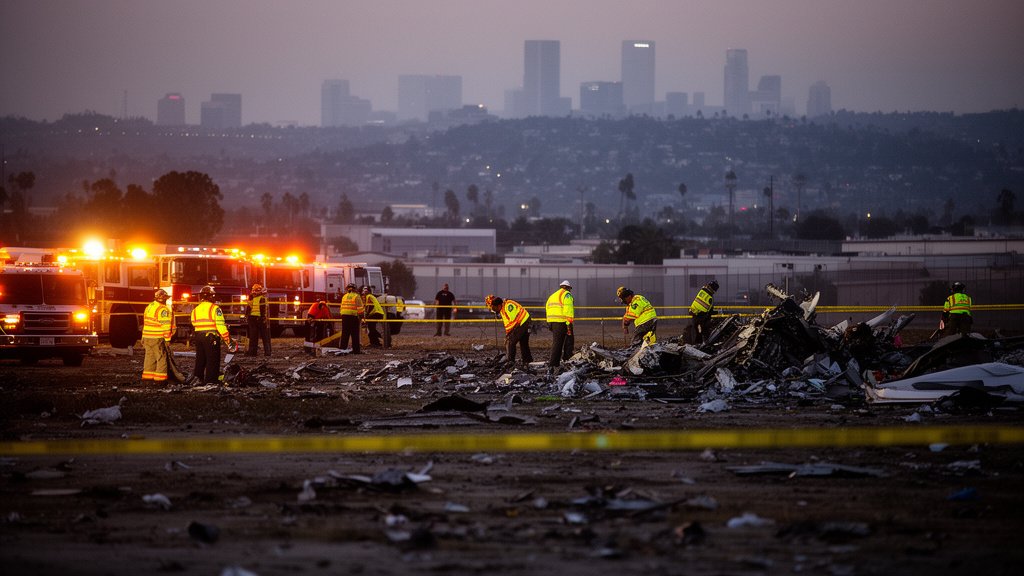
Reports indicate that the helicopter was operating in the Chatsworth area during the late evening hours. Its primary mission was standard news gathering: providing live, overhead perspective for a segment regarding a separate, fatal collision involving a Metro bus. The transition from a routine journalistic mission to a disaster occurred suddenly. While specific flight telemetry is still being recovered and analyzed, initial accounts suggest the helicopter went down in a residential or industrial-adjacent area of Chatsworth, triggering an immediate and massive emergency response from local fire and law enforcement agencies. First responders arrived on the scene to find the wreckage, confirming that the three individuals on board had perished in the impact. The sudden loss of life has halted news operations temporarily as the station reels from the loss of colleagues, many of whom are staples in the daily lives of Los Angeles viewers.
Understanding News-Gathering Aviation
Helicopters are an integral part of the Los Angeles news landscape, often described as the ‘eyes in the sky’ for a city defined by its massive, complex freeway system. News organizations rely heavily on these platforms to provide real-time updates on traffic congestion, police pursuits, and emergency scenes. Operating a news helicopter is a specialized aviation discipline, requiring pilots to balance the high-stakes demands of live broadcasting with the rigorous safety standards of general aviation. Pilots must maintain constant awareness of urban hazards, including power lines, skyscrapers, and the unpredictable wind patterns characteristic of the San Fernando Valley. This incident underscores the inherent risks involved in deploying rotary-wing aircraft in dense urban environments, particularly during night operations where visibility and spatial awareness are significantly more challenging.
The NTSB Investigation Protocol
In the wake of the crash, the National Transportation Safety Board (NTSB) and the Federal Aviation Administration (FAA) have immediately assumed jurisdiction. The investigation into the Chatsworth crash will be exhaustive and methodical. NTSB investigators are currently on-site, documenting the debris field and collecting wreckage components for detailed laboratory examination. The investigation will focus on several critical pillars: mechanical integrity, pilot logbooks and training history, air traffic control communications, and weather conditions present at the time of the flight. The ‘black box’ or flight data recorder, if equipped, will be a primary focus to reconstruct the final moments of the flight. Investigators will cross-reference internal NBC4 operational logs with FAA flight path data to determine if there were any signs of distress before the incident. This process can take months, sometimes years, to conclude, as federal agencies aim to identify not just the cause, but any systemic safety gaps that could prevent future tragedies.
Aviation Safety and Local Media
This incident has ignited a wider conversation regarding the safety protocols of news-gathering aircraft. While commercial aviation is subject to stringent oversight, the niche sector of media helicopters is often scrutinized after such events. Industry experts are likely to revisit safety requirements, including the mandatory installation of advanced terrain awareness systems, night-vision technology, and updated pilot fatigue management policies. The broadcast news industry in Los Angeles, known for having one of the most active helicopter fleets in the world, now faces a period of intense reflection. The question for station executives is how to balance the competitive, high-speed nature of local news reporting with the non-negotiable safety of the crews tasked with gathering those images.
Looking Ahead: The Aftermath
For the immediate future, the focus remains on the investigation and supporting the families of those lost. The Chatsworth community, already dealing with the aftermath of the original bus collision, has been deeply affected by the secondary tragedy of the helicopter crash. NBC4 has committed to full cooperation with federal authorities, providing all necessary documentation and resources to facilitate a transparent investigation. The legacy of the crew and the mission they were conducting that night will likely become a focal point in aviation safety forums for years to come, serving as a solemn reminder of the risks taken by news professionals to keep the public informed. As the NTSB continues its work, the community waits for answers, hoping that the findings will lead to safer skies for all.
FAQ: People Also Ask
Who is responsible for investigating the NBC4 helicopter crash?
The investigation is being led by the National Transportation Safety Board (NTSB), with support from the Federal Aviation Administration (FAA). These agencies are responsible for determining the probable cause of the crash.
What was the helicopter doing in Chatsworth before it crashed?
The helicopter was on a mission to provide aerial news coverage for a separate, earlier fatal collision involving a Metro bus in the area.
Are there any immediate safety changes expected for news helicopters?
While it is too early to mandate specific industry-wide changes, NTSB investigations often lead to safety recommendations. The industry will likely conduct internal reviews of flight protocols, maintenance schedules, and night-flight training requirements.
How long does an NTSB investigation typically take?
NTSB investigations are complex and thorough. A preliminary report is usually issued within weeks, but the final determination of the probable cause and any safety recommendations can take 12 to 24 months to complete.