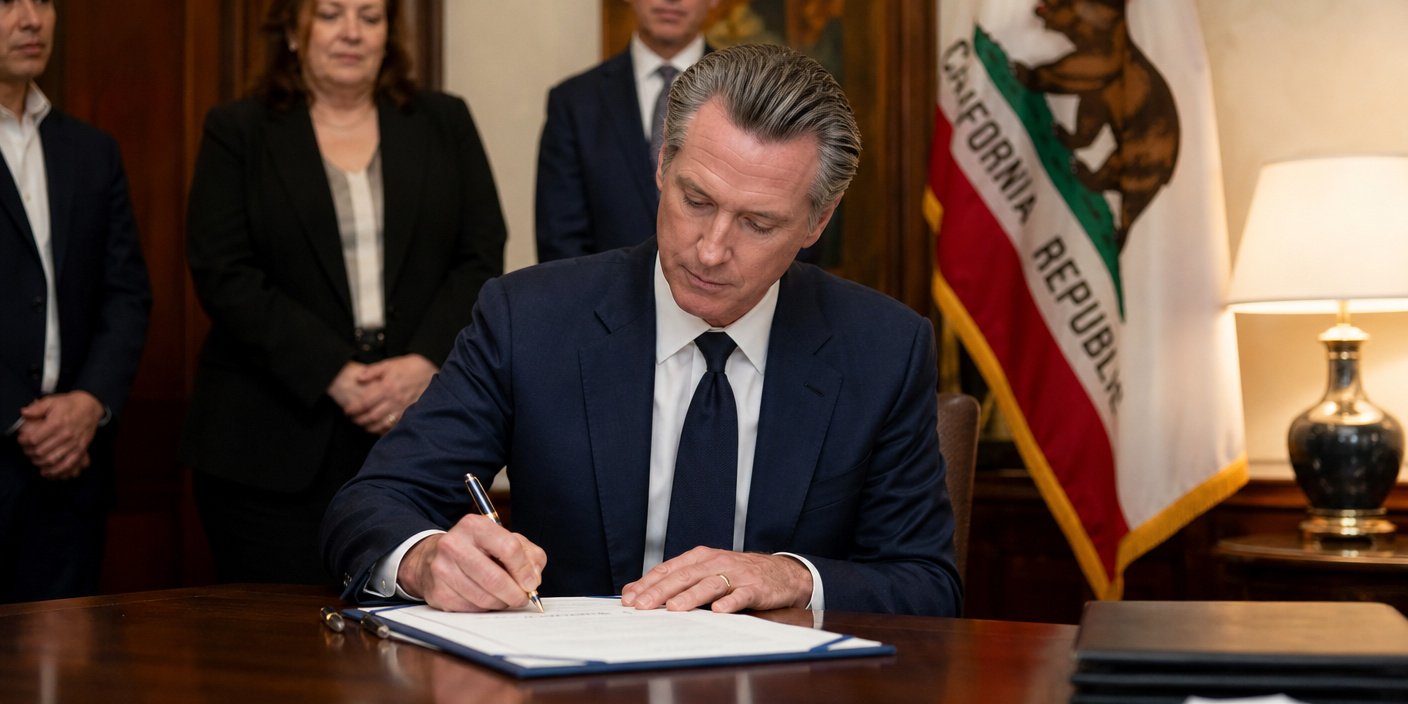
California Governor Gavin Newsom has officially signed the ‘Main Street Protections’ Act, known legislatively as SB 992, marking a watershed moment for the state’s commercial real estate landscape. The legislation introduces temporary, mandatory caps on commercial rent increases for small businesses operating within designated urban corridors, aiming to stem the tide of gentrification-driven displacement that has shuttered legacy businesses across major California metropolitan areas. By intervening directly in the commercial leasing market, the state signals a departure from its historical hands-off approach, prioritizing the preservation of local business vitality over unrestricted market rate adjustments.
Key Highlights
- SB 992 mandates temporary commercial rent caps for small businesses located in high-traffic urban corridors.
- The legislation targets displacement of legacy businesses by limiting annual lease renewal hikes.
- Governor Newsom framed the act as a vital safety net to preserve the unique economic fabric of California’s downtown districts.
- Implementation will be managed through a partnership between state authorities and municipal zoning boards.
- The protections are categorized as temporary, serving as a buffer while long-term zoning solutions are drafted.
California’s Commercial Real Estate Overhaul
The signing of SB 992 represents a significant recalibration of property rights in California. For years, small business owners in cities ranging from San Francisco to San Diego have decried the aggressive rent hikes that follow urban revitalization projects. With the passage of the ‘Main Street Protections’ Act, the state government has finally codified a defensive posture for small enterprises. This legislation is not an absolute freeze on rents, but rather a regulatory cap intended to prevent unsustainable spikes that force businesses to shutter, often leading to months or years of commercial vacancy. The bill, pushed through the legislature with strong backing from urban-focused advocacy groups, essentially forces landlords to negotiate within a state-approved framework for renewal terms, providing tenants a reprieve from the volatility of post-pandemic market valuations.
Mechanics of the Cap: Navigating the Legislative Framework
Unlike residential rent control measures, SB 992 approaches commercial real estate through the lens of ‘Corridor Vitality Zones.’ The Act utilizes granular data to identify commercial blocks that serve as the economic heart of their respective municipalities. Within these zones, commercial landlords are restricted from raising rents above a defined percentage annually for qualifying small businesses. The criteria for ‘small business’ status under the act are stringent, requiring entities to have fewer than 50 full-time employees and a gross annual revenue below a specified threshold. This ensures the protection is targeted at independent boutiques, cafes, and local service providers rather than large, national retail chains or corporate franchises that possess the capital to absorb rent surges. By limiting the scope, the Newsom administration hopes to avoid creating a chilling effect on broader commercial development investment.
The Economic Ripple Effect: Market Stability vs. Investor Appetite
The long-term economic impact of SB 992 remains a subject of intense debate among urban planners and commercial developers. Proponents argue that the measure creates a stable, predictable environment for small business growth. When rent increases are tethered to economic reality rather than speculative demand, local ecosystems thrive, ensuring that the ‘main street’ experience remains authentic and diverse. This, in turn, boosts foot traffic and local sales tax revenue, benefiting the municipality at large. However, skeptics from the real estate investment community warn of potential market stagnation. If the upside of commercial leasing is capped, developers may hesitate to invest in the renovation or seismic retrofitting of older buildings. The risk is that while the Act saves existing businesses, it might inadvertently deter the modernization of commercial spaces, leading to the preservation of ‘mom-and-pop’ shops within crumbling, outdated infrastructure. The state has acknowledged these concerns, embedding a sunset clause into the legislation, which mandates a review of the program’s economic impact every 24 months.
Defining ‘Urban Corridors’ and Zoning Jurisdiction
A critical component of SB 992 is the delegation of power to local Urban Zoning Commissions. The Act does not apply a blanket state-wide cap; rather, it empowers local governments to declare specific ‘Main Street Protection Zones.’ This decentralized implementation is perhaps the most politically savvy aspect of the bill, as it respects local control while providing a state-backed authority to enforce the caps. Municipalities are now tasked with identifying the specific street segments that qualify for these protections. This process will inevitably involve intense lobbying from both landlord associations—who may attempt to exclude certain high-value blocks—and small business advocacy coalitions, who will push for maximum coverage. The success of the Act will therefore hinge on the transparency and data-driven nature of these zoning decisions, as any perception of political favoritism could undermine the law’s legitimacy.
Small Business Sentiment vs. Property Investor Concerns
The reaction to the signing has been predictably bifurcated. Small business owners, who have navigated the precarious post-pandemic recovery era, have largely heralded the Act as a lifeline. Many have spent the last several years operating on month-to-month leases, terrified that a triple-digit rent increase could end their business overnight. Conversely, commercial landlords have expressed deep concern regarding the erosion of contract law. They argue that the market should dictate the value of a storefront and that capping rents discourages property owners from maintaining their assets. The challenge for Governor Newsom and his administration will be balancing these competing interests. The ‘Main Street Protections’ Act is ultimately a compromise—a temporary regulatory finger in the dike of the modern California real estate market. Whether this measure will evolve into a permanent fixture of state law or be quietly phased out will depend on the real-world metrics reported over the next two years regarding commercial vacancy rates and business survival.
FAQ: People Also Ask
1. Does SB 992 apply to all commercial properties in California?
No. The Act is strictly limited to ‘designated urban corridors’ which must be identified and approved by local municipal zoning authorities. It does not apply to all commercial real estate across the state.
2. How does the Act define a ‘small business’ for rent cap eligibility?
To qualify for protections under SB 992, a business must typically demonstrate that it has fewer than 50 full-time employees and operates with a gross annual revenue below a state-defined threshold, specifically excluding most national corporate chains.
3. Is this a permanent law?
No. The ‘Main Street Protections’ Act is temporary. It includes a sunset clause that requires the state to conduct a comprehensive impact assessment every two years, at which point the legislature will determine whether to extend, modify, or allow the provisions to expire.
4. Will my landlord be allowed to raise my rent at all?
Yes. SB 992 establishes a cap on the percentage increase, it does not freeze rents indefinitely. The cap is designed to prevent exorbitant, unsustainable hikes rather than prohibit reasonable adjustments aligned with economic indicators.
5. Can municipalities opt-out of the ‘Main Street Protections’ Act?
While the state provides the framework, the actual implementation is decentralized. Cities and counties have a degree of latitude in how they define the protected corridors, effectively allowing them to manage the balance between local development needs and small business protection.