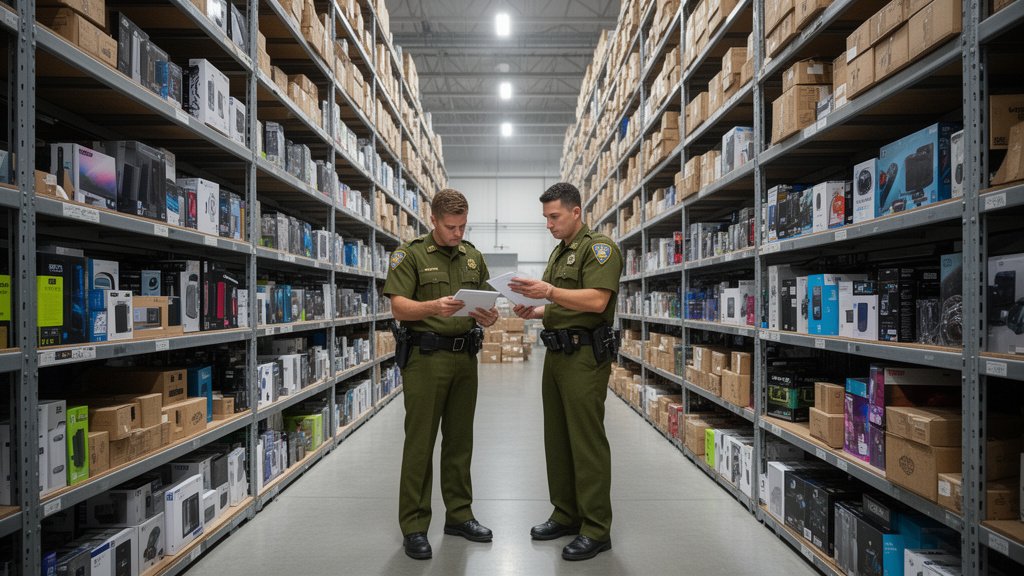
The California Highway Patrol (CHP) has successfully intercepted and recovered more than $1.05 million in stolen merchandise, marking a pivotal moment in the state’s ongoing battle against sophisticated, organized retail crime rings. This high-value recovery, executed as part of a synchronized national enforcement effort, highlights the growing intensity of the Organized Retail Crime Task Force (ORCTF) in dismantling the infrastructure of illegal fencing operations. By targeting the distribution networks rather than just individual shoplifting incidents, authorities are signaling a new, more aggressive phase in law enforcement’s approach to the retail security crisis.
Key Highlights
- Total Recovery: CHP operations successfully seized over $1.05 million in illicit retail inventory.
- Operational Scope: The recovery was conducted as part of a larger national organized retail crime (ORC) blitz, emphasizing cross-jurisdictional cooperation.
- Strategic Focus: The investigation specifically targeted the ‘fencing’ aspect of the crime, where stolen goods are aggregated and laundered back into the secondary market.
- State-Level Impact: The operation reinforces the efficacy of the Organized Retail Crime Task Force (ORCTF) in protecting commercial stability across California.
Decoding the Organized Retail Theft Surge
The recent recovery of $1.05 million in stolen goods is not merely a single tactical success; it is a diagnostic indicator of the structural shift in retail crime. Historically, retail theft was categorized as disconnected, opportunistic acts of petty shoplifting. However, the current landscape has evolved into a highly professionalized, supply-chain-based illicit economy. Organized Retail Crime (ORC) involves syndicates that function with the logistics, planning, and distribution capabilities of legitimate retail businesses, albeit with a focus on high-value, easy-to-resell commodities.
Tactical Operations: Dismantling the Fencing Network
The core of this operation involved the CHP’s specialized ORCTF units meticulously mapping the movement of stolen inventory. When criminals steal at this volume, the bottleneck is never the theft itself—which is often performed by transient, low-level operatives—but the ‘fencing’ process. Fencing is the act of aggregating stolen goods, removing security tags, and repackaging them for sale through online marketplaces or independent, illicit storefronts.
By infiltrating these networks, investigators can track the inventory upstream. The $1.05 million figure represents not just the value of the items, but the capital that has been effectively denied to the criminal organizations. This process requires significant coordination between the CHP, local law enforcement agencies, and the California Department of Justice, often utilizing advanced forensic accounting and digital surveillance to trace the flow of goods from the store shelf to the distribution hub.
The Anatomy of the Illegal Marketplace
One of the most critical secondary angles in this investigation is the role of digital marketplaces in fueling ORC. Syndicates often use established e-commerce platforms to sell stolen goods under the guise of legitimate inventory. The CHP’s success in this recent blitz suggests a deeper capability to bridge the gap between physical evidence and digital footprints.
Law enforcement is increasingly focusing on the digital breadcrumbs left by these syndicates—bank transfers, shipping logs, and online vendor profiles. By treating the theft as a white-collar crime investigation, authorities are applying pressure to the financial incentives that drive the violence and chaos seen on the sales floor. If the profit margin for a stolen unit of merchandise is diminished by higher risks of detection and seizure, the viability of the entire business model for these syndicates begins to collapse.
The Socio-Economic Ripple Effect
Beyond the raw dollar value, the impact of these thefts on local communities is profound. Retailers, facing unsustainable losses, are forced to implement ‘fortress’ store designs, reduce operating hours, or, in the worst cases, close locations permanently. This phenomenon creates ‘retail deserts,’ where low-income or transit-dependent neighborhoods lose access to essential goods such as groceries and pharmacies.
When the CHP removes $1.05 million in stolen goods from the underground market, they are also providing a critical stabilizing force for the local economy. Reducing ORC helps mitigate the insurance premiums that retailers pass on to consumers. Furthermore, it aids in maintaining store presence in vulnerable areas, preserving employment, and protecting the local tax base. The Retail Industry Leaders Association (RILA) has long argued that this level of systematic enforcement is necessary not just for corporate margins, but for the fundamental health of urban and suburban community centers.
The Future of Retail Security and Legislative Evolution
Looking ahead, the success of the recent CHP operation will likely serve as a blueprint for future deployments. There is a strong push for greater interoperability between state, federal, and private security forces. The integration of real-time inventory tracking, AI-driven surveillance, and inter-agency intelligence sharing is becoming the new standard.
Legally, the debate surrounding ORC continues to evolve. While critics focus on the thresholds for felony prosecution, law enforcement agencies are focusing on the aggregation of crimes. By combining multiple, smaller thefts into a single, cohesive RICO-style or organized crime case, the ORCTF is finding ways to bypass traditional sentencing limitations and hold ringleaders accountable for the true scale of their operations. The $1.05 million seizure is a testament to this ‘cumulative impact’ strategy, proving that when law enforcement changes its definition of the crime, it drastically improves the efficacy of the response.
FAQ: People Also Ask
Q: What is the Organized Retail Crime Task Force (ORCTF)?
A: The ORCTF is a specialized unit within the California Highway Patrol dedicated to investigating and dismantling organized theft rings. They focus on the high-level operators who orchestrate the theft, storage, and sale of illicit goods rather than just the street-level thieves.
Q: Why is $1.05 million a significant number in this context?
A: This figure represents a high-volume recovery that indicates the seizure of an entire supply chain—from warehouse hubs to distribution channels—rather than a single store recovery. It signals a major financial blow to the organized syndicates involved.
Q: How does the CHP track stolen retail goods?
A: The CHP uses a combination of traditional surveillance, undercover operations, and modern digital forensics. They track the flow of goods through online marketplaces and monitor financial transactions to identify where stolen inventory is being laundered.
Q: Does retail crime impact prices for everyday shoppers?
A: Yes. Organized retail crime leads to higher security costs, increased inventory loss, and insurance premiums, all of which are eventually passed on to the consumer in the form of higher prices on goods.