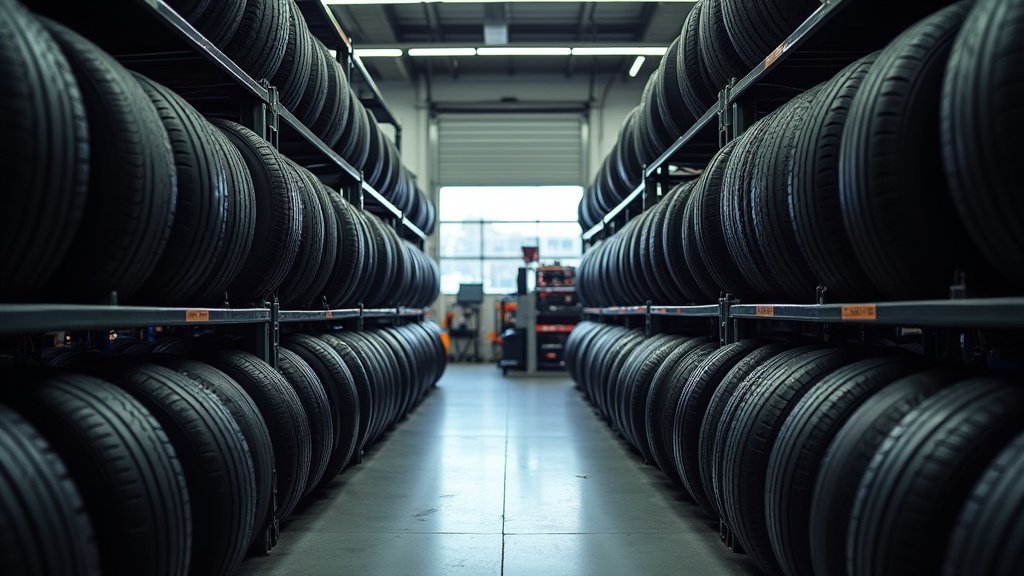
The California Energy Commission (CEC) has officially finalized a sweeping new regulatory framework for replacement tires, marking a significant, albeit controversial, shift in the state’s automotive policy. The mandate, which tightens standards for rolling resistance—the energy lost as a tire rolls and deforms under the weight of a vehicle—is designed to accelerate California’s climate objectives by improving fleet-wide fuel efficiency. However, the move has ignited a fierce debate, with industry leaders cautioning that the stringent requirements will necessitate the removal of approximately 70% of existing tire models from the California market, leading to reduced consumer choice and significant price increases for motorists.
Key Highlights
- Regulatory Shift: The CEC has mandated strict rolling resistance and wet-grip standards, prioritizing fuel efficiency across all replacement tire sales in California.
- Market Contraction: Industry experts project that compliance costs and technical feasibility constraints will force manufacturers to discontinue nearly 70% of currently available replacement tire models.
- Consumer Impact: Analysts warn that the reduction in supply, coupled with the research and development costs required to meet these standards, will likely result in higher out-of-pocket costs for California drivers.
- Safety vs. Efficiency: While the goal is fuel conservation, critics emphasize the delicate balance between low rolling resistance and tire performance, particularly regarding stopping distances on wet surfaces.
The Economics of Efficiency: Navigating the New Tire Standard
The California Energy Commission’s latest policy serves as a stark example of the friction between aggressive environmental governance and the realities of global manufacturing. At the heart of this regulation is the concept of rolling resistance. When a tire rotates, energy is dissipated as heat due to the deformation of the rubber compound against the road surface. By mandating tires with lower rolling resistance, the state aims to reduce the energy required to propel vehicles forward, thereby reducing fuel consumption and greenhouse gas emissions. While the environmental logic is sound—aligning with California’s broader net-zero ambitions—the implementation presents a logistical bottleneck for tire manufacturers and retailers.
The ‘70% Elimination’ Controversy
The most alarming figure emerging from the industry response is the estimate that 70% of current tire models will not pass the new testing thresholds. For manufacturers, re-engineering a tire to satisfy rolling resistance requirements often involves altering rubber compounds or structural design. These alterations are not merely cosmetic; they fundamentally change the performance characteristics of the tire. For many manufacturers, the cost to re-test, re-certify, and potentially re-engineer a tire model to meet the specific requirements of the California market—which remains a massive, influential economy—is prohibitive. Instead of upgrading the entire portfolio, industry insiders suggest that many brands will simply exit the California market for those specific models, effectively narrowing the consumer’s options to a select few premium or specially developed products.
The Ripple Effect on Consumer Pricing
For the average California motorist, the immediate impact may not be a sudden inability to purchase tires, but rather a contraction of price points. Historically, the aftermarket tire industry offers a diverse range of tires for every budget, from entry-level economy tires to high-performance racing rubber. The new regulations act as a de facto filter, potentially eliminating lower-cost, high-rolling-resistance options. As these ‘budget’ alternatives are phased out, consumers will likely be funneled into higher-tier, more expensive models that meet the new compliance standards. This shift effectively places the burden of regulatory compliance on the consumer’s wallet, raising concerns about the affordability of essential vehicle maintenance in a state already grappling with a high cost of living.
Technical Trade-offs: The Wet Grip Conundrum
Perhaps the most nuanced aspect of this regulation is the ‘wet grip’ performance requirement. It is an engineering maxim that increasing fuel efficiency (reducing rolling resistance) often comes at the expense of traction. A harder, ‘slippery’ rubber compound rolls more easily but may struggle to grip the road during heavy rainfall. The CEC has acknowledged this tension and included wet-grip testing standards to ensure that the drive for efficiency does not compromise public safety. However, engineers within the U.S. Tire Manufacturers Association (USTMA) and other industry bodies have noted that achieving these dual, conflicting goals—low rolling resistance and high wet-weather traction—is an expensive scientific challenge that requires advanced silica-based compounding technologies that are inherently more expensive to manufacture.
Future Outlook: Can the Market Adapt?
As the implementation dates approach, the tire industry is currently in a state of rapid adaptation. Large-scale manufacturers are shifting their R&D focus to comply with California’s standards, hoping to leverage these changes to standardize their global production lines. However, the smaller, niche manufacturers may find the barrier to entry insurmountable. The long-term success of this regulation will depend on whether the consumer fuel savings promised by the CEC—measured in reduced gasoline consumption over the life of a tire—actually offset the increased initial purchase cost for the average driver. If the savings fail to materialize or are minimal, the policy may face significant pushback from both consumer advocacy groups and the automotive aftermarket industry.
FAQ: People Also Ask
1. Does this new CEC regulation apply to the tires already on my car?
No. This regulation specifically targets the sale of replacement tires. It governs what tire shops and retailers are permitted to sell as new inventory within the state of California, not the tires currently installed on your vehicle.
2. Will this mandate actually save me money on fuel?
In theory, yes. Tires with lower rolling resistance require less energy to keep moving, which can improve fuel economy by a small percentage. However, whether these incremental fuel savings will outweigh the higher purchase price of the new, compliant tires remains a subject of ongoing debate among economists and automotive experts.
3. Will my tires be less safe because of these changes?
Not necessarily. The regulations include specific ‘wet grip’ standards designed to ensure that manufacturers do not sacrifice safety for fuel efficiency. The CEC has stated that any compliant tire must pass rigorous safety tests, ensuring that the reduction in rolling resistance does not translate to unsafe traction levels on wet pavement.
4. Is California the only state with these rules?
Currently, California is leading the charge with these specific, stringent requirements for replacement tires. Because of the state’s massive market size, many manufacturers often adopt these standards globally to avoid managing two separate supply chains, which could lead to a ‘California Effect’ where these standards eventually influence tire design nationwide.