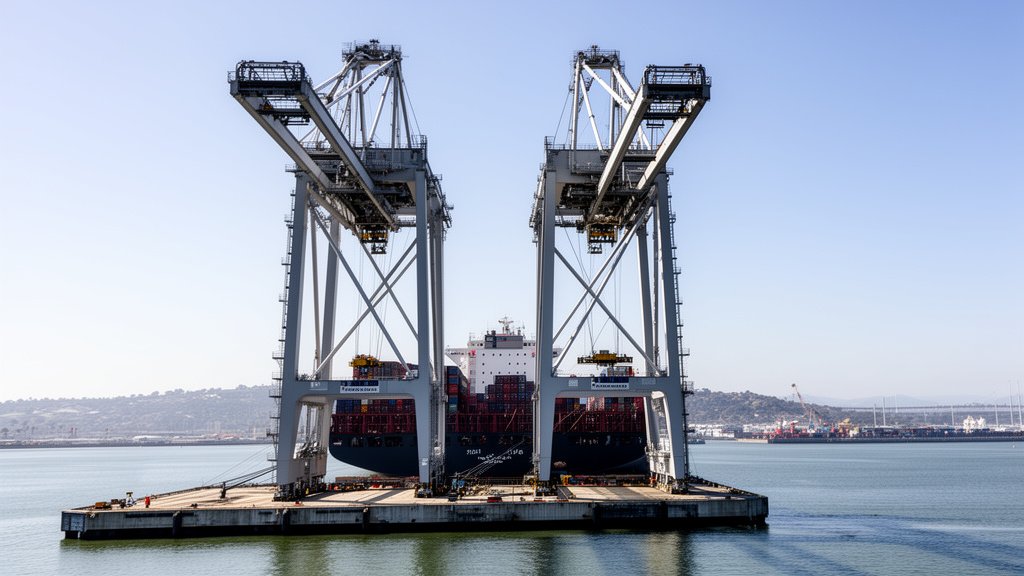
The Port of Oakland is officially pivoting toward a more sustainable and efficient future with the commissioning of two state-of-the-art, European-built electric ship-to-shore (STS) cranes at the TraPac Terminal. This multi-million dollar infrastructure upgrade represents one of the most significant investments in the port’s recent history, specifically engineered to handle the increasing demands of the world’s largest container vessels. By replacing aging, fossil-fuel-dependent machinery with advanced electric technology, the TraPac Terminal is setting a new standard for operational performance while aggressively targeting a reduction in the carbon footprint associated with global supply chain activities. This development is not merely an equipment upgrade; it is a strategic repositioning of the Port of Oakland to remain competitive in an era where environmental stewardship and logistical speed are increasingly intertwined.
Key Highlights
- Massive Scale: The new ship-to-shore cranes stand at an impressive 440 feet, allowing them to service the largest generation of container ships currently in operation.
- Sustainability Milestone: Transitioning from traditional diesel-powered systems to electric power significantly lowers greenhouse gas emissions and particulate matter at the terminal.
- Enhanced Throughput: The increased height and reach of these cranes enable faster loading and unloading times, driving improved cargo efficiency for regional importers and exporters.
- European Engineering: These specialized units utilize advanced European engineering to ensure long-term durability and precision in heavy-duty port environments.
- Competitive Positioning: This investment strengthens the Port of Oakland’s role as a vital gateway for West Coast trade, enhancing its capacity to handle complex maritime logistics.
Transforming the Waterfront: The New Era of Sustainable Port Operations
Precision Engineering for Mega-Vessels
In the competitive landscape of international maritime shipping, the ability to process massive container vessels—often referred to as ‘megaships’—is the primary determinant of a port’s success. The two new electric STS cranes at the TraPac Terminal are fundamentally designed to address this requirement. Standing 440 feet tall, these cranes provide the necessary vertical clearance and reach to service the highest stacks of containers on modern, ultra-large container vessels (ULCVs) that transit the Pacific Ocean. Unlike legacy equipment, which struggled with the physical constraints of newer ship designs, these European-built units offer enhanced reach and control, allowing for seamless operations even when vessels are fully laden. This precision engineering reduces the downtime per vessel, ensuring that the Port of Oakland can maintain a rigorous turnaround schedule that meets the high expectations of global shipping carriers.
Reducing the Carbon Footprint of Global Trade
The maritime shipping industry is under immense pressure to decarbonize, and the Port of Oakland is taking decisive action. The transition to electric cranes at TraPac is a cornerstone of this broader environmental strategy. By eliminating the reliance on diesel engines for crane operations, the port is dramatically cutting local emissions, including nitrogen oxides and soot, which are historically linked to diesel combustion. This transition aligns with California’s stringent clean air mandates and serves as a blueprint for other terminals looking to mitigate their environmental impact. The electrification of the crane fleet also enables the port to leverage California’s increasingly green electrical grid, further decoupling terminal operations from fossil fuel volatility. This is a critical move toward ‘green corridors’—shipping routes designed to prioritize sustainability at both the point of origin and the point of destination.
Operational Efficiency and the Bottom Line
While the environmental benefits are clear, the economic justification for these cranes is equally compelling. Efficient cargo handling is the lifeblood of the Bay Area’s economy. The integration of electric STS cranes optimizes the flow of goods, directly influencing the speed at which products reach retailers and consumers. Faster, more reliable crane operations lead to reduced congestion at the terminal, shorter vessel berthing times, and lower overall operational costs. For companies relying on the TraPac Terminal for their supply chain needs, this investment signals a more predictable, reliable logistical environment. As supply chains continue to recover from historic volatility, the reliability afforded by upgraded, modern machinery provides a distinct competitive advantage for Oakland compared to neighboring ports that may still be relying on legacy infrastructure.
The Technological Evolution of the TraPac Terminal
TraPac, as a major operator within the Port of Oakland, has consistently invested in automation and modernization. The addition of these cranes represents a logical next step in their technological roadmap. These units are equipped with sophisticated drive systems that not only improve lifting capacity but also provide real-time diagnostic data to operators. This telemetry allows for predictive maintenance, ensuring that the cranes are serviced before mechanical issues can disrupt terminal throughput. Furthermore, the ergonomic and technological improvements for the crane operators—who are now controlling these massive machines with greater accuracy and less fatigue—contribute to a safer and more productive work environment. The synergy between high-tech machinery and skilled human operators remains the core engine of the port’s functionality.
Future-Proofing for Global Logistics
The global maritime landscape is changing rapidly. Ships are getting larger, shipping alliances are shifting, and environmental regulations are tightening. By commissioning these 440-foot electric cranes, the Port of Oakland is future-proofing its assets. The investment acknowledges that the port cannot remain static in its methodology; it must evolve or risk obsolescence. As we look toward the next decade, the ability to facilitate high-volume, low-emission trade will likely be the benchmark by which successful ports are measured. This project proves that Oakland is not only keeping pace with these trends but is actively driving the transition toward a more modern, efficient, and environmentally responsible maritime infrastructure.
FAQ: People Also Ask
1. Why were electric cranes chosen over traditional diesel models?
Electric cranes offer a dual benefit: they provide superior operational control and durability while simultaneously eliminating local diesel emissions, which is critical for complying with environmental regulations and meeting sustainability goals.
2. Will these new cranes handle all container vessels?
Yes. The 440-foot height is specifically engineered to service the largest container vessels currently in the global fleet, ensuring the terminal can accommodate massive ships that require significant vertical reach to unload and load cargo.
3. How does this investment affect the local Oakland economy?
By improving the efficiency and throughput of the TraPac Terminal, the port strengthens its status as a reliable logistics hub. This attracts more shipping lines, sustains high-quality port jobs, and supports the local supply chain, which is essential for Bay Area commerce.
4. Is the Port of Oakland planning further electrification projects?
While specific future plans are determined by port authority and terminal operators, the successful commissioning of these cranes sets a precedent for continued electrification across the terminal, with a long-term focus on achieving zero-emission operations.