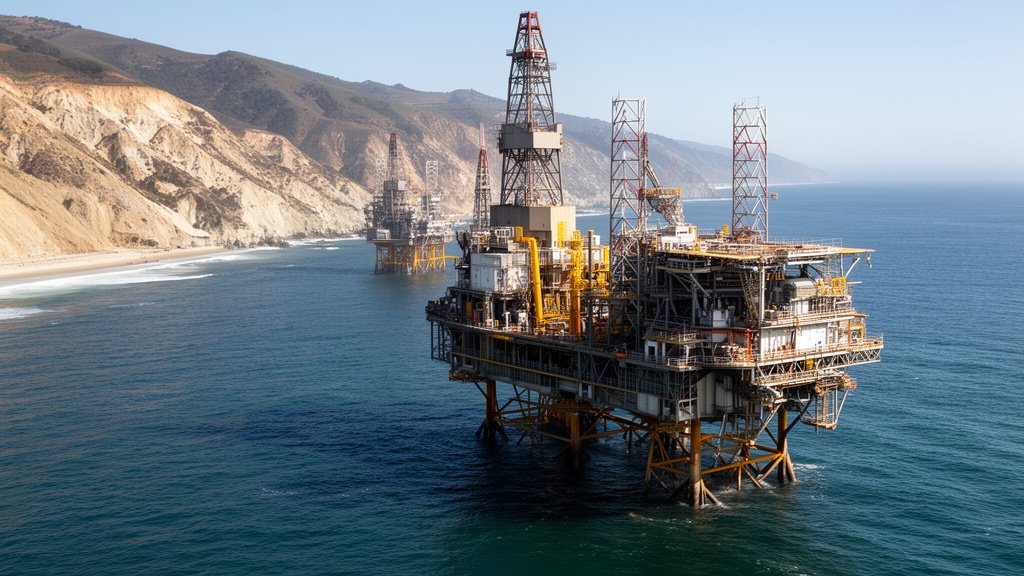
The effort to restart the long-dormant offshore oil infrastructure in Santa Barbara County has shifted from a local regulatory battle to a high-stakes federal showdown, with Donald Trump’s administration signaling a direct intervention to revive the pipeline. At the center of this controversy is Sable Offshore, the company currently navigating a labyrinth of legal and environmental hurdles to bring the Santa Ynez Unit back online. The project, which utilizes the notorious Line 901—a pipeline responsible for the devastating 2015 Refugio oil spill—has faced staunch resistance from local stakeholders, yet federal pressure has increasingly sought to override these objections, prioritizing national energy dominance over regional environmental protection.
Key Highlights
- The Infrastructure Core: The project centers on the reactivation of the Santa Ynez Unit (SYU) and the aging Line 901 pipeline, which have remained shuttered since the 2015 Refugio spill.
- The Federal Pivot: Former President Trump’s intervention centers on a broader strategy of federal energy dominance, using federal agencies to pressure local regulators who have previously denied permits.
- Local vs. Federal Conflict: Santa Barbara County officials and the California State Lands Commission are clashing with Sable Offshore, citing decades-old safety concerns and modern seismic risks.
- Sable’s Strategy: Sable Offshore, which acquired the assets from ExxonMobil, argues the pipeline is essential for national security and economic independence, positioning the restart as a “patriotic” energy project.
The Battle Over California’s Coastal Energy Legacy
The narrative surrounding the Santa Barbara offshore oil pipeline is not merely about energy production; it is a fundamental clash over the limits of local governance and the reach of federal administrative power. For decades, the Santa Barbara coastline has served as a symbol of environmental resilience, defined largely by the community’s reaction to the 1969 Santa Barbara oil spill, which effectively birthed the modern American environmental movement. When the 2015 Refugio spill released over 140,000 gallons of crude oil into the Pacific, it solidified local opposition to any future reactivation of the Line 901 pipeline.
However, the recent involvement of federal forces, encouraged by Trump-era energy policies, has forced a recalibration of these local defenses. Sable Offshore, the entity tasked with the reactivation, has been the beneficiary of this top-down regulatory environment. By framing the pipeline not as a risky industrial project, but as a critical node in national energy infrastructure, the company—supported by allies within federal departments—has attempted to bypass local California authorities who have withheld the necessary permits for pipeline operation.
Why the Focus on Santa Barbara?
The “why” behind this intervention is rooted in the strategic value of the Santa Ynez Unit. The SYU contains massive proven reserves of oil and gas. To an administration focused on deregulation and increasing domestic output, the continued closure of this facility represents an unacceptable loss of energy capacity. The goal is to set a legal precedent: if federal authority can supersede local environmental restrictions in a deeply progressive, environmentally sensitive area like Santa Barbara, it becomes exponentially easier to replicate this strategy in other states across the nation. This isn’t just about local oil; it is about establishing a federal mechanism that renders local opposition legally impotent.
The Legal and Seismic Risks
Critics, including the California State Lands Commission and various environmental advocacy groups, argue that the pipeline infrastructure is inherently compromised. The region is seismically active, and the pipeline—installed in the late 1980s—was found to be severely corroded at the time of the 2015 failure. Sable Offshore claims it has performed extensive retrofitting and integrity testing, yet local officials remain skeptical. They point out that the pipeline’s location near pristine marine sanctuaries makes any future spill an unmitigable catastrophe. The intervention from the federal level, critics argue, ignores these site-specific safety data points in favor of a binary choice: either the pipeline is active and producing, or it is a failed asset.
Economic Implications and National Security Framing
Sable Offshore’s messaging has leaned heavily into the rhetoric of energy independence. By characterizing the imported oil that would be replaced by Santa Barbara crude as a national security vulnerability, the company has effectively mobilized support from energy-centric federal lobbyists. This framing creates a political shield; anyone opposing the project on local environmental grounds can be painted as a “radical” standing in the way of American prosperity. It is a classic move in the modern political playbook: take a complex, localized environmental dispute and elevate it to a matter of national importance to bypass regional stakeholders.
The Future of the Coastal Pipeline
The saga of the Santa Barbara pipeline serves as a bellwether for the future of energy infrastructure in the United States. If Sable Offshore succeeds in restarting the line despite the intense opposition from California’s regulatory bodies, it will signal a major shift in the balance of power between Washington and state capitals. The case has become a legal tug-of-war, likely destined for the Supreme Court. As the project continues to move forward, it forces a larger question: how much control should local communities have over the environmental risks posed by national industrial energy projects?
FAQ: People Also Ask
What exactly is the Santa Ynez Unit (SYU)?
It is an offshore oil and gas production facility off the coast of Santa Barbara, California, currently managed by Sable Offshore. It includes offshore platforms and the onshore processing facility, connected to the mainland by the controversial Line 901.
Why was the pipeline shut down in 2015?
The pipeline was shuttered following the Refugio oil spill in May 2015. The line ruptured due to severe external corrosion, spilling approximately 140,000 gallons of crude oil into the ocean and onto local beaches, resulting in significant ecological damage and a multi-year legal settlement.
What role did Trump play in the pipeline restart?
The Trump administration advocated for policies that prioritize domestic energy production and deregulation. By applying federal administrative pressure and signaling support for Sable Offshore’s restart efforts, the administration sought to override local permitting delays, positioning the pipeline as a vital piece of national energy security infrastructure.
What is the biggest hurdle currently facing the project?
The primary hurdles are the withholding of required local land-use permits by Santa Barbara County and the ongoing legal scrutiny from the California State Lands Commission regarding pipeline safety, seismic integrity, and environmental liability.
How does Sable Offshore justify the risk?
Sable Offshore argues that the pipeline has undergone rigorous testing and upgrades. They contend that the economic benefit of domestic oil production, combined with modern leak detection and safety monitoring, renders the previous risks obsolete and makes the project safe for operation.