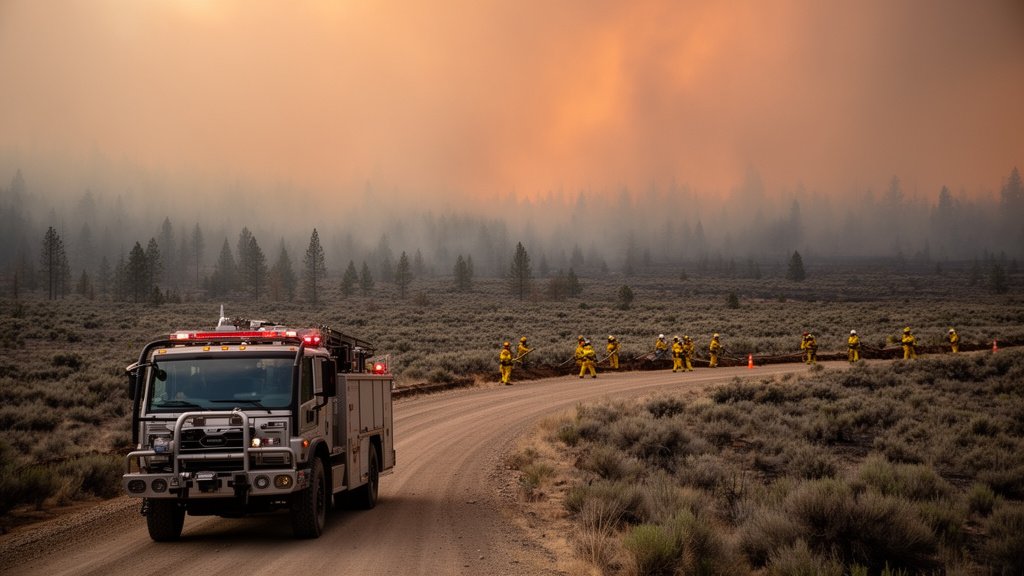
The Bench Fire is currently exerting immense pressure on residential areas in central Oregon, as erratic wind patterns and high-temperature conditions fuel rapid fire expansion. Emergency management officials are currently operating under a state of high alert, balancing the urgent necessity of defensive structure protection with the somber reality of a mounting human cost. This incident has solidified as one of the most challenging tactical situations in the region this season, with local authorities confirming the death of a fourth firefighter, who succumbed to injuries sustained during initial suppression operations.
Key Highlights
- Rapid Escalation: The Bench Fire has breached initial containment lines, with wind gusts exceeding 40 mph pushing flames toward residential infrastructure.
- Community Displacement: Mandatory evacuation orders remain in effect for the immediate perimeter as the Wildland-Urban Interface (WUI) faces critical threat levels.
- Tragic Milestone: A fourth firefighter has died due to injuries incurred during suppression efforts, marking a painful loss for the state’s wildland fire community.
- Multi-Agency Response: Federal and state agencies, including the Oregon Department of Forestry (ODF), have mobilized incident management teams to prioritize containment and public safety.
The Anatomy of the Bench Fire Crisis
The situation involving the Bench Fire in central Oregon is a stark example of the volatility inherent in modern wildfire suppression. As of the latest reports, the fire has demonstrated extreme behavior, characterized by rapid rates of spread and the formation of spot fires that challenge containment efforts. The geography of the region—a complex mosaic of timber and high-desert vegetation—is currently acting as a conduit for the flames rather than a barrier, providing ample fuel that, when combined with prevailing winds, has created a fast-moving front.
Tactical Challenges at the Frontline
Fire suppression strategy has been forced to shift from direct attack methods to defensive structure protection. When fires reach this level of intensity, Incident Command Posts (ICPs) prioritize the evacuation of civilians and the hardening of residential zones. The use of aerial resources has been occasionally hampered by high-altitude winds, limiting the ability of air tankers and helicopters to drop retardant or water effectively on the most critical parts of the fire front. Ground crews, working in brutal, smokey conditions, are focused on establishing fire lines, but the dynamic nature of the blaze often renders static lines obsolete, forcing crews to retreat and regroup frequently.
The Human Cost: A Somber Loss
Perhaps the most difficult aspect of the current situation is the confirmation that a fourth firefighter has died from injuries sustained during the operation. This loss serves as a grim reminder of the profound dangers inherent in the wildland firefighting profession. While the individual’s identity is being withheld pending full family notification, their sacrifice has reverberated across the firefighting community. Operational protocols are being reviewed to ensure that safety measures remain the top priority, though the harsh reality is that the unpredictability of wind-driven fires leaves even the most elite crews vulnerable.
Secondary Perspectives: Beyond the Flames
The Climate Connection: A Changing Fire Regime
The Bench Fire is not an isolated event; it is emblematic of a shifting fire regime in the Pacific Northwest. Historically, central Oregon’s climate allowed for distinct fire seasons with predictable weather patterns. Today, we are witnessing the emergence of year-round wildfire threats. The combination of prolonged drought periods, which dehydrate the fuel beds, and sporadic, high-velocity wind events, suggests that the region’s ecology is fundamentally changing. The National Interagency Fire Center (NIFC) has frequently highlighted how these ‘mega-fire’ conditions are becoming the new baseline, requiring communities to adapt their infrastructure far more aggressively than in previous decades.
The Economics of WUI Expansion
As residential development continues to push into the Wildland-Urban Interface, the economic stakes of wildfires have skyrocketed. The cost of fighting the Bench Fire is substantial, but it is dwarfed by the potential for property damage. Municipalities are now facing the dual burden of providing services to these expanding populations while simultaneously investing millions in fire-resistant infrastructure, such as defensible space clearing and fire-resistant roofing ordinances. The economic impact is not merely in suppression costs but in the long-term insurability of homes in these high-risk zones, creating a quiet crisis of property devaluation that may persist long after the smoke clears.
The Psychological Toll on Elite Crews
We must also acknowledge the cumulative trauma experienced by the crews on the line. Facing a fourth fatality in a single season places an enormous psychological burden on those tasked with containing the Bench Fire. Burnout and ‘compassion fatigue’ are recognized risks within the wildland firefighting community. Support networks and mental health initiatives provided by the Oregon Department of Forestry (ODF) and other agencies are being tested to their limits as they manage the morale of personnel who are simultaneously battling a physical fire and the emotional weight of their colleagues’ loss.
FAQ: People Also Ask
1. What is the current status of the evacuation orders?
Evacuation orders are dynamic and managed locally. Residents within the immediate Bench Fire perimeter should follow instructions from the county sheriff’s department and monitor emergency alerts constantly. Do not wait for a knock on the door if you are in a designated zone.
2. Why is wind such a critical factor in the Bench Fire’s growth?
Wind is the primary driver of fire spread. It dries out vegetation rapidly, pushes flames into unburnt fuel, and causes ‘spotting,’ where embers are carried long distances by wind gusts, starting new fires ahead of the main front, which makes containment significantly more difficult.
3. How does the death of the fourth firefighter affect the suppression effort?
While the tragedy is profound, the firefighting effort continues with an unwavering focus on safety. Commanders often hold ‘safety stand-downs’ or briefings to reassess risk, ensuring that operational strategy does not compromise the lives of active crew members. The loss reinforces the need for extreme caution.
4. Is there an estimated date for full containment of the Bench Fire?
Containment estimates are highly speculative due to the fire’s erratic behavior. Incident commanders generally do not provide firm dates for full containment until the fire’s forward progress is halted and a significant buffer zone is established around the perimeter.