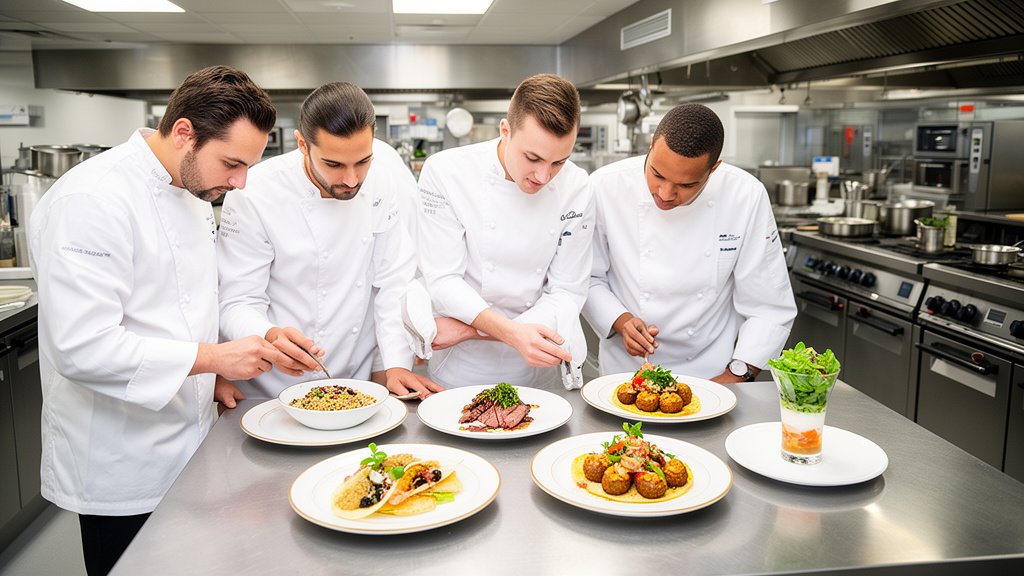
The landscape of noncommercial foodservice—covering universities, hospitals, and corporate dining—is undergoing a seismic shift. No longer content with the ‘cafeteria’ stigma, institutions are aggressively pursuing culinary excellence to drive participation and retention. This professional evolution was on full display at the inaugural FoodService Director (FSD) Chefs Immersion West Coast, a high-stakes culinary exchange where regional chefs broke down institutional silos to co-create recipes utilizing the latest industry-sponsored innovations.
The Genesis of the Immersion Model
The event was designed as a controlled laboratory environment. Unlike traditional trade shows where chefs are passive spectators, the FSD Chefs Immersion invited top-tier culinary directors and executive chefs from across the West Coast to actively engage in recipe development. The objective was clear: solve the dual crisis of labor shortages and rising ingredient costs by leveraging efficiency-driven, sponsor-provided products in ways that feel bespoke and high-end.
By forcing cross-institutional collaboration, FSD created an environment where a hospital chef and a university director had to merge their operational constraints—nutritional requirements in healthcare versus speed-of-service in higher ed—to develop scalable menu solutions. This convergence of perspectives is becoming the standard for modern foodservice R&D.
The 5 Standout Dishes: A New Culinary Blueprint
The heart of the immersion resulted in five core dishes that demonstrate how industrial efficiency can meet artisanal execution. These dishes serve as a roadmap for institutions looking to elevate their menus without bloating labor budgets.
1. The ‘Global-Local’ Umami Grain Bowl
This dish leveraged plant-based protein sponsors to create a base that functions as both a main and a side. By utilizing ancient grains pre-cooked for efficiency, chefs added complexity through a custom-made chili-lime vinaigrette and a pickled vegetable slaw. This dish proved that plant-forward eating doesn’t require complex scratch-prep, provided the flavor profile is punchy and globally inspired.
2. The Elevated Sheet-Pan Brisket
Addressing the challenge of slow-cooking, this dish utilized pre-smoked, sponsor-supplied protein. Chefs transformed the base product into a ‘deconstructed street taco’ plate. By focusing on the vessel (house-made corn tortillas) and the garnish (a fresh pico de gallo made in-house), they managed to produce a high-end Mexican concept dish with minimal active cooking time.
3. The Sustainable ‘Nose-to-Tail’ Turkey Meatball
Using high-yield poultry products, the chefs created a meatball that focused on sustainability and texture. The innovation here was the addition of hidden root vegetables—finely minced and sautéed—which extended the yield of the meat by 30% while significantly lowering food costs. This technique is critical for operators battling rising commodity prices.
4. The ‘Flash-Seared’ Seafood Tostada
In this experiment, chefs utilized quick-thaw, individually quick-frozen (IQF) seafood to create a premium offering. The dish was defined by a rapid-searing process that locked in moisture, served over a crispy tortilla with a chimichurri sauce. It demonstrated how IQF technology has advanced to the point where, with the right chef intervention, it rivals fresh-catch quality.
5. The Zero-Waste Dessert Parfait
Focusing on the ‘back-end’ of the menu, this dish utilized pastry components and leftover fresh fruit from other stations. By transforming fruit scraps into a compote and using sponsor-provided dairy-free creams, the chefs created a high-margin dessert that effectively achieved a zero-waste metric for the day.
Industry Implications: The Shift Toward ‘R&D-Lite’
The FSD Chefs Immersion West Coast highlights a growing trend: the professionalization of the institutional kitchen. As operators face tighter margins, the ‘Chef as R&D’ model is becoming essential. By working in partnership with industry sponsors, these chefs are not just cooking; they are stress-testing supply chain innovations before they hit mass market.
This shift moves the needle from simple ‘cost-plus’ purchasing to strategic sourcing. When an operator can co-develop a recipe with a manufacturer, they gain operational IP—intellectual property—that makes their menu distinct from their competitors, even when using the same base products.
Secondary Angles: Future-Proofing Noncommercial Food
1. The Labor-Efficiency Paradox: The immersion confirmed that labor savings are no longer found by ‘cutting’ labor, but by investing in products that minimize prep hours. These five dishes were explicitly designed to be assembled by entry-level staff while maintaining a ‘chef-driven’ presentation.
2. Sustainability as a P&L Driver: We are seeing a move away from sustainability being a ‘nice to have.’ In the recipes created, sustainability was used as a tool to lower COGS (Cost of Goods Sold). Utilizing secondary cuts, vegetable extenders, and root-to-stem cooking are now economic imperatives, not just ethical choices.
3. The Rise of the ‘Destination’ Cafeteria: By utilizing these recipes, institutions are attempting to retain their ‘captive’ audiences—students and employees who might otherwise order delivery. The immersion process proves that the key to retention is treating institutional dining with the same level of creative rigor as a fast-casual restaurant chain.
FAQ: People Also Ask
Q: What is the FSD Chefs Immersion program?
A: It is an exclusive culinary exchange program hosted by FoodService Director that brings together chefs from noncommercial sectors—such as healthcare, B&I (Business & Industry), and higher education—to collaborate on recipe development and product testing.
Q: How does this event impact commercial food manufacturers?
A: It provides manufacturers with direct, unfiltered feedback from high-volume operators, allowing them to iterate on their products based on the specific needs of institutional kitchens (e.g., holding stability, prep speed, and nutritional compliance).
Q: Are these recipes available for public use?
A: While the specific recipes were developed for the event, FSD often publishes the findings and methodologies to help other operators implement similar strategies in their own kitchens.
Q: Why is this ‘West Coast’ event significant?
A: The West Coast region is widely considered the trendsetter for food innovation in the U.S., particularly regarding plant-forward diets, sustainability, and fusion cuisine. Hosting the inaugural event there set a high bar for culinary expectations in the institutional space.