The 2026 iteration of Lollapalooza will be remembered not for its seamless execution, but for its resilience against the climate crisis and the sheer artistic ambition of its legacy headliners. Over the first weekend of August 2026, Chicago’s Grant Park faced a series of severe convective storms that forced the most significant operational pivot in the festival’s recent history. Despite the widespread cancellation and rescheduling of major sets that left tens of thousands of fans in limbo, the narrative of the weekend was reclaimed by The Smashing Pumpkins. In a ‘reunion-style’ spectacle that effectively bridged the gap between 90s alternative rock and modern pop-punk, the band delivered a transformative performance featuring surprise guest appearances from Olivia Rodrigo and Yungblud, signaling a new, collaborative era for the touring industry.
Key Highlights
- Weather Crisis: Severe flooding and high-wind warnings forced the cancellation or postponement of over 15 scheduled sets on Saturday, August 1st, prompting major evacuation protocols across Grant Park.
- The Smashing Pumpkins Spectacle: Despite the chaos, the band’s headlining set proceeded, serving as the cultural anchor of the weekend and a masterclass in festival crisis management.
- Cross-Generational Collaboration: The set featured highly anticipated guest appearances by Olivia Rodrigo and Yungblud, marking one of the most significant cross-genre crossovers in recent festival history.
- Economic Resilience: The event highlights the growing importance of extreme weather insurance and flexible scheduling in the modern touring landscape.
The Chicago Tempest and the Future of Festival Operations
The logistical nightmare that defined the opening days of Lollapalooza 2026 underscores a harsh reality facing the global live music industry: the increasing volatility of extreme weather. On August 1st, as the ‘Flashpoint Alpha’ storm system moved through Cook County, C3 Presents and city officials were forced to enact emergency protocols. The rainfall, which exceeded three inches in under four hours, turned the park’s main thoroughfares into saturated flood zones, rendering sound engineering and electrical equipment on secondary stages unusable.
For industry stakeholders, this wasn’t merely a weather event; it was a stress test for modern festival infrastructure. Historically, festivals operate on rigid, minute-by-minute schedules. The 2026 Lollapalooza update demonstrates that the ‘new normal’ requires a shift toward fluid, dynamic programming. While the financial impact of mass cancellations—including refunds, logistics, and insurance claims—remains under internal review by stakeholders, the event has reignited discussions regarding the sustainability of outdoor, multi-day festivals in major urban centers. The reliance on legacy systems of stage management is being challenged by the necessity of rapid response capability. We are likely to see a shift in venue insurance premiums and a mandate for improved drainage infrastructure in public spaces that host high-density concerts.
The Smashing Pumpkins: A Masterclass in Legacy Performance
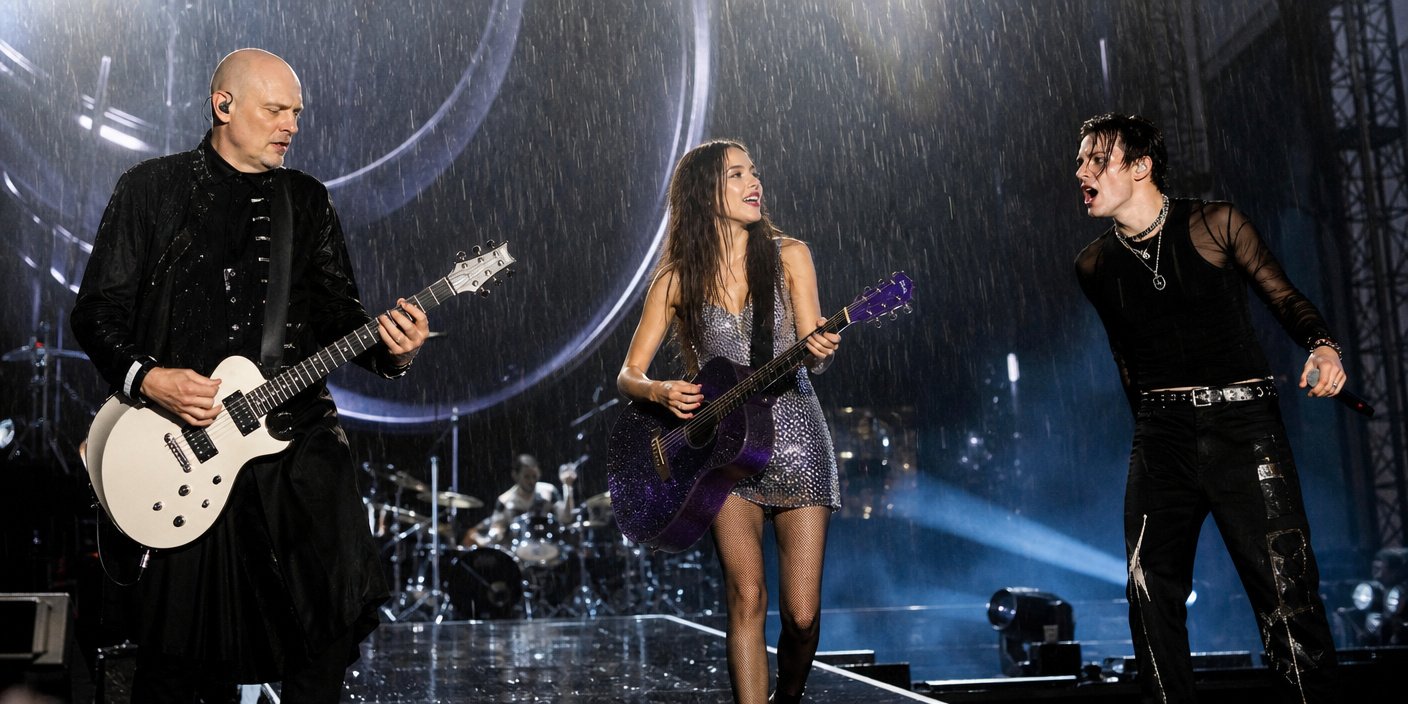
Amidst the backdrop of evacuation sirens and stage crews scrambling to cover equipment, The Smashing Pumpkins’ performance emerged as a defiance of the elements. Frontman Billy Corgan, leveraging decades of performance experience, orchestrated what was widely described as a ‘reunion-style’ set. The production design was intentionally raw, utilizing stripped-back lighting that cut through the heavy, rain-saturated atmosphere, creating a cinematic visual aesthetic that defined the weekend.
This was not a standard nostalgia tour. By maintaining a high-fidelity soundscape even under adverse conditions, the band proved that legacy acts possess a unique capacity to anchor a festival’s emotional narrative. The technical precision required to keep a set running while the surrounding infrastructure was collapsing suggests that the band and their production team had optimized their setup for modularity—a trend that other legacy artists will undoubtedly emulate in future touring seasons.
Generational Fusion: The Rodrigo and Yungblud Factor
The most discussed moment of the festival was undoubtedly the inclusion of Olivia Rodrigo and Yungblud. Their appearance during The Smashing Pumpkins’ set was not merely a cameo; it was a strategic integration of fanbases. When Rodrigo joined the band for a blistering rendition of ‘Cherub Rock,’ and Yungblud later stepped out for ‘Zero,’ the demographic tension that typically separates 90s alt-rock from contemporary pop-punk evaporated.
From a market perspective, this is a blueprint for future artist management. By placing legacy acts in collaborative settings with Gen-Z superstars, the industry is effectively mitigating the risk of generational alienation. This collaboration strategy keeps the legacy artist relevant to a younger demographic while providing the younger artists with the ‘stamp of approval’ from industry titans. The data surrounding social media engagement during these specific sets suggests that the ‘halo effect’ of this collaboration provided the festival with its highest peak in earned media value for the entire year.
Economic Implications and the Outlook
While the weekend served as a triumph for the artists, the underlying economics of the festival present a complex picture. The costs associated with rescheduling—including overtime pay for crews, localized security costs, and the inevitable surge in insurance premiums for the 2027 cycle—are substantial. The industry is currently observing a ‘re-pricing’ of risk for outdoor festivals. We expect to see a surge in the implementation of hybrid-indoor venue strategies, where major headliners are guaranteed a secondary, climate-controlled space in the event of an ‘Act of God’ declaration.
Furthermore, the Smashing Pumpkins’ successful pivot suggests that ‘surprise guest’ culture is evolving from a novelty into a necessary tool for event stabilization. When the schedule fails, the talent must fill the gap. The ability to pull in globally recognized stars like Rodrigo, even on short notice, turned a potential PR disaster into a viral success story. This is the new gold standard for festival booking: agility, collaboration, and an unwavering commitment to the performance, regardless of the forecast.
FAQ: People Also Ask
How did Lollapalooza 2026 manage the safety risks associated with the August 1st flooding?
Festival organizers activated a phased evacuation plan, prioritizing the safety of the main staging areas first. By utilizing a real-time communications network, organizers coordinated with local authorities to pause and resume sets, focusing on ‘Flashpoint’ updates to ensure the safety of both artists and attendees. The operational focus was strictly on mitigating electrical hazards caused by standing water near the main power grids.
Was the Smashing Pumpkins’ set officially considered a ‘reunion’?
While not a full-band reunion of the 1993 lineup, the aesthetic, setlist, and ‘reunion-style’ branding were explicitly utilized by the band to invoke that specific era. The inclusion of guests served to frame the performance as a bridge between the classic era and the modern day, rather than a traditional ‘greatest hits’ retrospective.
How does the inclusion of artists like Olivia Rodrigo impact festival booking strategies?
Collaborations like the one at Lollapalooza 2026 demonstrate the ‘bridge’ strategy. Promoters are increasingly looking for legacy acts who are willing to curate guest appearances from current chart-toppers. This minimizes the risk of low turnout from younger demographics at legacy-led sets and maximizes the viral potential and social media reach of the festival, transforming a single performance into a cross-generational media event.