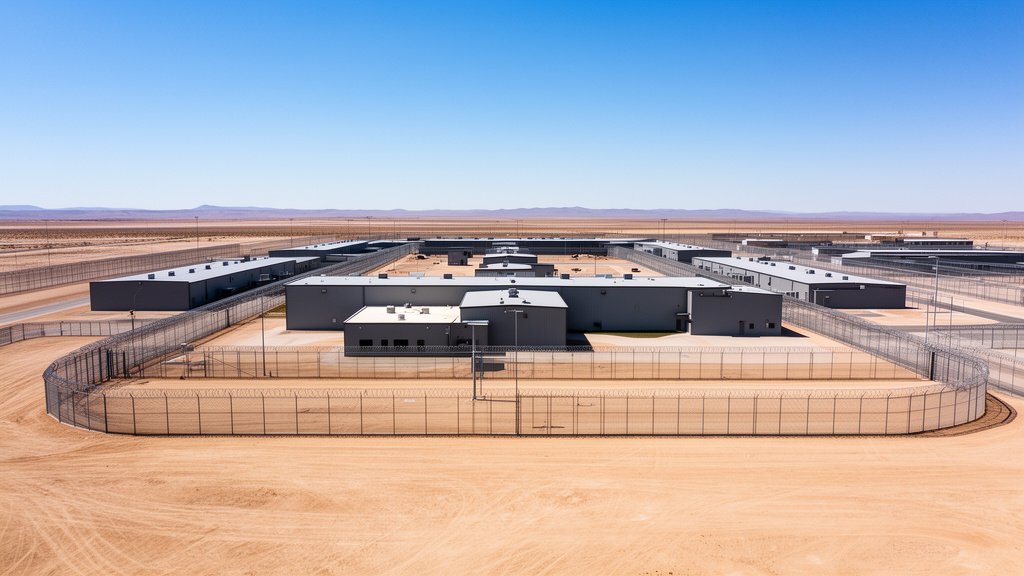
The U.S. Department of Homeland Security (DHS) has finalized a $1.5 billion acquisition of the Otay Mesa and California City detention centers from private operator CoreCivic, a move that signals a hardening of federal resolve to secure long-term immigration detention capacity. This transaction, executed despite California’s landmark legislative efforts to phase out for-profit, privately run detention facilities, marks a critical turning point in the tug-of-war between federal immigration enforcement mandates and state-level sovereignty. By purchasing the facilities outright, the federal government effectively removes the “private operator” label that California authorities sought to regulate out of existence, positioning the sites as government-controlled assets to fulfill essential national security and immigration processing functions.
The Strategic Pivot: Navigating State Legislation
The acquisition centers on a direct conflict between federal authority and California’s Assembly Bill 32 (AB 32), which was signed into law in 2019 to gradually eliminate private, for-profit detention centers and prisons. While the state viewed the legislation as a moral imperative to end the profit motive behind incarceration, the DHS viewed it as an existential threat to its operational capacity in a high-demand region.
The $1.5 billion purchase serves as an end-run around the intent of AB 32. By shifting ownership from a private corporation to the federal government, the facilities are no longer subject to the same state-level restrictions that applied when they were leased. Legal analysts have pointed to the “Supremacy Clause” of the U.S. Constitution as the likely bedrock of the federal position: the argument that federal immigration enforcement functions must not be hindered by state law, particularly when the federal government is acting as the proprietor of the facility itself.
Inside the Facilities: Otay Mesa and California City
The two facilities involved in this deal are significant in scale and strategic importance. The Otay Mesa Detention Center, located in San Diego County, has long been a primary hub for Immigration and Customs Enforcement (ICE) operations, housing hundreds of detainees and providing vital proximity to the U.S.-Mexico border.
California City Correctional Center, located in the High Desert of Kern County, offers a different strategic utility. While its remote location has often been a point of contention for advocates citing difficulty in accessing legal counsel, its capacity allows the federal government to maintain a buffer of space, ensuring that overflow during times of increased migration does not create systemic bottlenecks. By securing ownership of these specific sites, the DHS has insulated its detention infrastructure from the threat of local municipality pressure or state regulatory shifts, securing a baseline of bed space that it deemed non-negotiable.
The Economic and Operational Ripple Effects
While the federal government frames this as a necessity for national security and border management, the transition will have profound economic and operational ripple effects. For CoreCivic, the sale represents a major portfolio divestment, though the company will likely continue to face a shrinking market for private detention in states with similar restrictive legislation.
For the surrounding communities—particularly in the rural areas near California City—the changeover from a private facility to a federal installation brings stability. These facilities are often the largest employers in their respective regions. Federal ownership suggests that these sites are now permanent fixtures of the federal landscape, rather than volatile commercial operations subject to the whims of quarterly earnings and state political headwinds. However, this permanence also crystallizes the long-term presence of federal detention in California, potentially dampening the hopes of activists who sought to see these facilities shuttered entirely.
Examining Federal Supremacy and Future Litigation
The legal fallout of this acquisition is far from over. The purchase sets a high-stakes precedent: can the federal government “buy” its way out of state laws that conflict with its operational mandates? Legal experts anticipate that this move will trigger a new wave of litigation. If the federal government successfully invokes sovereign immunity or federal supremacy to nullify local regulatory oversight at these sites, it could provide a blueprint for federal agencies to replicate this strategy across other industries and states.
Conversely, if the state attempts to challenge the sale or impose new zoning or environmental regulations on these now-federalized sites, the courts will be forced to rule on the outer limits of the Supremacy Clause in the context of private-to-public real estate transactions. This is not merely a purchase; it is a legal gambit that redefines the relationship between federal enforcement powers and state-level policy innovation.
The Long-Term Outlook for Immigration Detention
As the U.S. looks toward the future of immigration policy, the $1.5 billion investment suggests that the status quo—detention—is expected to remain a primary tool of the system for the foreseeable future. The decision by DHS to sink such a significant capital investment into these sites indicates that federal planners do not anticipate a move away from physical detention as a mechanism for processing or holding migrants.
This purchase solidifies the geography of federal detention for the coming decades. It suggests that despite the political volatility surrounding immigration in the United States, the bureaucratic and operational apparatus is firmly entrenched, and the federal government is willing to leverage its massive purchasing power to ensure that its facilities remain open and fully functional, regardless of the legislative climate in the host state.
FAQ: People Also Ask
Q: What is AB 32 and how did it affect this deal?
A: AB 32 is a 2019 California law designed to phase out private, for-profit detention centers and prisons. It created significant pressure on the federal government by threatening the viability of ICE detention contracts. The federal purchase bypasses these restrictions by moving the facilities into federal ownership, making them exempt from the state’s private-sector regulations.
Q: What happens to the employees at these facilities?
A: While the ownership has transferred to the federal government, the daily operations will continue. In many such federal acquisitions, existing staff are often retained through contractor agreements to ensure continuity of operations, though the reporting structure shifts from the corporate entity to the federal agency.
Q: Why was the $1.5 billion price tag so high?
A: The valuation reflects the strategic value of the land, the existing physical infrastructure, and the operational “readiness” of the facilities. Securing immediate access to large-capacity detention centers in a state that is actively legislating against them comes at a premium, representing both real estate value and “operational security” costs.
Q: Could California attempt to block this purchase?
A: Challenges are possible, typically focusing on zoning, environmental impact studies, or labor regulations. However, the Supremacy Clause of the U.S. Constitution generally grants the federal government significant latitude in its own operations, making it very difficult for states to legally prevent federal agencies from buying and operating property for federal purposes.