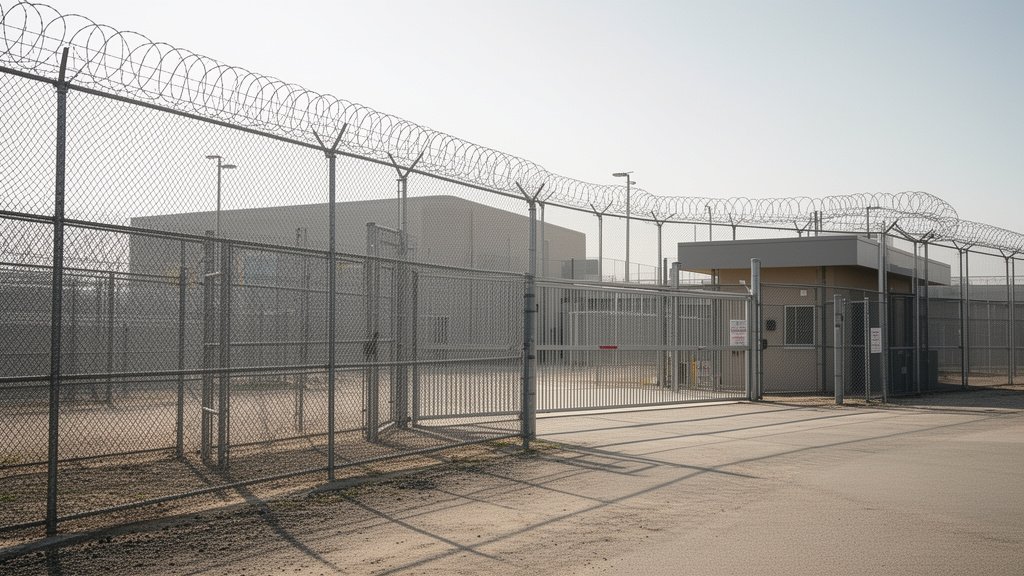
Immigration and Customs Enforcement (ICE) has ignited a nationwide debate following the implementation of a strict “no-contact” visitation policy at its largest detention facility in California. The move, which explicitly bans physical contact—including the ability for families to embrace or hold hands during visits—has been met with intense scrutiny from civil rights organizations, legal advocates, and families who argue the policy inflicts unnecessary psychological harm on detainees and their loved ones.
Key Highlights
- The Policy Shift: ICE has formally prohibited all forms of physical contact between detainees and visitors, replacing traditional face-to-face sessions with non-contact, glass-partitioned visitation protocols.
- The Human Impact: Families report that the inability to offer physical comfort to detained relatives, particularly children visiting parents, is exacerbating the trauma already associated with long-term detention.
- Security vs. Welfare: While ICE maintains that the policy is a necessary security measure to prevent contraband smuggling and ensure facility safety, advocates characterize it as a punitive measure designed to isolate vulnerable populations.
- Escalating Protests: Civil rights groups are calling for an immediate reversal of the policy, citing constitutional concerns regarding the right to familial association and humane treatment standards.
The Wall Between Families: Analyzing the New ICE Visitation Protocol
At the heart of the latest controversy is the reconfiguration of the visitor experience within the facility’s secure zone. For years, visitation in many low-to-medium security wings allowed for limited, supervised physical interaction—a vital lifeline for mental health and family stability. The new policy mandates a “zero-contact” environment, requiring all visitors to communicate through reinforced glass barriers, utilizing telephone handsets as the sole medium for conversation.
The Security Argument vs. Civil Rights
The Department of Homeland Security (DHS) and local ICE management have defended the move as a “hardening” of facility protocols. According to agency spokespeople, the presence of contraband in detention centers—ranging from illicit substances to unauthorized electronic devices—has reached levels that necessitate drastic preventive action. The logic follows that limiting the physical proximity between the public and the detainee population creates a safer, more controlled environment for corrections officers and inmates alike.
However, this security-first approach is being challenged by organizations such as the American Civil Liberties Union (ACLU) and local immigrant rights coalitions. These groups argue that the policy is fundamentally dehumanizing. They contend that detention centers, which are technically civil (not criminal) holding facilities, should operate under standards that prioritize familial cohesion rather than prison-like isolation. By eliminating the ability for a parent to hug their child or for spouses to find solace in a touch, ICE is accused of inflicting “psychological violence” that serves no demonstrable security purpose, but rather punishes families for the immigration status of their loved ones.
The Psychological Cost of Isolation
Psychologists and social workers familiar with the immigration detention system warn that this policy could have severe long-term consequences. For many, a detention center is a site of extreme uncertainty and high stress. The physical touch of a family member is often the only remaining connection to a life outside the facility. Studies on incarceration consistently show that visitation frequency and quality are directly correlated with lower recidivism rates and improved mental health. By severing this physical link, critics argue that ICE is effectively increasing the vulnerability of the detainees to depression, anxiety, and trauma-induced behavioral issues.
Legal Precedents and Future Challenges
The legal landscape surrounding visitation rights in detention is complex. Historically, courts have granted broad discretion to detention facility operators to determine safety protocols. However, there is a growing push to challenge whether such restrictive policies violate the Fifth Amendment rights of families to associate. Legal scholars are watching closely to see if this California-based policy becomes a testing ground for a nationwide rollout. If the policy withstands initial legal challenges, it could set a dangerous precedent, allowing for the widespread erosion of rights in privatized and government-run detention centers alike.
FAQ: People Also Ask
Q: What is the primary justification for the ICE contact ban?
A: ICE officials cite facility safety, specifically the need to curb the entry of contraband, as the primary driver for the policy. They argue that physical contact points provide too many opportunities for the smuggling of illicit items.
Q: How does this policy affect children visiting detained parents?
A: Critics argue the impact is most severe for children. The inability to physically hug or interact with a detained parent can lead to profound emotional distress, fear, and a sense of abandonment, which advocates warn can have lasting developmental impacts.
Q: Is this policy being implemented nationwide?
A: Currently, the policy is focused on the specific California facility. However, immigrant rights advocates fear this could be a pilot program intended for broader expansion across the ICE detention network.
Q: Are there any exceptions to the ‘no-contact’ rule?
A: As of the current report, the policy is described as strict and comprehensive. While legal counsel usually retains the right to communicate with clients, the rules for family and social visits have been broadly restricted to non-contact protocols.