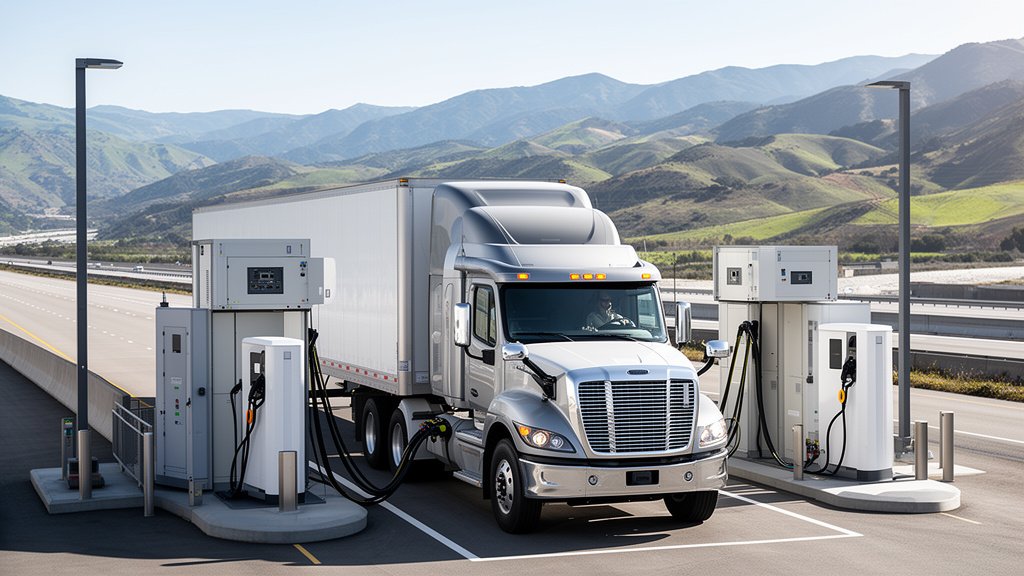
The Pacific coast of North America is set to become the world’s most significant testing ground for sustainable heavy-duty logistics. In a sweeping policy alignment, leaders from California, Oregon, Washington, and British Columbia, alongside partners in Baja, Mexico, have pledged to establish a unified, seamless infrastructure corridor dedicated to electric heavy-duty trucks. This initiative, which targets the I-5 freight artery—a 1,500-mile stretch that serves as the backbone of trade for the Western United States—aims to eliminate the ‘range anxiety’ that has historically stymied the transition from diesel to zero-emission technology for long-haul trucking.
Key Highlights
- Geographic Scope: A continuous, electrified infrastructure network spanning from Baja, Mexico, through the U.S. West Coast states, ending in British Columbia, Canada.
- Technology Agnostic: The infrastructure plan supports both Battery Electric Vehicles (BEVs) and Hydrogen Fuel Cell Electric Vehicles (FCEVs) to meet diverse range and load requirements.
- Grid Integration: A multi-state commitment to massive electrical grid upgrades and on-site energy storage, ensuring reliable, high-speed charging for class-8 heavy-duty vehicles.
- Economic Driver: The project aims to reduce long-term logistics costs and achieve state-mandated carbon neutrality goals by 2035.
The Architecture of a Continental Shift
The commitment to an electrified Baja-to-Canada corridor represents more than just a series of charging stations; it is a fundamental shift in how the North American supply chain operates. Historically, heavy-duty trucking has been the most difficult sector to decarbonize due to the immense energy demands of hauling 80,000-pound loads over mountainous terrain and long distances. By creating a unified, multi-state charging ecosystem, policymakers are attempting to lower the barrier to entry for logistics fleets that have been hesitant to switch to electric propulsion.
Scaling the Infrastructure Challenge
Unlike passenger vehicle charging, heavy-duty electric trucks (HDETs) require ‘megawatt charging’ systems. Current standard fast-chargers are insufficient for the duty cycles of long-haul freight. The pledge includes a mandate for high-speed, high-voltage charging nodes located at strategic intervals—specifically at major logistics hubs, ports, and freight depots. According to the North American Council for Freight Efficiency (NACFE), optimizing these nodes is critical to achieving the same operational efficiency as diesel, which currently dictates the economics of the freight industry.
The Grid and the Energy Mix
One of the most complex hurdles identified by the regional leaders is grid stability. Integrating large-scale charging hubs into the local energy distribution network requires massive capital investment in substations and on-site energy storage (battery arrays). The initiative proposes a model where charging stations act as grid-balancing assets, absorbing renewable energy (solar and wind) during peak production hours and deploying it when freight demand spikes at night. This ensures that the trucks are not just running on electricity, but on decarbonized electricity.
Economic Implications for the Supply Chain
Logistics firms operate on razor-thin margins, where fuel represents the single largest variable cost. The long-term vision of this initiative is to leverage the lower cost of electricity—relative to diesel—to lower the total cost of ownership (TCO) for fleet operators. By providing a reliable, standardized network, the corridor allows companies to predict their energy costs with higher accuracy. Furthermore, with California’s Advanced Clean Trucks (ACT) regulation already in effect, this infrastructure acts as the necessary ‘enabler’ for manufacturers to meet state requirements for zero-emission fleet sales.
Cross-Border Collaboration and Regulatory Harmony
Perhaps the most ambitious aspect of the pledge is the integration of Baja, Mexico, and British Columbia, Canada. Cross-border logistics are notorious for regulatory bottlenecks. By standardizing charging protocols and interoperability standards across international lines, the initiative aims to create a ‘frictionless’ transit zone. This includes harmonizing technical standards for chargers, ensuring that a truck loaded in San Diego can charge in Vancouver without needing different proprietary equipment or software subscriptions.
Future-Proofing: Hydrogen vs. Battery
The initiative acknowledges that a one-size-fits-all approach is insufficient for the rugged topography of the West Coast. While battery electric trucks are ideal for urban and regional deliveries (the ‘drayage’ sectors), hydrogen fuel cells offer advantages for long-haul routes crossing the Cascade Range or the Siskiyou Mountains. The corridor plan includes dedicated hydrogen fueling stations co-located with electric charging, creating a ‘refueling oasis’ model that guarantees uptime for fleet managers regardless of their powertrain preference.
FAQ: People Also Ask
Q: What is the primary purpose of the Baja-to-Canada corridor?
A: To eliminate range anxiety for heavy-duty electric truck operators by creating a continuous, reliable network of charging and fueling infrastructure along the 1,500-mile I-5 corridor, facilitating the transition to zero-emission freight.
Q: How will the grid handle the massive electricity demand of these trucks?
A: The initiative includes plans for localized grid upgrades, smart-charging management, and on-site energy storage (battery buffers) to ensure that the increased demand does not destabilize the local utility distribution systems during peak usage times.
Q: Will this initiative cover just electric battery trucks, or hydrogen as well?
A: The pledge is technology-agnostic and includes support for both battery-electric and hydrogen fuel cell infrastructure, recognizing that each technology serves different segments of the freight and heavy-duty transport market.