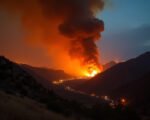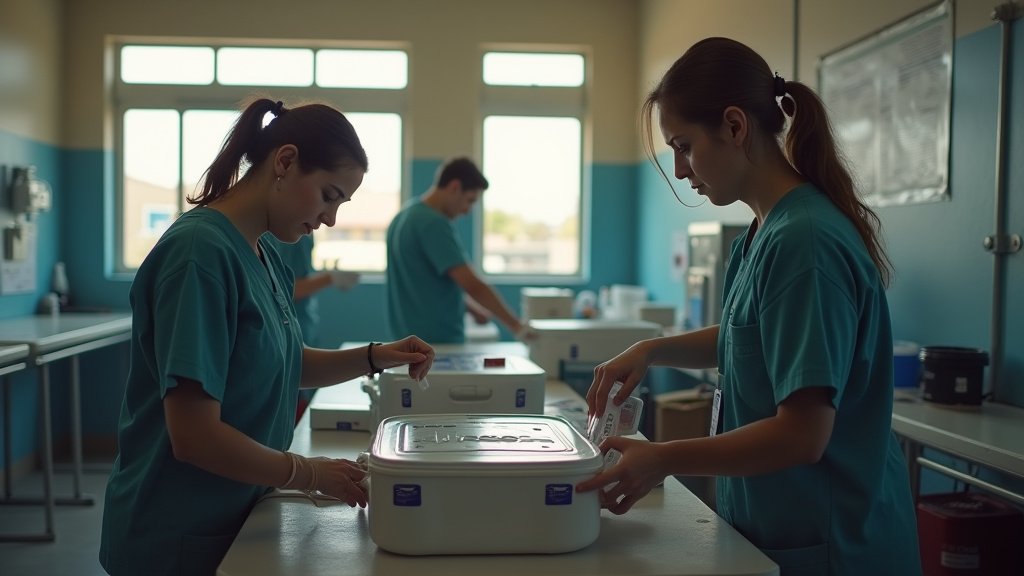
The American Red Cross has officially declared a national emergency blood shortage, a critical designation prompted by the compounding effects of ongoing regional wildfire disasters across the West Coast. As Oregon, Washington, and California grapple with historic fire seasons, the infrastructure required to collect, process, and distribute blood has been severely compromised. This convergence of environmental catastrophe and medical logistics has created a “perfect storm,” leaving hospitals on edge as they brace for a potential inability to meet surgical and trauma-related demands. The organization is now issuing a desperate call for eligible donors to schedule appointments immediately, emphasizing that the current supply is dangerously thin.
Key Highlights
- Emergency Designation: The American Red Cross has formally declared a blood shortage emergency as supply levels hit critical lows.
- Disaster Displacement: Wildfires in Oregon, Washington, and California have shuttered blood drive locations and displaced potential donors, halting collection in key geographic hubs.
- Type O Urgency: There is a specific, heightened demand for Type O Negative and Type O Positive blood, the universal types most frequently used in trauma care.
- Supply Chain Fragility: Power outages and smoke-related visibility issues have hindered the transportation of existing blood supplies to regions with the highest immediate need.
The Anatomy of a Blood Supply Crisis
The American Red Cross blood supply chain operates on a “just-in-time” model, meaning the time from donation to delivery at a hospital is often measured in days, not weeks. When disasters like the current West Coast wildfires occur, this fragile chain is immediately severed. The crisis is not merely a shortage of potential donors; it is a breakdown of the logistics of accessibility.
The Collision of Disasters and Logistics
When a wildfire necessitates the evacuation of a town or city, it creates a dual-threat environment for blood banking. First, thousands of potential donors are physically displaced, making them unable to attend pre-scheduled blood drives. Second, many Red Cross donation centers—often located in community centers, schools, or local event halls—are forced to close because those buildings are either under evacuation orders or are being repurposed as temporary shelters for wildfire victims.
Furthermore, the logistical network is strained by the very fires intended to be fought. Smoke and air quality hazards, coupled with the closure of primary highway arteries, slow the transport of collected blood from the West Coast to regional distribution hubs. Even in areas not directly touched by fire, the secondary effects of mass power outages disrupt the strictly temperature-controlled cold chain required to keep blood products viable. A power failure at a storage facility can ruin days of collection in a matter of hours, adding significant pressure to an already thinning reserve.
Understanding the Universal Donor Urgency
While all blood types are currently requested, the Red Cross is highlighting a specific, acute need for Type O Negative and Type O Positive donors. Type O Negative is the universal blood type, meaning it can be transfused to any patient regardless of their blood type. In trauma situations—which are frequent in disaster response scenarios—doctors do not have the time to blood-type a patient before administering life-saving transfusions. Consequently, trauma centers rely almost exclusively on Type O Negative during emergencies. When the supply of “universal” blood dips below a certain safety threshold, it fundamentally changes how hospitals manage their ERs, often forcing the delay of elective surgeries to reserve remaining stocks for trauma cases.
Secondary Angles: Beyond the Immediate Shortage
To understand the full scope of this emergency, we must look beyond the immediate plea for needles and veins to the systemic factors currently at play.
Historical Context: The “Disaster Exhaustion” Phenomenon
This is not the first time wildfire season has impacted blood supply, but analysts are observing a new phenomenon: “disaster exhaustion.” In previous decades, blood shortages were usually isolated to specific regions. Today, the scale of wildfires in states like Oregon and California spans hundreds of miles, affecting multiple donor regions simultaneously. Historically, the Red Cross could mobilize volunteers from neighboring states to fill gaps. Now, because disasters are regional rather than local, there are fewer “unaffected” neighbors to call upon for supplemental staffing and mobile drive support. This systemic strain requires the Red Cross to rethink its national distribution strategy, moving blood across the country more frequently than ever before to cover the “fire-impacted” zones.
The Economic and Operational Impact
There is a massive, often overlooked economic cost to this emergency. Transporting blood units is a multi-million dollar logistical undertaking. When regional centers go offline, the Red Cross must re-route supplies from non-impacted zones (such as the Midwest or the South). The cost of expedited freight, refrigerated transport, and overtime staffing for logistics teams creates a significant budgetary deficit. These costs are ultimately borne by the organization’s disaster relief fund, which is already stretched thin by the immediate needs of wildfire victims—providing shelter, food, and counseling. Essentially, the wildfire crisis is draining the organization’s operational budget from two directions: the cost of providing aid to survivors and the cost of maintaining the blood supply chain.
Future Predictions: Climate Resilience in Blood Banking
Looking toward the future, the Red Cross and other public health agencies are beginning to discuss “climate-resilient” blood collection strategies. This includes building hardened, mobile collection units that are capable of operating during power grid failures and developing satellite distribution hubs that can function autonomously when major regional centers are compromised. As climate change continues to increase the frequency and severity of wildfire seasons, the expectation is that blood shortages will become a seasonal norm rather than an anomalous event. The organization is shifting toward a decentralized model, encouraging donors in less fire-prone regions to commit to year-round “standing appointments” to create a buffer that can be instantly moved to disaster zones.
FAQ: People Also Ask
1. Can I donate blood if I live near a wildfire zone?
Yes, provided you are in a safe, non-evacuation area and your local collection site is open. The Red Cross advises donors to check the `RedCrossBlood.org` website or the Red Cross Blood Donor App to find operational drives in their area. Please do not attempt to travel through evacuation zones to donate.
2. How long does the donation process take, and is it safe?
Most appointments take about an hour, with the actual blood draw lasting 8-10 minutes. The process is extremely safe; all medical equipment is sterile and used only once, and staff follow rigorous safety protocols to prevent the spread of infection.
3. Why is Type O blood more important than other types during a disaster?
Type O Negative is the universal blood type, essential for trauma patients when there is no time to test for blood type. Type O Positive is the most common blood type and is in constant, high demand by hospitals for various medical treatments, making both vital during an emergency shortage.