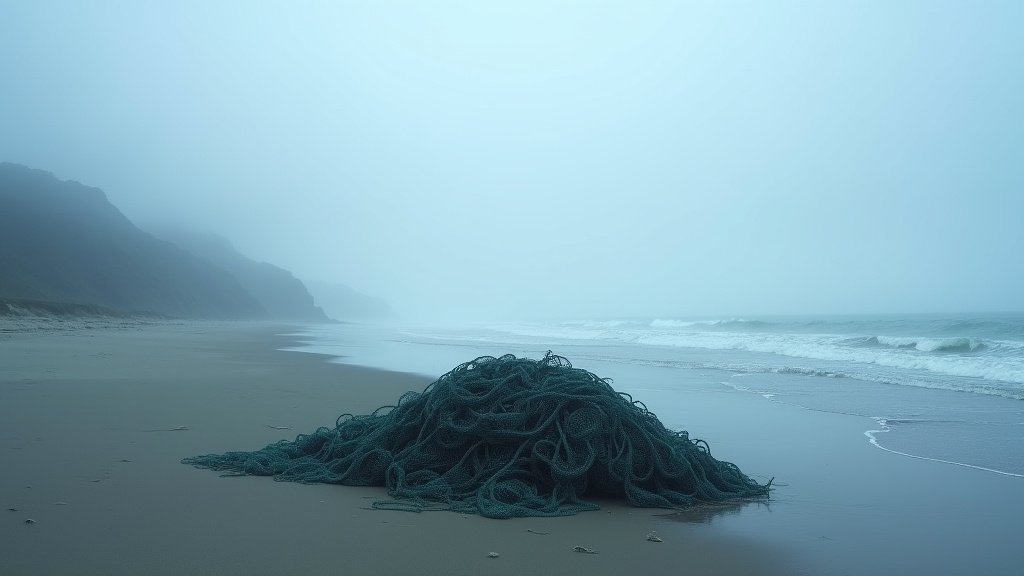
A somber discovery on a Humboldt County beach this week marks the second humpback whale carcass found in just two weeks, intensifying concerns over a dramatic increase in whale deaths along the West Coast. This recent stranding near Centerville, west of Ferndale, adds to a growing tally that could make 2026 the second-deadliest year on record for West Coast whales, with only 2019 surpassing it in mortality.
Mounting Mortality: A West Coast Crisis
The stark reality of escalating whale deaths has been underscored by a recent report from the Center for Biological Diversity, which documented at least 51 whale deaths along the West Coast this year alone. This figure is pushing the region towards unprecedented mortality rates, raising urgent questions about the health of marine ecosystems and the impact of human activities on these majestic creatures.
Environmental Factors: Shifting Oceans, Scarce Food
Scientists are investigating a confluence of factors contributing to this surge in deaths. A primary theory centers on significant changes in Arctic sea ice patterns. The ice is forming later in the year and melting earlier, disrupting the delicate timing of whale migrations and, critically, impacting the availability of their food sources during these crucial journeys. For species like humpback whales, which undertake extensive migrations, the reduced accessibility of prey can lead to malnutrition, exhaustion, and ultimately, death. The exact mechanisms by which these environmental shifts affect whale health are still under intense scientific scrutiny, but the correlation is becoming increasingly difficult to ignore.
Human Impact: The Unseen Killers
Beyond environmental shifts, human activities are increasingly implicated as direct causes of whale mortality. Ship strikes, where whales collide with vessels, are a significant concern, particularly in busy shipping lanes that overlap with whale migration routes. Other human-induced factors, such as entanglement in fishing gear and pollution, are also being examined as potential contributors to the grim statistics. The Center for Biological Diversity has specifically advocated for measures such as reducing ship speeds in known whale migration hotspots, a strategy aimed at providing whales more time to evade oncoming vessels and mitigate the risk of fatal collisions. The effectiveness and implementation of such mitigation strategies are now a focal point for conservation organizations and marine biologists.
Humboldt’s Grim Toll: A Local Echo of a Global Problem
The repeated strandings on Humboldt beaches serve as a visceral local manifestation of a much larger, regional crisis. Each carcass represents not only a tragedy for an individual animal but also a data point in a disturbing trend that demands immediate attention. The specific conditions leading to these Humboldt strandings are part of the ongoing investigation, but they undoubtedly contribute to the overall grim picture painted by the rising numbers across the entire West Coast. Local authorities and marine mammal rescue teams face the difficult task of responding to these events, collecting valuable data, and working towards understanding the causes.
Looking Ahead: Conservation and Research
The escalating whale death toll necessitates a multi-faceted approach involving continued scientific research, enhanced conservation efforts, and policy changes. Understanding the complex interplay between environmental changes and human impacts is crucial for developing effective long-term solutions. This includes more robust monitoring of whale populations, further research into prey availability and migration patterns, and stricter enforcement of regulations aimed at reducing ship strikes and fishing gear entanglement. The future of West Coast whale populations hinges on a concerted and urgent response to this escalating crisis.
FAQ: People Also Ask
What is the primary reason for the increase in whale deaths on the West Coast?
While multiple factors are at play, scientists are pointing to a combination of environmental changes, such as altered Arctic sea ice patterns affecting food availability, and direct human impacts like ship strikes and entanglement in fishing gear. The Center for Biological Diversity notes at least 51 whale deaths this year, attributing the surge to human activities.
Is this year the deadliest on record for West Coast whales?
Not yet, but it is trending towards becoming the second-deadliest year on record, following 2019. The increasing number of whale strandings suggests that 2026 could be a record-breaking year for whale mortality on the West Coast.
What measures are being proposed to reduce whale deaths?
Conservation groups, such as the Center for Biological Diversity, advocate for measures like slowing down ship speeds in areas where whales migrate. This aims to reduce the incidence of fatal ship strikes.
How does Arctic sea ice affect whale populations?
Changes in Arctic sea ice formation and melt timing are believed to disrupt whale migration patterns and reduce the availability of crucial food sources. This can lead to malnutrition and exhaustion for whales, contributing to increased mortality during their long journeys.
What specific types of whales are being affected?
The reports specifically mention humpback whales, with two washing ashore in Humboldt County this month alone. However, the trend of increased deaths is being observed across various whale species along the West Coast.