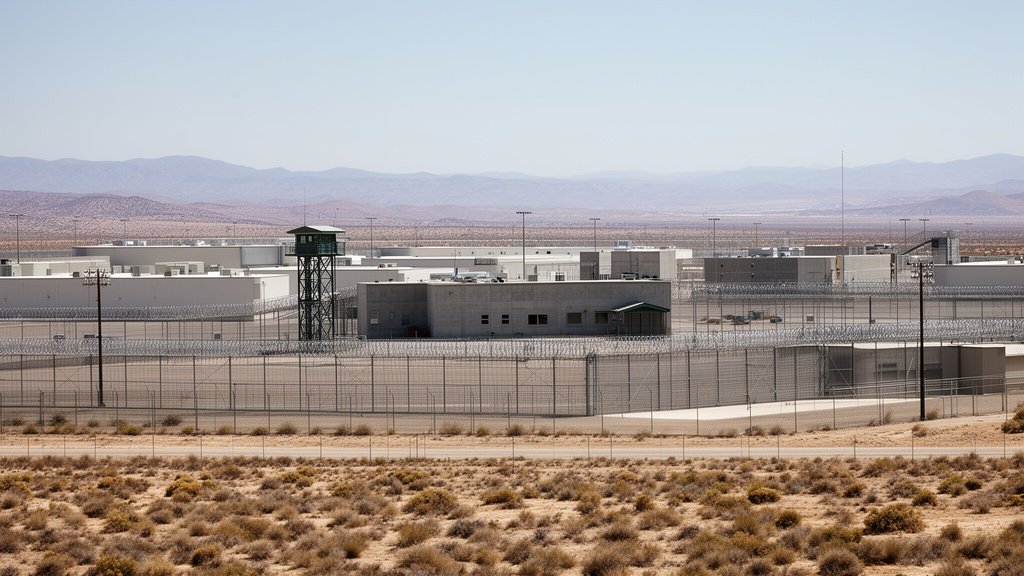
In an aggressive maneuver to maintain its detention capacity in California, the federal government has finalized a $1.5 billion acquisition of two major immigration detention facilities previously owned and operated by CoreCivic. This move effectively bypasses California’s Assembly Bill 32 (AB 32), a landmark piece of state legislation signed into law in 2019, which aimed to phase out the use of private, for-profit detention facilities within the state’s borders.
Key Highlights
- The Acquisition: The federal government has completed a $1.5 billion deal to purchase two primary detention facilities from CoreCivic, one of the nation’s largest private prison operators.
- Bypassing AB 32: The purchase is a direct challenge to California’s AB 32, which prohibited the Department of Corrections and Rehabilitation and the Department of Justice from entering into or renewing contracts with private, for-profit detention providers.
- Strategic Locations: The facilities in question—key nodes in the immigration enforcement network—allow the federal government to retain operational control over immigration detention in a state that has been highly resistant to federal detention practices.
- Legal Precedent: This action highlights the ongoing friction between the Supremacy Clause of the U.S. Constitution and state-level attempts to restrict federal enforcement infrastructure.
Sovereignty and Supremacy: The Federal Playbook
The $1.5 billion transaction represents more than a real estate deal; it is a calculated assertion of federal authority. When California passed AB 32 in 2019, the legislative intent was clear: to remove the financial incentive for for-profit corporations like CoreCivic to lobby for and profit from the detention of undocumented immigrants. However, the federal government—specifically U.S. Immigration and Customs Enforcement (ICE)—has long argued that California’s restrictions interfered with the federal government’s “plenary power” to enforce immigration law.
By purchasing the properties outright, the federal government has effectively removed the “contract” element that AB 32 sought to regulate. Because the facilities are now federal property, they are subject to federal oversight and are no longer classified as private facilities under contract with the state. This legal pivot fundamentally alters the landscape of the litigation that has been winding through the courts for years, including challenges in the Ninth Circuit Court of Appeals. The government is essentially arguing that since it owns the bricks and mortar, California’s state-level labor and land-use regulations cannot impede the operation of a federal facility.
The Operational Rationale
ICE officials have long contended that proximity to major urban centers is crucial for immigration proceedings. By keeping detention centers in California—where many detainees have family, legal representation, and community ties—ICE maintains that it ensures a more efficient adjudication process. Losing these facilities would have forced the transfer of detainees to facilities in other states, such as Arizona or Texas, which critics argue would make it significantly harder for detainees to access counsel and communicate with families.
CoreCivic’s Exit and Financial Strategy
For CoreCivic, the sale represents a strategic divestment from a politically volatile market. While California provided lucrative detention contracts for years, the legal uncertainty introduced by AB 32 turned the state into a liability. Selling the facilities at a significant premium allows CoreCivic to reduce its exposure to state-level legal challenges and free up capital to invest in states with more favorable regulatory environments. This deal ensures that CoreCivic can continue to support the infrastructure, potentially as a service contractor for facility maintenance, even if they no longer own the underlying land or buildings.
The Legal and Ethical Friction
The acquisition has reignited a heated debate regarding the constitutional separation of powers. Legal scholars note that while the federal government generally possesses broad authority over immigration, the specific question of whether state laws can govern the operation of private entities—even those serving federal agencies—has been a gray area. By transforming private facilities into federal ones, the government is sidestepping the legal debate entirely.
Advocacy groups are already preparing for the next phase of the legal battle, focusing on environmental, labor, and safety standards within these facilities. They argue that regardless of ownership, federal detention centers must still comply with rigorous standards for human rights, medical care, and legal access. However, moving the facilities under direct federal ownership removes one of the primary leverage points advocates had: the ability to pressure state governments to terminate contracts with private operators.
Financial and Fiscal Implications
Critics of the purchase highlight the sheer cost of the acquisition. Spending $1.5 billion on facility ownership is a massive capital expenditure. The long-term fiscal impact depends on whether the government views this as a cheaper alternative to paying the rising daily rates charged by private operators in an environment where supply is constrained by state laws. If the federal government intends to manage these facilities directly, it will also assume all the liabilities associated with operating large-scale secure environments, including security, staffing, and potential litigation costs related to detainee conditions.
FAQ: People Also Ask
Q: What is AB 32, and why does it matter here?
A: AB 32 is a California law passed in 2019 that aimed to phase out the use of private, for-profit detention centers in the state. The current federal purchase is designed to circumvent this law by making the facilities federal, rather than private, property.
Q: Who is CoreCivic?
A: CoreCivic is one of the largest private prison operators in the United States, providing detention and correctional services to various state and federal government agencies.
Q: Will this end the legal battles over immigration detention?
A: Highly unlikely. While the federal government has solved its immediate capacity issue by buying the facilities, it faces a new set of challenges regarding regulatory compliance and potential litigation from civil rights groups who will argue that conditions must meet federal, not just local, standards.
Q: Why is the federal government spending $1.5 billion on this now?
A: The deal serves as a defensive measure to secure bed space in a state that has been actively hostile to the presence of private detention facilities, ensuring ICE maintains operational continuity near major urban hubs.