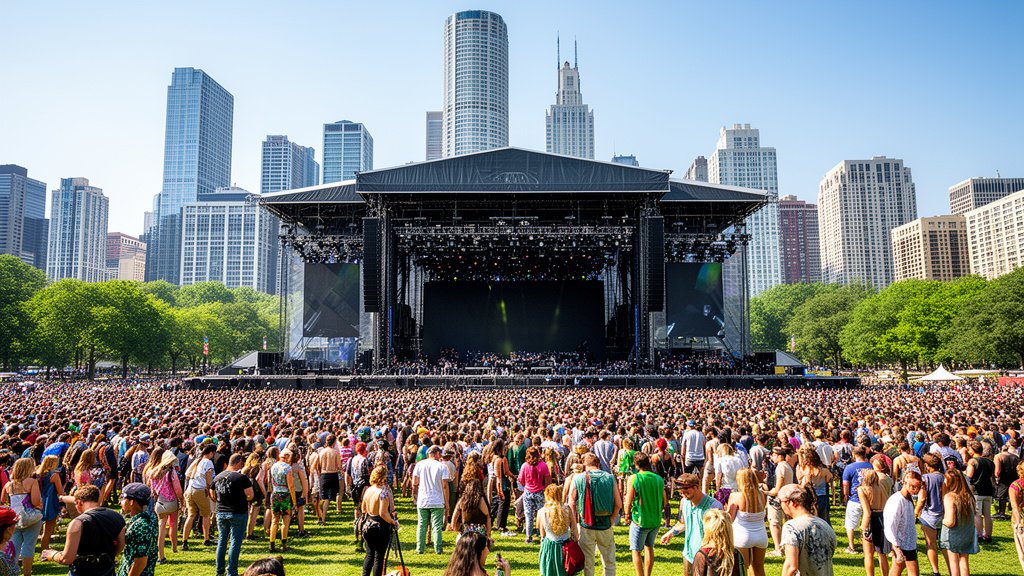
The heartbeat of downtown Chicago has quickened as Lollapalooza 2026 officially kicks off in the historic expanse of Grant Park. From July 30 through August 2, the festival reasserts its dominance as a titan of the global music industry, transforming the city’s front yard into a sprawling, multi-sensory landscape. With a staggering lineup of over 170 artists distributed across eight unique stages, this year’s iteration promises to be the most ambitious in the festival’s recent history, balancing the weight of its legacy with a forward-thinking, digitally immersive broadcast strategy.
The Architecture of the Experience
Grant Park serves as more than just a venue; it is the essential backdrop for the Lollapalooza experience. The geography of the festival—stretching from the shadows of the iconic Chicago skyline to the edges of Lake Michigan—requires a logistical symphony of production. With eight distinct stages, attendees are forced to navigate a complex itinerary of soundscapes. The design of the festival grounds ensures that the auditory experience remains distinct despite the sheer volume of output, creating localized “sonic bubbles” that allow different genres to coexist simultaneously across the park.
This year, the organizational focus has shifted toward efficiency and crowd flow, acknowledging the massive influx of music fans the city expects to host. The logistics of managing 170+ performances over four days is a feat of modern event production, requiring thousands of crew members, sound engineers, and safety personnel to ensure the transition between sets remains seamless. For the city of Chicago, this influx represents a critical pillar of its summer economy, driving hotel occupancy rates and downtown spending to annual peaks.
The Streaming Revolution: Disney+ and Hulu
Perhaps the most significant development for the 2026 edition is the comprehensive broadcast partnership with Disney+ and Hulu. This move represents a tectonic shift in how live music is consumed. Gone are the days when the festival experience was limited solely to those with physical wristbands. By integrating a multi-platform livestream, Lollapalooza has evolved from a local gathering in Grant Park into a global, on-demand media event.
This streaming model serves three primary functions: it expands the festival’s reach to millions of viewers who cannot physically attend; it provides a high-fidelity archive of performances that contributes to the cultural longevity of the artists involved; and it creates a direct revenue stream through digital engagement. For the music industry, this partnership is a bellwether, indicating that the future of major festivals is inherently hybrid, blending the raw, visceral energy of live crowds with the polish and reach of global digital broadcasting.
Economic Impact and Cultural Resonance
Beyond the stages and the streams, Lollapalooza 2026 operates as a significant economic engine for Illinois. The surge in domestic and international travel during the first week of August is a cornerstone of the Chicago summer tourism strategy. Local businesses, from dining institutions to retail outlets, pivot their operations to accommodate the massive demographic shift occurring downtown.
Culturally, the festival continues to be a bellwether for musical trends. By curating a lineup that balances established legends with rising viral stars, the organizers effectively capture the zeitgeist of the moment. The presence of 170+ artists ensures that there is a diversity of sound that reflects the current global appetite for music, spanning electronic, hip-hop, indie-rock, and pop genres. This wide-net curation is essential to maintaining relevance in an era of fractured listening habits, ensuring that every attendee—and every digital viewer—finds a point of entry into the festival’s ecosystem.
Future Predictions and The Road Ahead
As the festival concludes its current run, eyes will inevitably turn toward 2027. The success of the 2026 edition, particularly in its integration of streaming technology, sets a high bar. We can expect future iterations to lean even harder into the hybrid model, potentially exploring augmented reality (AR) features or more interactive digital viewing experiences. The sustainability of such a large-scale event in a public space like Grant Park will remain a key topic of discussion for city planners, who must weigh the massive economic benefits against the logistical strain on the downtown infrastructure. For now, however, the focus remains on the music, the crowds, and the singular energy that only a Chicago August can provide.