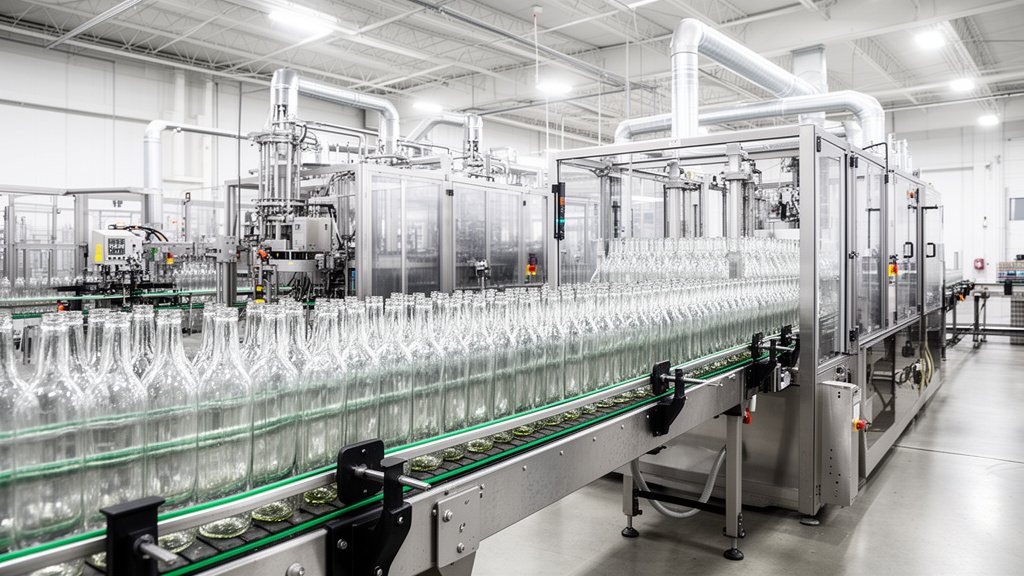
Revino, the Oregon-based startup championing the transition to reusable glass, has secured a $4.8 million grant from CalRecycle to establish a state-of-the-art bottle-washing facility in Lompoc, California. This strategic expansion marks a significant step forward for the state’s circular economy, as Revino aims to construct an infrastructure capable of sanitizing and recirculating 10 million glass wine bottles annually. By addressing the massive environmental footprint of the California wine industry—the largest in the United States—this project aims to shift the paradigm from single-use “recycle-only” models to a robust “reuse” framework.
Key Highlights
- Strategic Funding: The $4.8 million grant provided by CalRecycle (the California Department of Resources Recycling and Recovery) is dedicated specifically to scaling reusable packaging infrastructure.
- New Lompoc Facility: Revino will construct a commercial-scale bottle-washing plant in Lompoc, designed to clean 10 million glass containers per year.
- Circular Economy Impact: The initiative aims to drastically reduce the carbon footprint associated with wine production, targeting the energy-intensive manufacturing and transport of new glass bottles.
- Supply Chain Pivot: The facility will serve California wineries, allowing them to adopt returnable packaging systems that were previously logistically impossible for individual labels to manage alone.
Advancing the Circular Economy in California Wine
The California wine industry is a titan of global production, yet it faces a persistent environmental challenge: the glass bottle. Manufacturing new glass is an energy-intensive process that releases high levels of CO2, and even with robust recycling programs, the energy required to crush, transport, and melt glass back into raw materials is significant. Revino’s entry into the California market represents a structural shift from a linear “take-make-waste” model to a circular “reduce-reuse” model. By creating a centralized washing facility, Revino allows wineries to bypass the single-use cycle, instead utilizing a system where bottles are collected, sanitized, inspected for structural integrity, and returned to the production line.
The Lompoc Strategy: Why Central Coast?
Choosing Lompoc, located in Santa Barbara County, was a strategic logistical decision. As a hub for the Central Coast wine region, Lompoc provides proximity to a high density of wineries ranging from boutique producers to larger labels. This “micro-hub” approach minimizes the transportation distance for empty bottles—a critical factor in the life-cycle analysis of reusable packaging. If empty bottles must be transported hundreds of miles to be washed, the carbon savings of reusing them are diminished. By positioning the facility in the heart of a major production zone, Revino maximizes the environmental efficacy of the logistics network.
Industrial-Scale Sanitization Technology
One of the primary concerns for wineries adopting reusable glass is the safety and sterilization of the bottles. Revino’s operations utilize advanced commercial sanitization technology, which exceeds industry standards for food-grade safety. The process involves high-temperature caustic washes, integrated optical inspection systems to identify micro-cracks or contaminants, and strict quality control protocols that ensure every re-entered bottle is virtually indistinguishable from a new one. This level of technical oversight is crucial, as the wine industry maintains incredibly high standards for hygiene and presentation.
Regulatory Tailwinds and Future Projections
This grant is not occurring in a vacuum; it aligns with California’s aggressive regulatory push toward Extended Producer Responsibility (EPR). As the state continues to implement stricter legislation regarding plastic and glass waste management, producers are facing increasing pressure to adopt sustainable packaging. Revino’s expansion serves as a proof-of-concept for the state, demonstrating that infrastructure investment can simultaneously meet regulatory requirements and reduce long-term operational costs for businesses. If the Lompoc facility reaches its 10-million-bottle target, it could serve as the blueprint for similar “reuse hubs” across other agricultural regions in California.
The Economic Argument for Reuse
Beyond the environmental benefits, there is a compelling economic argument for the transition. Glass costs have surged in recent years, impacting the margins of small and mid-sized wineries. A reusable bottle program allows for a stabilized, potentially lower cost-per-unit over time, as the bottle becomes a durable asset rather than a consumable. By subsidizing the initial infrastructure setup, the CalRecycle grant de-risks this transition, providing the necessary capital for Revino to bridge the gap between niche sustainability project and mainstream commercial operation.
FAQ: People Also Ask
Q: How do wine consumers return these bottles once the system is live?
A: Revino works with retail partners and winery tasting rooms to establish drop-off points. The goal is to make the return process as seamless as recycling, with the added benefit that the glass is cleaned rather than crushed.
Q: Are these bottles the same quality as single-use glass?
A: Yes. Revino’s bottles are manufactured to specific durability standards that allow them to be washed and reused multiple times. They are inspected for quality and safety before returning to the winery.
Q: When will the Lompoc facility be operational?
A: While the timeline for facility construction is typically phased, the grant marks the kickoff for immediate development. Official operational dates are expected to be announced by Revino as construction milestones are met.
Q: Will this affect the price of wine?
A: In the long term, the adoption of reusable packaging is intended to stabilize or reduce packaging costs for wineries, which could help mitigate price increases caused by rising commodity costs for glass and shipping.