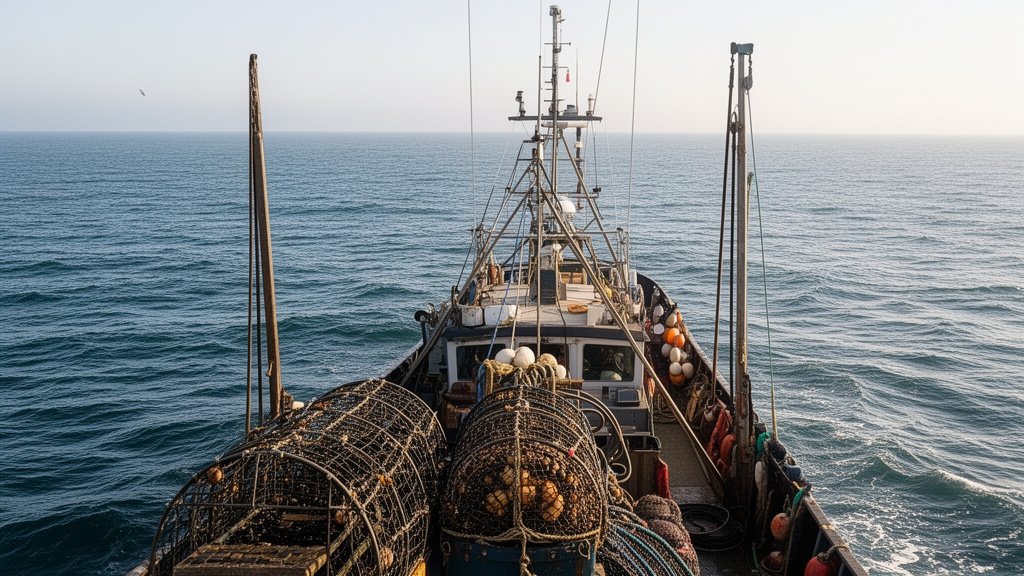
The National Marine Fisheries Service (NMFS) has finalized its updated regulatory framework for the U.S. West Coast sablefish pot fishery, a move that was intended to mitigate the escalating frequency of whale entanglements. However, the agency’s decision to prioritize gear marking over substantive reductions in vertical fishing lines has sparked immediate and intense backlash from conservationists. With 2026 data confirming a staggering 37 humpback whale entanglements—a record-high figure that underscores the severity of the crisis—the Center for Biological Diversity and other ocean advocates argue that these new federal rules are effectively a bureaucratic gesture that ignores the physical reality of the ocean environment.
The Regulatory Gap: Marking vs. Minimizing
The core of the conflict lies in the divergence between regulatory solutions and the mechanics of whale entanglements. The NMFS regulations mandate enhanced gear marking, which requires fishery participants to use specific tags and coloring to identify equipment origin. While this provides useful data for researchers and policymakers to identify which fisheries are contributing most to the entanglement statistics, it does absolutely nothing to prevent the event itself.
For an endangered humpback whale navigating the feeding grounds of the Pacific, a piece of marked rope is as lethal as an unmarked one. Critics contend that by focusing on forensic identification rather than the volume of gear in the water, the agency is addressing the aftermath of the problem while leaving the root cause—the density of vertical lines—wholly untouched. The fishery industry has long argued that vertical lines are essential for locating and retrieving pots, but environmental groups point to the rising entanglement statistics as proof that the status quo is unsustainable.
Analyzing the 2026 Data Surge
The 2026 figures are more than just a statistical anomaly; they represent a significant year-over-year increase in incidents. The record of 37 entangled humpback whales indicates that current mitigation strategies are failing at a precipitous rate. Environmental analysts point to several factors driving this surge: shifting prey patterns that draw whales closer to established fishing grounds, longer migration periods, and an increasing density of commercial fishing gear.
When a humpback whale encounters a vertical line, the result is often catastrophic. Ropes can wrap around the whale’s tail, flippers, or head, causing severe injuries, limiting the animal’s ability to feed, swim, or surface for air. In many documented cases, the whales suffer for weeks or months, enduring significant physical trauma before either escaping with the gear still attached or succumbing to exhaustion and starvation. The 37 confirmed cases in 2026 are likely only a fraction of the total; experts agree that many entanglements go undocumented as whales slip beneath the surface and perish out of sight.
The ‘Band-Aid’ Criticism and Ropeless Alternatives
The Center for Biological Diversity has been vocal in characterizing the new NMFS rules as a “band-aid” approach. The group’s position is that without a mandatory transition toward ropeless or “on-demand” gear, whales will continue to be caught in the crossfire of commercial fishing.
Technological innovation, specifically in the form of acoustic-release pots, has reached a level of commercial viability that makes the agency’s hesitation to mandate these tools frustrating for advocates. Ropeless systems store the retrieval line on the seafloor until triggered by a specific acoustic signal from a vessel, effectively eliminating the vertical “curtain” of rope that poses the primary threat to whales. While the transition to this technology requires capital investment, conservationists argue that the environmental cost of inaction—the potential decline of humpback populations—is an economic and ecological debt that the West Coast cannot afford to pay.
Economic vs. Ecological Sustainability
There is a broader macroeconomic tension at play. The sablefish pot fishery is a vital component of the West Coast seafood economy, supporting hundreds of jobs and generating significant revenue. Industry representatives often fear that strict mandates on gear type could price smaller operators out of the market. However, there is a counter-argument gaining traction: an industry that is perceived as environmentally reckless risks losing its social license to operate. As consumer awareness regarding sustainable seafood grows, the fishery industry faces the risk of boycotts and stricter future interventions if they do not proactively adopt whale-safe practices. The NMFS, caught between balancing these economic realities and its mandate under the Marine Mammal Protection Act, appears to be paralyzed by a desire for incrementalism rather than the bold structural changes that the data clearly demands.
The Path Forward: What Needs to Change?
If the objective is to protect humpback whales, the regulatory focus must shift from observation to prevention. This includes three essential steps:
1. Dynamic Spatial Management: Closing specific zones to pot fishing during peak whale migration and feeding windows.
2. Ropeless Gear Subsidies: Rather than just requiring gear marking, the federal government should implement transition programs that assist fishers in upgrading to ropeless technology.
3. Stringent Line Limits: Placing a hard cap on the number of vertical lines an individual vessel can deploy at any given time.
Without these measures, the 2026 data acts as a warning sign. The current regulations may pass legal muster in the short term, but if the entanglement numbers continue to climb, the agency will inevitably face further litigation and increased public pressure to enforce substantive change.