As of August 30, 2026, the United States is grappling with an unprecedented ecological and logistical emergency. According to the latest federal data, nationwide wildfire damage has officially surpassed the 8.2 million-acre mark, marking a massive year-over-year increase that has pushed suppression capabilities to their absolute breaking point. While the wildfire crisis is a national concern, the West Coast—specifically Washington, Oregon, and California—has borne the brunt of this historic surge, with federal agencies reporting that these three states account for a disproportionate majority of the total burn acreage.
Key Highlights
- Record-Breaking Statistics: As of August 30, 2026, nationwide fire damage reached 8.2 million acres, a historic high for this date.
- Regional Epicenter: Washington, Oregon, and California are experiencing the most intense activity, stretching regional firefighting resources to their capacity.
- Federal Emergency Status: The surge has triggered an emergency-level response from the National Interagency Fire Center (NIFC) and FEMA, prioritizing life-safety over containment strategies.
- Resource Exhaustion: Deployment cycles for firefighting crews have been shortened to prevent exhaustion, complicating the management of large-scale incident command chains.
- Future Outlook: With prolonged drought conditions persisting into September, federal meteorologists warn that the window for fire containment remains critically narrow.
The Anatomy of an Unprecedented West Coast Wildfire Surge
The 8.2 million-acre milestone represents more than just a number; it is a signal of a systemic breakdown in ecological stability across the Western United States. The current crisis is being driven by a “perfect storm” of conditions: consecutive years of moisture deficits, persistent 2026 summer heat domes, and dry lightning patterns that have ignited multiple complex fire events simultaneously across Washington, Oregon, and California.
Federal agencies, led by the National Interagency Fire Center (NIFC), have been operating at Preparedness Level 5 (PL5)—the highest level of severity—for the past three weeks. This status indicates that nearly all national firefighting resources are committed, leaving virtually no surge capacity for new, high-priority ignitions. The sheer scale of the West Coast wildfire activity means that initial attack capabilities are now essentially non-existent; once a fire starts, it is immediately designated as an extended-attack incident, requiring complex, multi-agency coordination that often takes days to fully mobilize.
The Tri-State Emergency: A Regional Analysis
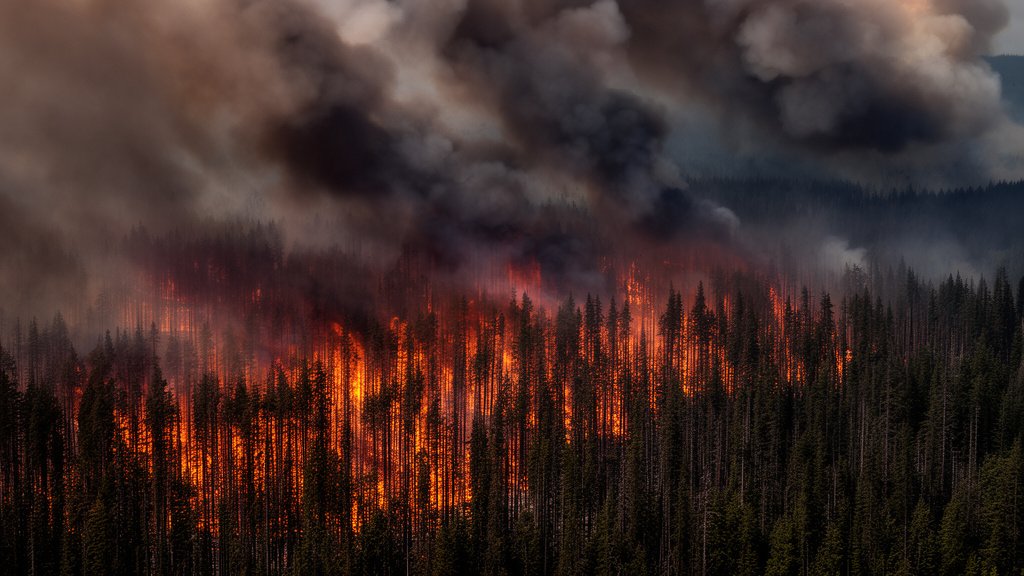
In California, the primary focus remains the Northern and Central Sierras, where fuel moisture levels have dropped to record lows. Cal Fire has reported that rapid-growth events are now occurring in areas previously considered “fire-resistant” due to high-altitude humidity. Simultaneously, in Oregon and Washington, the terrain has proven particularly challenging. Unlike the brush-dominated fires of Southern California, the Pacific Northwest is battling heavy timber-fueled fires. These infernos are creating massive pyrocumulonimbus clouds, which can generate their own lightning and erratic wind patterns, making suppression attempts exceptionally hazardous for ground crews.
The Economic and Infrastructural Fallout
Beyond the immediate threat to life and property, the economic repercussions are beginning to ripple through the region. The insurance market for high-risk zones in the West is effectively collapsing, with major underwriters reassessing their exposure in the wake of the 2026 disaster. Furthermore, the supply chain impact of this wildfire surge cannot be understated. Smoke-induced air quality failures have forced the closure of multiple logistics hubs in the Pacific Northwest, delaying freight movement and impacting manufacturing sectors that rely on regional connectivity.
The agricultural sector is also facing catastrophic losses. Vineyards in California and orchard operations in Washington are reporting total crop failure due to “smoke taint” and direct fire encroachment. This secondary economic impact is expected to drive up food prices nationwide well into the winter months, as regional supply chains struggle to recover from the August losses.
Resource Strain and Personnel Fatigue
The human cost of this 8.2 million-acre surge is centered on the men and women on the front lines. The Bureau of Land Management (BLM) and the Forest Service have reported record levels of crew fatigue. The operational cadence has been unrelenting. With the 2026 season effectively starting weeks earlier than the historical average, personnel have been on the fire lines for months without the customary respite periods.
This exhaustion has forced a strategic pivot. Federal and state leaders have been forced to implement a triage model: resources are no longer allocated based on the potential to “put the fire out,” but rather based on protecting critical infrastructure and high-density population centers. This “defensive-first” posture acknowledges that, under current climate variables, aggressive suppression of the total burn acreage is no longer operationally viable until weather patterns shift.
Climate Trajectories and Future Predictions
The overarching question facing policymakers is whether this 2026 surge is an outlier or the new operational reality. Climate data suggests a concerning trend: the synergy between atmospheric heat domes and prolonged terrestrial dryness is creating a feedback loop. As more vegetation is destroyed, the land’s ability to retain future moisture decreases, leading to even drier, more flammable landscapes in the subsequent year. Experts from the National Oceanic and Atmospheric Administration (NOAA) warn that without significant seasonal intervention, the remaining weeks of the 2026 fire season could see the total acreage exceed 10 million—a threshold that would cement this year as the most destructive in modern history.
FAQ: People Also Ask
Q: Why is the 2026 wildfire season more severe than previous years?
A: The 2026 season is driven by a combination of record-breaking heat domes, long-term multi-year drought, and high fuel loads in Pacific Northwest forests, which have prevented firefighters from utilizing standard containment strategies.
Q: What is the significance of the 8.2 million-acre figure?
A: It serves as a benchmark for the total geographic scale of the destruction. It indicates that federal resources are fully saturated, meaning that new fires have a higher probability of becoming “mega-fires” due to delayed response times.
Q: Are fire suppression strategies changing due to these records?
A: Yes. Federal and state agencies are increasingly utilizing “defensive-first” strategies, focusing on the protection of infrastructure and population centers rather than attempting to achieve full containment on fires burning in remote or wilderness areas.
Q: When is the peak of the fire season expected to end?
A: Historically, the risk remains high through October. Meteorologists are monitoring for late-season rain patterns, but current models suggest above-average temperatures will persist in the West Coast region through late September.