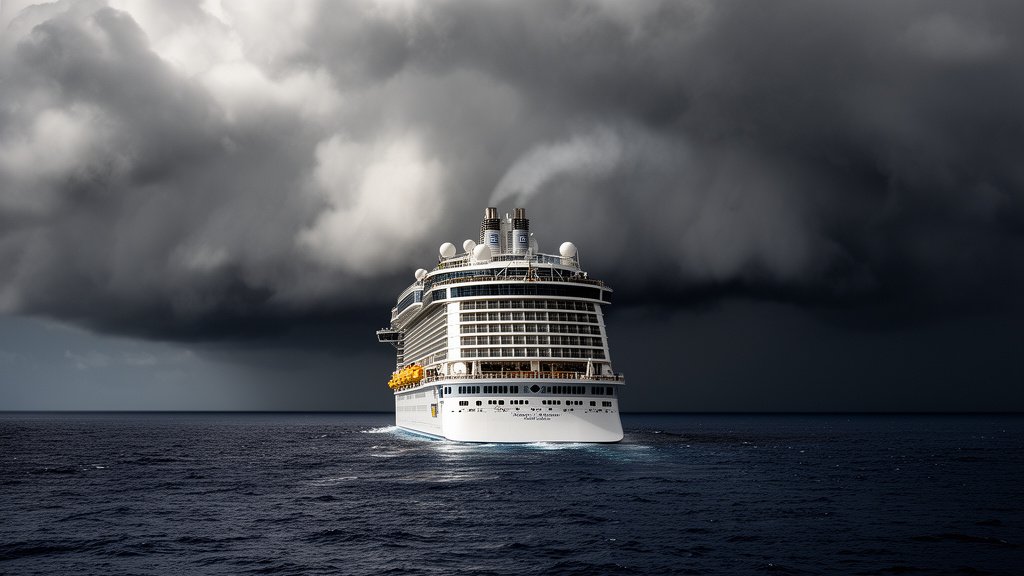
Royal Caribbean International has confirmed a necessary adjustment to the itinerary of the Navigator of the Seas, currently sailing from the Port of Los Angeles, as a direct response to developing tropical storm conditions within the Eastern Pacific basin. The vessel, a prominent member of the Voyager-class fleet, is shifting its path to ensure the safety of passengers and crew, adhering to strict maritime protocols that prioritize stability and weather avoidance over original port schedules.
Key Highlights
- Strategic Rerouting: The Navigator of the Seas has altered its course to circumvent intensifying weather systems in the Eastern Pacific, prioritizing safe navigation.
- Passenger Safety Protocol: All itinerary modifications are enacted in accordance with Royal Caribbean’s comprehensive safety management systems, which utilize real-time meteorological data.
- Operational Agility: The cruise line is actively communicating with passengers regarding changes to port calls, aiming to minimize disruption while maintaining the overall cruise experience.
Navigating Nature: Inside the Navigator of the Seas Reroute
The maritime industry operates under a unique set of variables where the destination is often secondary to the safety of the vessel. The recent decision to divert the Navigator of the Seas highlights the complex, real-time decision-making process required to operate large-scale cruise ships in the Eastern Pacific—a region frequently monitored for tropical storm activity. When a system reaches a threshold that could impede navigation or guest comfort, cruise operators like Royal Caribbean Group do not hesitate to deviate from the planned itinerary.
The Mechanics of a Cruise Reroute
For the average traveler, a cruise itinerary is a static document. In the maritime world, however, it is a dynamic plan. When Captains and the shore-side fleet operations team receive meteorological forecasts indicating hazardous weather, they initiate a “re-routing” protocol. This often involves skipping a port of call, swapping the order of destinations, or, in extreme cases, extending time at sea in calmer waters.
For the Navigator of the Seas, this means analyzing the storm’s trajectory, wind speeds, and wave height projections. The goal is simple: avoid the storm entirely rather than attempting to “outrun” it or push through periphery winds. This decision is made hours, sometimes days, before the ship reaches the storm’s projected path, showcasing the high level of coordination between meteorological agencies and the ship’s bridge command.
Meteorological Surveillance at Sea
How do cruise lines track these storms? The industry relies on a combination of satellite imagery, buoy networks, and internal weather forecasting software that integrates data from agencies like the Eastern Pacific Hurricane Center.
Modern cruise ships act as mobile observation platforms. The Navigator of the Seas is equipped with advanced weather radar systems that allow the bridge team to visualize storm cells with high precision. This granular level of data allows the captain to make micro-adjustments to the ship’s heading. While the ship is robust, designed to withstand significant maritime conditions, the comfort of the passengers remains a priority, and avoiding the swell generated by a tropical system is standard practice to prevent excessive ship motion.
The Passenger Experience and Contractual Reality
When an itinerary is altered, the primary concern for guests is often how it affects their vacation. It is a fundamental reality of the cruise industry—dictated by the “Cruise Ticket Contract”—that cruise lines reserve the right to alter itineraries due to weather, mechanical issues, or security concerns.
While passengers may be disappointed by the loss of a specific port call, Royal Caribbean’s communication strategy usually involves providing onboard credits or adjusting port fees. This transparency is crucial for maintaining brand loyalty, especially when the disruption is caused by a force majeure event like a tropical storm.
Secondary Angles: Examining the Broader Impact
1. The Economic Ripple Effect on Port Towns
When a ship skips a port in the Mexican Riviera due to weather, the impact is felt locally. Port towns, which rely heavily on the economic influx of thousands of tourists in a single day, experience a sudden revenue void. Local tour operators, souvenir vendors, and restaurant owners depend on the scheduled arrivals of the Navigator of the Seas. While safety is paramount, these weather-induced cancellations highlight the economic vulnerability of tourism-dependent coastal regions.
2. The Fine Print: Understanding Contractual Rights
It is vital for travelers to understand that itinerary changes are not grounds for a full refund. This creates a disconnect between consumer expectations and maritime law. The cruise contract is a robust document that protects the operator when they prioritize safety. Discerning travelers are increasingly turning to “Cancel For Any Reason” (CFAR) travel insurance to mitigate the risk of a “watered-down” vacation experience when weather forces a reroute.
3. Future-Proofing the Fleet with Tech
Technological advancement is allowing cruise lines to operate more safely than ever before. New “predictive navigation” algorithms are being integrated into bridge systems. These systems don’t just show where the storm is; they run simulations based on fuel efficiency, speed, and passenger comfort to recommend the most optimal path to safety. The Navigator of the Seas, while an established vessel, benefits from these overarching fleet-wide software upgrades, proving that data is as important as the hull itself in modern maritime navigation.
FAQ: People Also Ask
Q: Will I get a refund if my cruise itinerary changes due to a storm?
A: Typically, no. Cruise lines reserve the right to alter itineraries for safety without providing full refunds. However, they may offer non-refundable onboard credit or other compensation for missed ports.
Q: Is it safe to cruise during tropical storm season?
A: Yes. Cruise ships are designed to be mobile and are capable of outrunning or maneuvering around storms. Safety is the top priority for all cruise lines, and they strictly adhere to meteorological warnings.
Q: How does Royal Caribbean notify passengers of changes?
A: Changes are usually communicated via the cruise line’s mobile app, in-stateroom letters, or announcements from the Captain on the public address system as soon as a decision is finalized.
Q: Can I cancel my cruise if I don’t want to go because of a storm?
A: Unless the cruise line cancels the cruise entirely, standard cancellation policies apply. If you choose to cancel, you may lose your fare unless you have “Cancel For Any Reason” travel insurance.