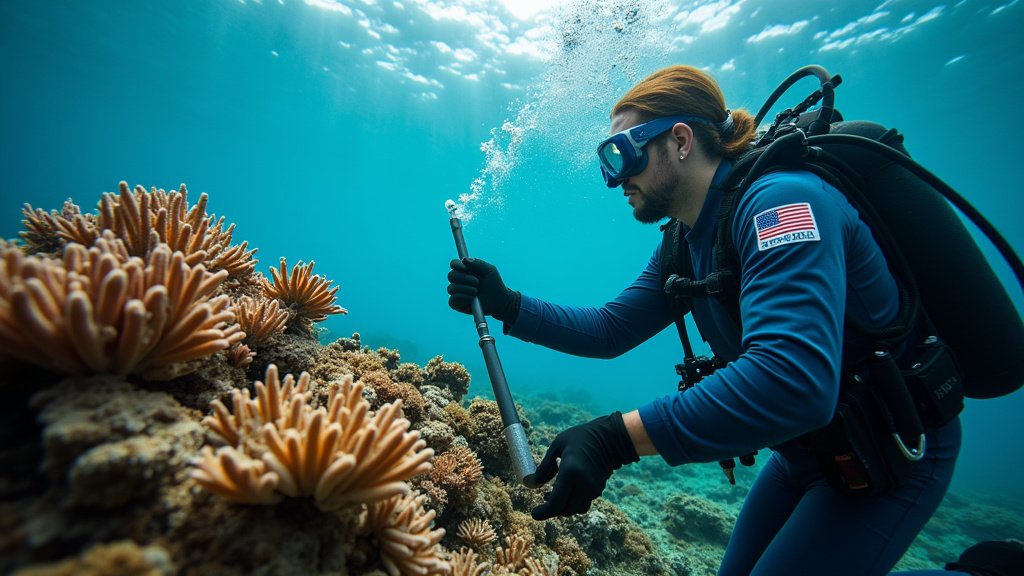
The National Oceanic and Atmospheric Administration (NOAA) has initiated two significant research missions, dubbed ‘Sea to Shining Sea,’ aimed at monitoring and understanding ocean acidification along both the U.S. Atlantic and Pacific coastlines. These dual efforts represent a crucial step in addressing the growing threat of increased acidity in marine environments, which poses risks to shellfish, coral reefs, and the broader marine ecosystem.
Key Highlights:
- Dual coastwide monitoring for ocean acidification.
- Focus on impacts on marine life, particularly shellfish and corals.
- Collaboration between NOAA and various research institutions.
- Data collection to inform conservation and policy decisions.
Tracking the Acid Tide: NOAA’s Dual Coastline Initiative
The ‘Sea to Shining Sea’ initiative by NOAA signifies a major commitment to understanding the pervasive issue of ocean acidification. This phenomenon, driven primarily by the absorption of excess atmospheric carbon dioxide into seawater, is altering ocean chemistry at an unprecedented rate. The research missions will deploy advanced monitoring technologies and sampling techniques across diverse coastal regions, from the cold waters of the Pacific Northwest to the vibrant estuaries of the Atlantic. Scientists will be collecting data on key parameters such as pH, dissolved inorganic carbon, and alkalinity to build a comprehensive picture of acidification’s spatial and temporal variations. This information is vital for predicting future changes and assessing the vulnerability of marine ecosystems and the economies that depend on them.
Scientific Scope and Methodologies
The missions are designed to be extensive, covering a wide array of marine habitats. On the Pacific coast, efforts will likely focus on areas known for their sensitive ecosystems, such as the kelp forests off California and the vital fisheries of Alaska. The Atlantic mission will target critical habitats along the Eastern Seaboard, including coral reefs in the Caribbean and important shellfish grounds from Maine to Florida. Researchers will employ a combination of ship-based surveys, autonomous underwater vehicles (AUVs), and fixed monitoring stations to gather high-resolution data. Specialized sensors will measure not only acidity but also temperature, salinity, and dissolved oxygen, providing a holistic view of ocean health. The data collected will be made publicly available through NOAA’s data portals, facilitating further research and public awareness.
Ecological and Economic Implications
Ocean acidification poses a severe threat to marine organisms that build shells and skeletons from calcium carbonate. This includes economically important species like oysters, clams, mussels, and scallops, as well as foundational species like corals and plankton. As ocean pH decreases, it becomes more difficult and energetically costly for these organisms to form and maintain their structures. This can lead to reduced growth rates, increased mortality, and impaired reproductive success, with cascading effects throughout the marine food web. The implications for coastal communities that rely on healthy fisheries and aquaculture are profound, potentially leading to significant economic losses. The ‘Sea to Shining Sea’ missions aim to provide the data necessary to forecast these impacts and develop adaptive strategies.
Policy and Conservation Nexus
The data generated by these missions will be instrumental in informing national and international policy regarding climate change mitigation and ocean management. Understanding the rate and extent of acidification allows policymakers to set more effective targets for reducing carbon emissions and to implement targeted conservation measures. This could include developing resilient aquaculture practices, protecting critical marine habitats, and establishing marine protected areas that are better equipped to withstand environmental changes. NOAA’s role in coordinating this research underscores the federal government’s commitment to addressing the complex challenges posed by climate change.
FAQ: People Also Ask
What is ocean acidification?
Ocean acidification is the ongoing decrease in the pH of the Earth’s oceans, caused primarily by the uptake of anthropogenic carbon dioxide (CO2) from the atmosphere. As CO2 dissolves in seawater, it forms carbonic acid, which then dissociates, releasing hydrogen ions that increase acidity.
How does ocean acidification affect marine life?
It particularly impacts marine organisms that build shells or skeletons from calcium carbonate, such as shellfish, corals, and some plankton. Lower pH levels make it harder for these organisms to form and maintain their structures, leading to reduced growth, increased vulnerability, and potential mortality.
Why are these NOAA missions important?
These missions are crucial because they provide critical, coastwide data on the extent and rate of ocean acidification. This information is essential for understanding the ecological and economic impacts, predicting future changes, and developing effective strategies for conservation and policy.
What are the economic consequences of ocean acidification?
Economically, ocean acidification threatens industries like shellfish aquaculture and commercial fishing, which rely on healthy marine populations. Reduced productivity and potential collapses in these sectors can lead to significant job losses and economic hardship for coastal communities.
How can ocean acidification be mitigated?
Mitigation primarily involves reducing global carbon dioxide emissions, as this is the root cause of increased CO2 absorption by the oceans. Other strategies include developing more resilient aquaculture and fisheries management practices, and protecting marine ecosystems that may be less vulnerable.