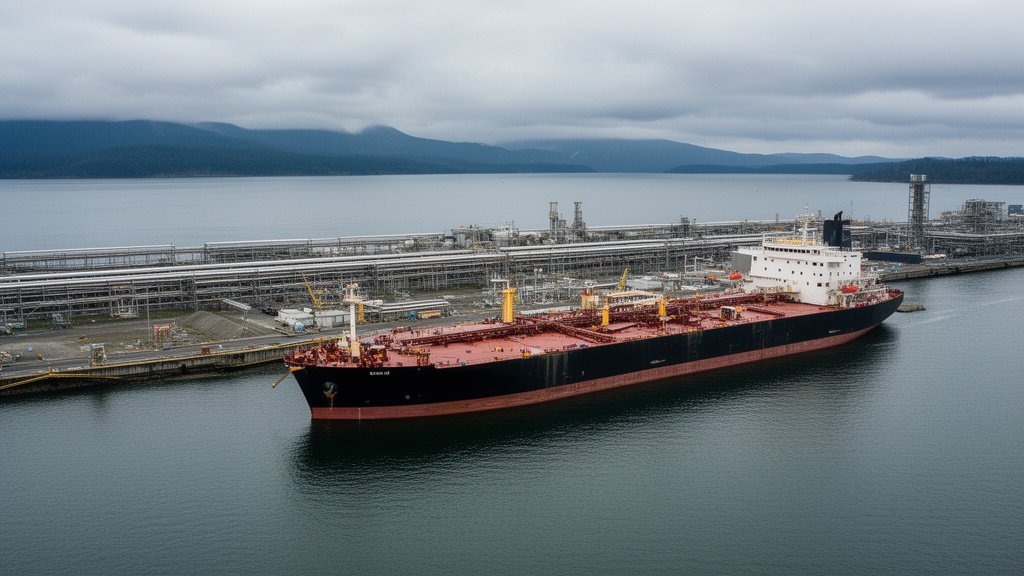
The Washington State Department of Ecology has issued a formal directive demanding an immediate cessation of the proposed expansion for a major West Coast oil pipeline infrastructure project, placing the future of regional fossil fuel logistics in a state of suspended animation. By leveraging the stringent oversight mechanisms found within the State Environmental Policy Act (SEPA), state regulators have signaled that the potential for catastrophic spill events and the cumulative impact of increased tanker traffic in the Salish Sea outweigh the immediate industrial benefits of the expansion.
Key Highlights
- Regulatory Intervention: The Washington State Department of Ecology has officially mandated a pause on permitting, citing incomplete risk assessments regarding spill prevention and containment.
- Salish Sea Sensitivity: The project’s proposed routing and expansion plans pose an escalated threat to the fragile ecosystem of the Salish Sea, particularly the critical habitat of endangered Southern Resident Orcas.
- SEPA Enforcement: State authorities are utilizing the State Environmental Policy Act (SEPA) to force a more rigorous environmental impact review, challenging the scope of previous corporate filings.
- Traffic Concerns: Regulators specifically flagged the projected increase in heavy tanker traffic as a primary catalyst for the intervention, demanding concrete safety mitigation strategies from the operator.
The Regulatory Clash: Washington’s Stand Against Pipeline Expansion
The intervention by the Washington State Department of Ecology represents a pivotal moment in the ongoing struggle between regional industrial capacity and the state’s aggressive decarbonization mandates. At the heart of this dispute is the proposed pipeline throughput expansion, a project designed to increase crude oil transit capacity across Washington’s sensitive maritime corridors. Regulators have explicitly stated that the environmental risks—specifically the probability of a major oil spill—have not been adequately accounted for in the operator’s current proposals.
This is not merely a bureaucratic delay; it is a fundamental challenge to the status quo of oil logistics in the Pacific Northwest. The Department of Ecology has historically taken a cautionary approach to industrial expansion, but this specific action demonstrates a heightened intolerance for projects that threaten to increase the carbon intensity of the region’s energy sector or pose acute, localized threats to the marine environment.
The Environmental Stakes of the Salish Sea
The Salish Sea is not only a commercial shipping artery but a biodiverse ecosystem of global significance. The Department of Ecology’s intervention report highlights that any increase in tanker traffic—an inevitable byproduct of the pipeline expansion—directly correlates to a statistically significant rise in the probability of spills.
Experts within the agency have pointed to the precarious state of the Southern Resident Orca population, which is already under immense pressure from habitat degradation and food scarcity. A single, large-scale crude oil spill could result in the localized extinction of these marine mammals, a fact that appears to have informed the Department’s decision to prioritize ecological safety over industrial throughput. The regulator’s demand for a comprehensive spill modeling study indicates that previous industry-led assessments may have significantly underestimated the volatility of the cargo and the difficulty of recovery operations in the region’s complex, tide-heavy waters.
Understanding the SEPA Oversight
The State Environmental Policy Act (SEPA) serves as the legal backbone for this intervention. SEPA requires state and local agencies to identify and evaluate environmental impacts before making decisions on proposals like the pipeline expansion. By invoking SEPA, the Department of Ecology has effectively forced the operator back to the drawing board.
This process is designed to be transparent and public-facing. The state is now requiring an Environmental Impact Statement (EIS) that covers not just the immediate pipeline infrastructure, but the entire lifecycle of the fuel transit, including the terminal points and the marine corridors. This ‘scope creep,’ as some industry lobbyists might call it, is being framed by regulators as a necessary due-diligence requirement for any project of this magnitude operating in the 21st century.
The Economic-Ecological Paradox
The tension here is emblematic of the broader global energy transition. Proponents of the expansion argue that this pipeline is critical for maintaining regional fuel prices and ensuring energy security for the state’s refining capacity. They contend that restricting the pipeline could paradoxically lead to higher carbon costs as fuel is forced to be transported by less efficient, more dangerous methods like rail or road transport.
However, the Department of Ecology’s position seems to be that fossil fuel infrastructure investments made today create a ‘lock-in’ effect, where the state becomes reliant on carbon-intensive energy well into a future that requires the opposite. By halting the expansion, the state is effectively signaling that it is no longer willing to accept the externalized costs of oil infrastructure as a baseline for economic stability.
FAQ: People Also Ask
Q: Why did the Washington State Department of Ecology intervene now?
A: The intervention was triggered by a review of the expansion’s environmental impact statements, which regulators found to be insufficient regarding spill risk assessments and traffic congestion in the Salish Sea.
Q: What happens to the pipeline project now?
A: The project is effectively paused. The operator must perform a new, more rigorous Environmental Impact Statement (EIS) that addresses the Department of Ecology’s specific concerns before any further permits can be considered.
Q: How does this affect regional fuel prices?
A: While the industry warns of potential supply tightening, regulators argue that the long-term ecological costs of a potential spill far outweigh the short-term economic fluctuations associated with the current project status.
Q: Is this the end of the project?
A: Not necessarily. It is a major roadblock. The operator has the option to revise their plans to meet state requirements, but the bar for approval has been significantly raised, making it harder for the project to proceed in its current form.