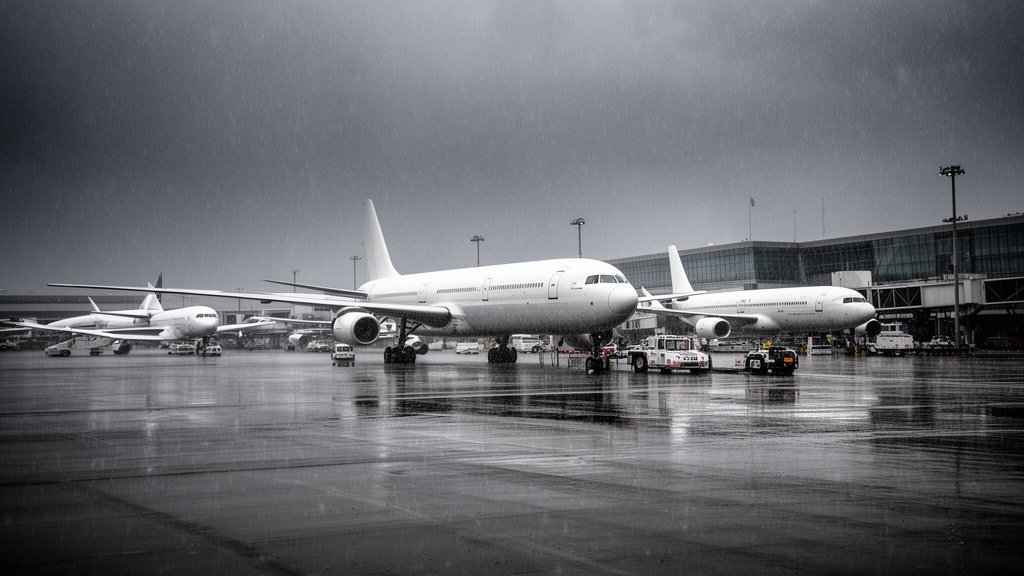
As millions of Americans prepare to navigate the busiest travel period of the year, a high-stakes meteorological event is unfolding along the Pacific coastline. A series of storms, colloquially referred to as a “storm train,” is forecast to make landfall across the West Coast, creating significant potential for disruption. Starting Tuesday, this system is expected to impact major transit hubs, complicating an already high-volume travel week that the Transportation Security Administration (TSA) anticipates will set new passenger screening records.
Key Highlights
- Impact Zone: The storm system is projected to affect regions from Washington State down to Northern California, with primary concerns for Seattle-Tacoma International Airport (SEA) and San Francisco International Airport (SFO).
- Timing: Weather impacts are forecast to intensify beginning Tuesday, coinciding with the peak “Tuesday-Wednesday” departure window for many holiday travelers.
- Operational Risks: Travelers should anticipate potential ground stops, flight delays, and cancellations as the Federal Aviation Administration (FAA) manages traffic flow in reduced-visibility conditions.
- Proactive Measures: Airlines are already issuing travel waivers for affected regions, encouraging passengers to monitor flight statuses proactively and consider alternate routing if possible.
Navigating the Pacific Weather Gauntlet
The convergence of record-breaking travel demand and severe meteorological conditions presents a complex challenge for the aviation industry and the traveling public. As we approach the Thanksgiving holiday, the meteorological “storm train” moving toward the West Coast is not merely a localized event but a potential bottleneck for the entire national airspace system. When major hubs like Seattle and San Francisco experience significant weather events, the “ripple effect” often extends across the country, as aircraft and crew rotations are delayed, causing cascading issues in airports thousands of miles away.
Meteorological Context: The Atmospheric River
Meteorologists are closely tracking the development of an atmospheric river—a long, narrow region in the atmosphere that transports most of the water vapor outside of the tropics. This specific storm system is tapping into a moisture-rich environment, promising heavy rainfall, strong winds, and mountain snow in the Cascade and Sierra Nevada ranges. The danger here lies in the intensity of the precipitation and the gusting winds, which can limit runway throughput. Air traffic control (ATC) protocols mandate greater separation between aircraft during periods of low visibility and high wind, which inherently reduces the capacity of major airports. For travelers, this translates into the dreaded “ATC delay” codes that plague flight boards during inclement weather.
Airline Logistics and Passenger Rights
For those departing from the West Coast, the primary concern is the potential for significant delays or cancellations. Major carriers, including Alaska Airlines, United, and Delta, have a high concentration of operations in the Pacific Northwest and the Bay Area. When these hubs face sustained weather threats, the operational logic shifts toward preservation of crew hours and aircraft positioning. Passengers must be acutely aware of their rights under Department of Transportation (DOT) guidelines. While airlines are not required to provide compensation for delays caused by “acts of God” or weather—which this storm train certainly qualifies as—they are often obligated to rebook passengers on the next available flight. It is highly recommended that travelers download their airline’s mobile app, which remains the fastest, most reliable way to receive push notifications regarding gate changes or cancellations.
Economic Ripple Effects and Historical Patterns
Beyond the immediate inconvenience, these storm events underscore the fragility of our modern travel infrastructure. Historical data from the last decade suggests that late November storms in the Pacific are becoming more intense, potentially linked to broader shifts in climatic patterns. Economically, these disruptions carry a heavy cost. Airlines lose millions in revenue due to operational inefficiency, while travelers face the spiraling costs of last-minute hotel stays, rental cars, and rebooked flights. Furthermore, this situation highlights the critical need for continued investment in air traffic management technology, such as the FAA’s NextGen initiative, which aims to provide more precise routing to circumvent bad weather. Understanding the historical frequency of these storms, frequent flyers are increasingly opting for “buffer days”—choosing to travel on the Monday before or even the Sunday prior to Thanksgiving to mitigate the risk posed by mid-week systems.
FAQ: People Also Ask
Q: Should I change my flight if a storm is forecasted for my departure day?
A: If your airline has issued a travel waiver, yes. Waivers allow you to change your flight to a different day without paying a fare difference or change fee. Check your airline’s “Travel Alerts” page immediately if you see a storm in the forecast.
Q: How do storms on the West Coast affect flights in the East?
A: The U.S. National Airspace System is interconnected. A “ground delay program” at a major West Coast hub reduces the number of planes landing there, which causes planes at other airports to be held on the ground to prevent “gridlock” in the sky. This can cause cascading delays nationwide.
Q: What is the best way to track if my flight will be canceled?
A: Use third-party tools like FlightAware in addition to the airline’s app. FlightAware provides data on where your specific aircraft is coming from; if the plane for your flight is stuck at a weather-impacted airport, your flight is likely to be delayed regardless of the weather at your current location.
Q: Do I get a refund if the weather cancels my flight?
A: You are entitled to a full refund of your ticket price if the airline cancels your flight and you choose not to travel, regardless of the reason (even weather). However, you are not entitled to additional compensation (like hotel vouchers) for weather-related cancellations, though many airlines provide them as a courtesy.