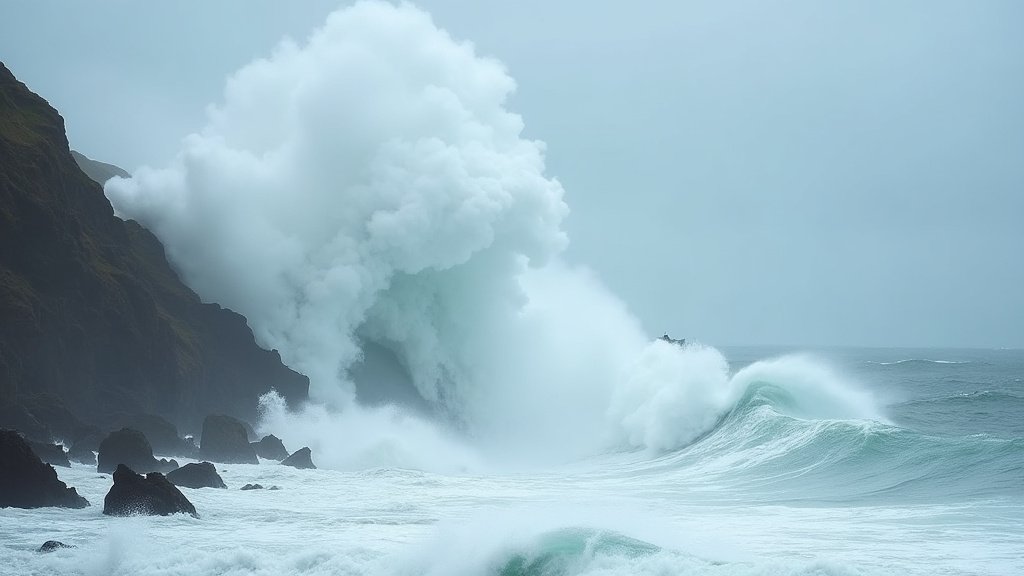
The U.S. West Coast is currently under siege by a severe and life-threatening high surf event, with the National Weather Service (NWS) issuing widespread warnings that stretch from the borders of Washington down to the southern reaches of California. Driven by a powerful, deep-pressure Pacific storm system, this meteorological phenomenon has generated colossal swells, with average wave heights ranging between 25 and 35 feet and localized sets surging as high as 50 feet. Authorities are urging immediate caution, warning that the sheer energy of these waves poses a significant risk to coastal communities, infrastructure, and any individuals venturing too close to the shoreline.
Key Highlights
- Extensive Alert Coverage: NWS high surf warnings are active across the entire West Coast, affecting Washington, Oregon, and California coastal regions.
- Historic Wave Heights: Deep-water swells are averaging 25 to 35 feet, with rogue sets reaching a staggering 50 feet in specific, exposed coastal areas.
- Meteorological Driver: A potent Pacific storm system, characterized by a massive fetch of wind, is the primary force behind the abnormal surf energy.
- Public Safety Imperative: Local officials have mandated beach closures and designated high-risk zones as off-limits to mitigate the risk of injury from sneaker waves and coastal inundation.
The Pacific Onslaught: Anatomy of a Historic Swell
The Meteorological Engine
The current high surf event is not a localized incident but the result of a massive, low-pressure system churning in the North Pacific. Meteorologists identify the primary driver as an intense “bomb cyclone” trajectory that has created a massive “fetch”—the distance over which wind blows uninterrupted over the ocean surface. As this system tracks eastward, it transfers kinetic energy into the water, generating long-period swells that travel thousands of miles before impacting the North American coastline.
When these deep-water swells encounter the shallower bathymetry near the continental shelf, the waves “trip,” forcing the water to pile upward into the massive 50-foot peaks currently being recorded. This process is further amplified by constructive interference, where separate wave trains merge, leading to the unpredictable and dangerous “rogue” sets reported by coastal monitoring stations.
Coastal Impact and Regional Variations
The impact of this storm is geographically diverse. In the Pacific Northwest, specifically along the rugged coastlines of Washington and Oregon, the combination of high surf and king tides creates a high risk of coastal flooding and severe beach erosion. These areas, characterized by steep cliffs and rocky inlets, are particularly susceptible to the scouring power of these massive waves, which can undermine cliffside infrastructure and cause significant debris buildup on local highways.
Moving south toward Central and Southern California, the coastal topography varies, leading to different dangers. In legendary surf zones such as Mavericks in Northern California or The Wedge in Newport Beach, the wave energy is focused into specific points. The NWS warns that even on beaches protected by breakwaters or land formations, the sheer volume of water displacement causes dangerous riptides and “sneaker waves”—sudden, unexpected surges of water that can drag observers or unsuspecting beachgoers into the turbulent surf.
Economic and Infrastructure Implications
The economic consequences of such a high-surf event are immediate and tangible. Coastal tourism, a multi-billion-dollar industry for the West Coast, effectively halts as beaches are closed and recreational activities are suspended. Local businesses that rely on the hospitality and ocean-recreation sectors face immediate revenue losses. Furthermore, the physical impact on infrastructure is substantial. Municipalities are bracing for damage to piers, boardwalks, and coastal roadways, such as sections of the Pacific Coast Highway, which are prone to flooding and debris damage during high-surf events. The cost of clean-up, repair, and temporary fortification of coastal assets places a significant burden on local government budgets.
The Climate Context and Future Predictions
While winter storms are a standard feature of the West Coast climate, scientific analysis suggests that the intensity of these events may be shifting due to broader climatic patterns. NOAA (National Oceanic and Atmospheric Administration) researchers have noted that increased ocean temperatures contribute to more energetic storm systems. As the ocean surface warms, it provides more fuel for cyclonic activity in the Pacific. This suggests that while 50-foot surf events remain “extreme,” the frequency of such events may increase over the coming decades, prompting a re-evaluation of coastal zoning and building codes. Engineers are increasingly looking at long-term resilience strategies, such as managed retreat for coastal structures and natural berm restoration, to combat the encroaching threat of an increasingly violent Pacific Ocean.
FAQ: People Also Ask
Why are these waves so much larger than normal winter surf?
These waves are driven by an unusually strong Pacific storm system with a massive fetch. The longer the distance the wind travels over the ocean, the more energy is transferred to the water, resulting in longer, more powerful, and taller waves when they hit land.
Are the beaches completely closed?
Yes, in many counties, lifeguards and public safety officials have cordoned off beach access. Even in areas without official closures, it is strongly advised to stay at least 100 feet back from the waterline to avoid the risk of sneaker waves.
How long will the high surf warning last?
The National Weather Service typically updates these warnings every 12 to 24 hours based on the storm’s progression. Residents should check their local NWS forecast office website for specific expiration times in their county.
What is a ‘sneaker wave’?
A sneaker wave is an unexpectedly large wave that surges much higher up the beach than the preceding waves, often catching observers off guard. These waves are the primary cause of surf-related accidents during high-energy weather events.