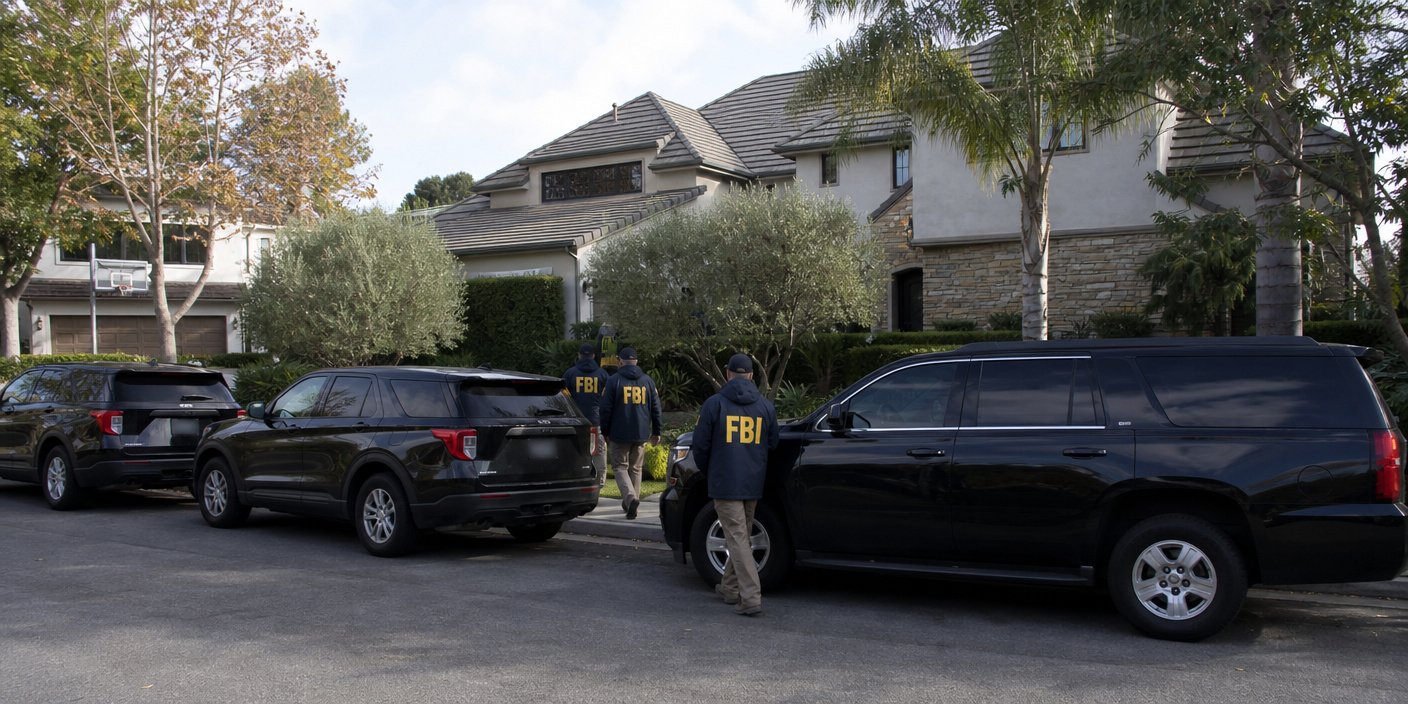
The Federal Bureau of Investigation (FBI) has executed a search warrant at the California residence of Representative Eric Swalwell, marking a significant and dramatic escalation in a federal investigation centered on sexual assault allegations. The operation, which took place amid a cloud of secrecy, represents a rare and high-stakes enforcement action against a sitting member of the United States Congress.
The Execution of the Warrant
According to federal sources, agents arrived at the Representative’s California property early in the day, securing the perimeter to facilitate what was described as a court-ordered search. The execution of a search warrant at the private home of a high-ranking legislative official is a procedure fraught with complex legal and constitutional considerations, typically requiring approval from high-level Department of Justice officials. The presence of federal agents in the neighborhood sparked immediate public attention and speculation regarding the specific focus of the ongoing sexual assault inquiry.
While federal law enforcement agencies generally maintain strict confidentiality regarding ongoing investigations, the visibility of this operation suggests that investigators are seeking specific, time-sensitive evidentiary material. The warrant, authorized by a federal judge, indicates that the Department of Justice has established probable cause to believe that evidence pertinent to the sexual assault investigation could be found on the premises.
Scope of the Sexual Assault Inquiry
This raid is the latest development in a protracted investigation into allegations of sexual assault. While the specific details of the claims remain under seal—as is customary in sensitive federal probes—the involvement of the FBI signals the gravity of the allegations. The agency has been building a dossier that reportedly involves witness testimony and digital forensics, which appear to have necessitated this physical intervention at the Representative’s residence.
Legal experts suggest that such a step is rarely taken unless investigators have exhausted other, less intrusive means of obtaining evidence or if they fear the destruction of information. The transition from a preliminary inquiry to an active search warrant execution highlights the increasing pressure on the investigators to secure concrete physical or electronic evidence to substantiate the claims that triggered the probe.
Political and Legislative Ramifications
Representative Eric Swalwell, a prominent figure in the House of Representatives, now faces a critical juncture in his political career. The optics of a federal raid are severe, regardless of the ultimate findings. In the halls of Congress, the incident has already prompted questions regarding the impact on committee assignments and the broader integrity of the legislative body.
Members of the House are generally afforded certain protections under the Speech or Debate Clause of the Constitution, which protects them from being questioned in other places for any Speech or Debate in either House. However, this protection does not extend to criminal acts, and the Department of Justice has historically navigated the fine line between pursuing legitimate criminal investigations and avoiding perceived political interference. This situation is being closely watched by leadership on both sides of the aisle, as the outcome of this investigation will undoubtedly influence the legislative agenda and the standing of the involved parties.
The Procedural Roadmap of Federal Investigations
Moving forward, the evidence seized during the raid will undergo a rigorous forensic analysis. The FBI will prioritize the authentication of digital files and the cataloging of physical documents collected from the home. This evidence will likely be reviewed by federal prosecutors to determine whether the threshold for criminal charges has been met.
If the investigation advances to a grand jury, the seized material will serve as the cornerstone of the prosecution’s case. The process of analyzing such evidence can take weeks or months, during which time the Representative and his legal team will likely seek to challenge the scope of the warrant. This legal maneuvering will set the stage for a protracted battle over privacy rights, the extent of federal investigative powers, and the substantive merits of the sexual assault allegations themselves.
Emerging Questions on Transparency and Justice
As the investigation continues, a key question remains: to what extent will the Department of Justice be transparent with the public? While the government typically resists disclosing details of active investigations to protect the integrity of the process, the high-profile nature of this case creates significant pressure for public disclosure. The intersection of a federal criminal probe and the public office held by the subject creates a unique tension between the presumption of innocence and the public’s right to accountability.
This incident also reignites the debate regarding the Department of Justice’s guidelines for investigating sitting lawmakers. Protocols intended to prevent political bias often result in prolonged investigations, which in turn fuels public frustration. The coming weeks will likely reveal whether the evidence gathered during this search is sufficient to warrant formal charges or if the investigation will conclude without further punitive action.
FAQ: People Also Ask
1. What is the significance of the FBI executing a search warrant at a Congressman’s home?
Executing a search warrant on a sitting member of Congress is an extraordinary measure. It requires evidence strong enough to convince a federal judge that there is probable cause that evidence of a crime exists on the property. It signifies that the investigation has moved past the preliminary information-gathering stage and into active evidence collection.
2. Does this raid imply that Representative Swalwell has been charged with a crime?
No. A search warrant is an investigative tool used to collect evidence. It is not an indictment or a formal charge. The legal process must proceed through investigations, evidence review, and potentially a grand jury before any charges are formally filed.
3. How does the Speech or Debate Clause affect this investigation?
The Speech or Debate Clause provides immunity to members of Congress for legislative acts. However, this constitutional protection does not shield members of Congress from the investigation or prosecution of criminal conduct unrelated to their legislative duties. Law enforcement is permitted to investigate alleged criminal activity so long as they do not infringe upon the legislative process.
4. What happens to the evidence seized by the FBI?
Evidence seized during a federal raid is cataloged, secured, and analyzed by specialized forensic teams. It is then reviewed by prosecutors to determine if it supports the allegations. The defense team is also entitled to challenge the validity of the warrant and the methods of seizure, which can lead to complex litigation before any evidence is presented in court.