The High-Stakes Collision of Holiday Travel and Coastal Peril
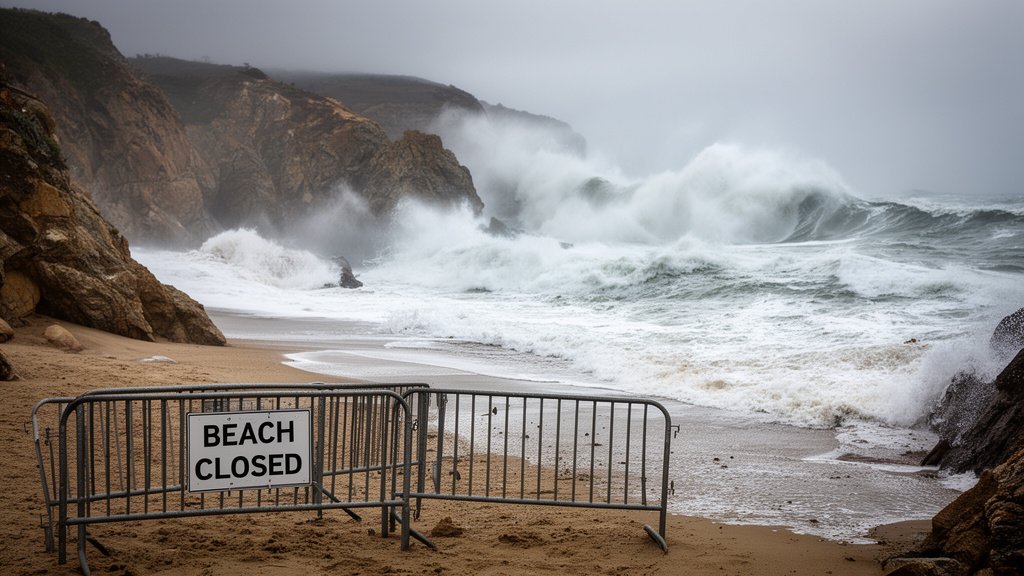
As millions of Americans traverse the California coastline for the Thanksgiving holiday, a dangerous meteorological event has forced an emergency response from local and state authorities. Record-breaking king tides—exceptionally high tides that occur when the orbits and alignment of the Earth, Moon, and Sun create maximum gravitational pull—are currently battering the Pacific coast. The National Weather Service (NWS) has issued urgent advisories across several coastal counties, warning of hazardous surf conditions where wave heights could reach an imposing 30 feet. The immediate result has been the strategic closure of popular beaches and coastal access points in cities such as Santa Cruz and Monterey, as officials prioritize public safety over recreational access during one of the year’s busiest travel windows.
Anatomy of the King Tide Event
King tides are a naturally occurring phenomenon, but their impact is being amplified by the current atmospheric conditions. These are not merely high tides; they represent the highest predicted tide of the year. When combined with storm surges or heavy swells, the consequences for coastal infrastructure are significant. The current surge is particularly dangerous because it coincides with a period of high human activity on the coast.
Meteorologists from the National Weather Service note that these tides, when crashing against the shoreline, have the kinetic energy to cause rapid erosion and localized flooding in low-lying coastal neighborhoods. The “king” status of these tides often pushes seawater past the typical high-tide line, inundating parking lots, beachfront walkways, and even sections of the iconic Pacific Coast Highway, which serves as a critical artery for holiday transit.
The Geography of the Threat: Santa Cruz and Beyond
While the entire California coast is on high alert, specific municipalities have faced the brunt of the inundation. In Santa Cruz, city officials have cordoned off key beach segments, citing the immediate danger of sneaker waves—sudden, large swells that can sweep individuals off the sand or rocks without warning. Similarly, in Monterey, the picturesque coastline, usually a magnet for holiday tourists, has seen restricted access as the surging ocean threatens to overtop local seawalls.
These closures are not arbitrary. They are calculated decisions based on real-time data regarding wave period, tide height, and historical flooding patterns. Authorities in these jurisdictions are working closely with the National Weather Service to monitor the hourly progress of the swells, with the understanding that even a few minutes of exposure in the wrong location could lead to a life-threatening situation for unsuspecting visitors.
Climate Context: The New Normal for Coastal California
Beyond the immediate crisis, the severity of these events has reignited discussions regarding long-term coastal management. Scientists and coastal engineers have long warned that rising sea levels exacerbate the impact of king tides. What might have been a manageable high tide decades ago now carries the potential for significant structural damage. This year’s Thanksgiving event serves as a high-visibility case study for how climate change is reshaping the frequency and intensity of “nuisance” flooding, turning what were once rare occurrences into routine logistical challenges for coastal municipalities.
Economic Ripples: Holiday Tourism at Risk
There is an undeniable economic component to these closures. Thanksgiving week is typically a lucrative period for the coastal hospitality industry. When beaches close, the draw for tourists diminishes, leading to cancellations and lost revenue for local businesses ranging from surf shops to waterfront dining establishments. Local chambers of commerce are navigating the difficult balance of promoting safety while attempting to maintain the viability of the local economy during the holiday rush.
Mitigation and Long-Term Resilience
How do cities prepare for the inevitable return of these tides? The strategy involves a multi-tiered approach:
1. Advanced Warning Systems: Utilizing NWS data to provide real-time updates via SMS and emergency broadcast alerts.
2. Infrastructure Reinforcement: Assessing the integrity of seawalls and drainage systems to ensure they can withstand the hydrostatic pressure of the king tides.
3. Public Education: Campaigning to ensure that tourists understand the difference between a “calm” ocean and the hidden dangers of a high-tide surge.
As we navigate the remainder of the holiday season, the message from public safety officials is clear: the ocean is currently acting in an unpredictable and powerful manner. Respecting the barricades and adhering to NWS advisories is not just a suggestion, but a prerequisite for ensuring safety during this extreme weather event.
FAQ: People Also Ask
Q: What exactly is a ‘King Tide’?
A: A King Tide is a non-scientific term used to describe an exceptionally high tide that occurs when the moon, earth, and sun align, creating a stronger gravitational pull. They occur in the winter months when the moon is closest to the Earth.
Q: Why are these specific tides causing so much flooding?
A: When the astronomical high tide coincides with weather-driven storm surges or significant swell, the water levels rise higher than predicted. This excess water pushes into areas that are usually dry, leading to the coastal flooding currently observed.
Q: Is it safe to visit the beach at all right now?
A: Public safety officials advise staying far back from the shoreline. Even if a beach is not officially closed, ‘sneaker waves’ can occur during king tide events, pulling people into the water from rocks or the shoreline. Please check local city government websites for the latest beach closure status before traveling.