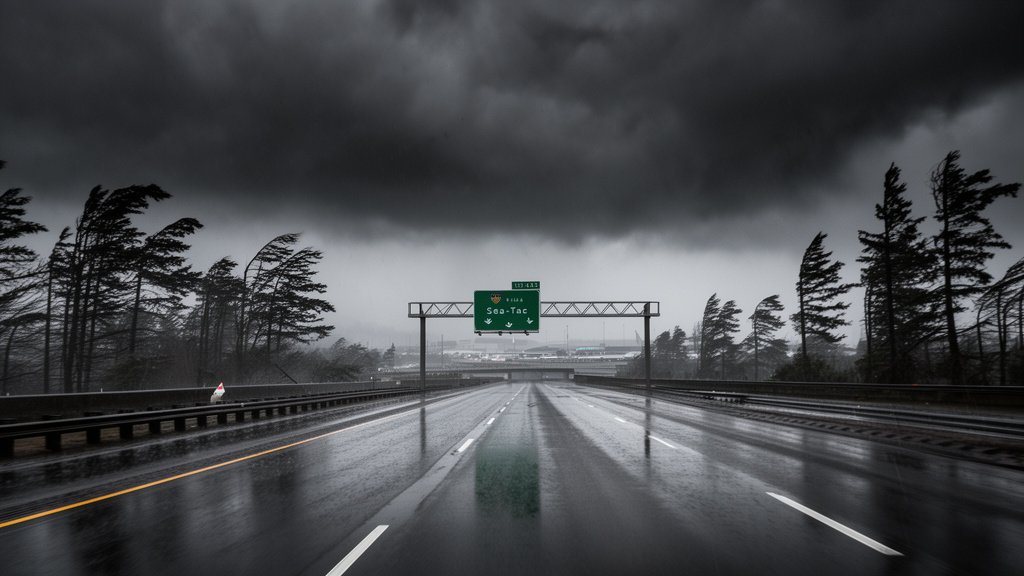
A significant winter weather system is tracking toward western Washington, with meteorologists warning of steady rain and strong winds beginning late Wednesday, potentially complicating Thanksgiving travel plans across the region. The incoming front is expected to impact major transportation hubs, including the I-5 corridor and Seattle-Tacoma International Airport, as holiday traffic reaches its annual peak.
Key Highlights:
- Timing: Severe weather conditions, characterized by heavy precipitation and sustained winds, are projected to arrive late Wednesday.
- Travel Infrastructure: Potential delays are anticipated for air travel at Sea-Tac, ferry services across Puget Sound, and ground transportation on major state highways.
- Safety Advisories: Local authorities, including the Washington State Department of Transportation (WSDOT), are urging travelers to monitor road conditions and prepare for potential power outages.
- Wind Concerns: Gusts could reach speeds capable of downing trees and power lines, with utility providers already bracing for localized service interruptions.
The Meteorological Setup and Regional Impact
The Pacific Northwest is bracing for a potent weather system that threatens to upend the travel schedules of thousands as the Thanksgiving holiday period begins. According to the latest models from the National Weather Service (NWS) Seattle office, the system is characterized by a deep low-pressure center that will bring intense moisture and tight pressure gradients to western Washington.
The Anatomy of the Storm
This particular weather pattern is classic for the region during late November, often referred to as an “atmospheric river” setup if the moisture plume is sufficiently connected to tropical origins. For travelers, the primary concern is not just the rainfall volume—which could cause localized flooding in poor drainage areas—but the high-velocity wind gusts. These winds often arrive in “bursts” or squalls, making high-profile vehicles on highways like Interstate 5 particularly vulnerable. Meteorologists advise that this wind component increases the probability of tree falls, which are the leading cause of power outages in the Puget Sound area during autumn and winter storms.
Transportation Hub Disruptions
Sea-Tac International Airport is bracing for the confluence of holiday volume and meteorological instability. While modern aviation technology can handle significant weather, low visibility and high crosswinds can force air traffic controllers to increase the spacing between arriving and departing aircraft. This “flow management” often creates a domino effect, leading to cascading delays that can ripple across the entire national airspace system. Travelers are advised to check their flight status well in advance and prepare for potential rescheduling.
Similarly, Washington State Ferries, a critical link for travelers heading to the Olympic Peninsula and the San Juan Islands, may experience service disruptions. High winds can trigger safety protocols that limit vessel docking, potentially leading to significant wait times at major terminals like Edmonds and Bainbridge Island.
Infrastructure and Utility Preparedness
Utility providers, including Puget Sound Energy (PSE) and Seattle City Light, have shifted into a heightened state of readiness. Crews are positioned to respond to potential downed lines, although they warn that the speed at which repairs can be conducted may be hampered by the ongoing severity of the weather. Residents in rural or heavily forested areas should prepare for the possibility of extended power outages, ensuring they have emergency supplies readily available.
Secondary Angles: Resilience, Economics, and Historical Context
To understand the broader implications of this weather event, we must look beyond the immediate travel delays.
1. The Economics of Disruption: Holiday travel represents one of the single most concentrated periods of economic activity in the U.S. travel sector. A disruption in the Pacific Northwest creates immediate financial friction: airlines face increased operational costs for de-icing and crew re-assignment, while regional retailers see a dip in foot traffic as residents opt to stay indoors. The “cost” of this storm is measured in millions of dollars of lost productivity and consumer activity.
2. Historical Weather Patterns: While storm systems in November are expected, recent years have shown an increased frequency of “rapid intensification” events. Looking back at 2021 and 2022, western Washington experienced back-to-back years of holiday-adjacent storms that tested the region’s infrastructure. This repetition is forcing a conversation about the resilience of the power grid, specifically the burying of lines in high-risk zones, which remains a slow and costly infrastructure challenge.
3. Climate Shifts and Travel Planning: Climatologists are increasingly studying how warmer atmospheric temperatures—which hold more water vapor—impact the intensity of these winter storms. For the casual traveler, this translates to a need for “resilient travel planning,” where the expectation of perfect weather is replaced by a proactive approach that includes travel insurance and flexible itinerary adjustments.
FAQ: People Also Ask
Q: What is the exact start time for the severe weather?
A: According to the current NWS projections, conditions are expected to deteriorate beginning late Wednesday, with the most significant impacts likely continuing through the Thanksgiving holiday period.
Q: Should I change my travel plans due to the wind warning?
A: Authorities recommend that travelers do not necessarily cancel, but rather prepare for delays. If you are driving, ensure your vehicle is maintained for wet-weather driving and consider leaving early to avoid the peak of the storm.
Q: Who is responsible for alerting the public about these travel risks?
A: The National Weather Service (NWS) Seattle office is the primary source for meteorological data. You should also monitor the WSDOT social media channels and your specific airline’s mobile app for real-time updates.