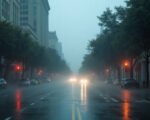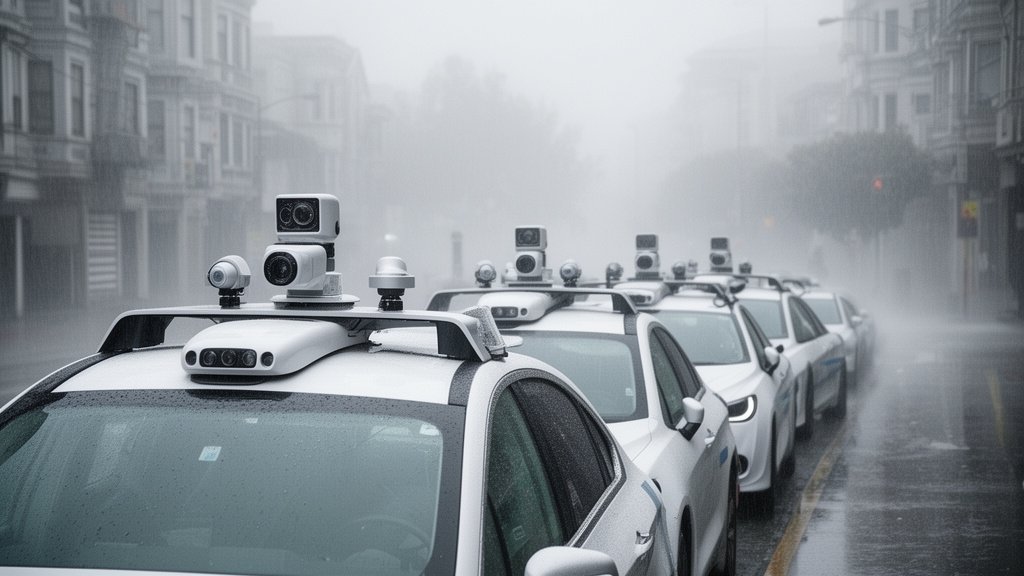
Waymo, the leader in autonomous driving technology, has officially suspended its commercial ride-hailing services across the San Francisco Bay Area effective November 23, 2026. This proactive move comes as a direct response to a severe atmospheric river and historic King Tide event currently battering the Northern California coastline. The company is working in close coordination with Mayor Daniel Lurie’s administration and the San Francisco Department of Emergency Management (SFDEM) to ensure transit corridors remain clear for first responders and essential emergency services as the region braces for intense rainfall and potential flooding.
Key Highlights
- Immediate Suspension: All Waymo autonomous ride-hailing services in the Bay Area were paused as of November 23, 2026, to prioritize public safety.
- Direct Government Coordination: The decision was finalized following high-level talks with the San Francisco Department of Emergency Management and Mayor Daniel Lurie’s office.
- Environmental Catalyst: The move is a response to an incoming atmospheric river event expected to bring record-breaking rainfall, coinciding with historic King Tides that threaten low-lying coastal transit arteries.
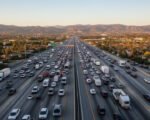
- Operational Priority: The primary objective is to keep road networks clear for municipal vehicles, emergency personnel, and critical infrastructure maintenance crews.
Navigating the Climate Emergency: A Strategic Pause
The decision by Waymo to ground its fleet in the San Francisco Bay Area represents a significant departure from standard service models. Typically, autonomous vehicles are touted for their ability to navigate complex urban environments, but the compounding risks of a severe atmospheric river and the extreme coastal surge associated with King Tides create a unique set of challenges that transcend normal operational parameters. By voluntarily removing vehicles from the road, Waymo is effectively reducing the load on traffic networks during what city officials are describing as a potentially historic weather event.
The Mechanics of the Atmospheric River Threat
Atmospheric rivers are intense, narrow regions in the atmosphere that transport water vapor from the tropics. When they hit the rugged topography of the San Francisco Bay Area, they dump high volumes of rain, leading to rapid runoff and localized flooding. Coupled with King Tides—exceptionally high tides that occur when the moon is at its closest point to Earth—the coastal vulnerability of the city reaches a peak. Storm drains, already potentially overwhelmed by rainfall, are further compromised by the incoming ocean surge, creating unpredictable hazards for any vehicle. For an autonomous fleet, this presents a high degree of sensor interference (lidar, radar, and cameras) and the potential for vehicle entrapment in flooded areas.
The Collaboration Model: Tech and City Hall
This event highlights a maturing relationship between Silicon Valley’s autonomous transport providers and the municipal government. Mayor Daniel Lurie’s administration has been vocal about the need for integrated crisis management. Rather than a reactive regulatory ban, the suspension appears to be a cooperative, proactive measure. By syncing with the San Francisco Department of Emergency Management (SFDEM), Waymo is signaling that its operations are not isolated from the public health and safety ecosystem but are, in fact, integral participants in urban resilience strategies. This partnership allows emergency planners to clear the digital and physical traffic grid, allowing city services to move with higher velocity to prevent or mitigate disaster impacts.
Secondary Angle: The Evolution of Autonomous Resilience
One might ask if autonomous vehicles should be robust enough to operate in extreme weather. However, the limitation isn’t necessarily just hardware capability—it is systemic risk management. If a robotaxi encounters a deep, flooded intersection or a debris-clogged thoroughfare that isn’t on its map, the vehicle is designed to come to a safe stop. In a mass-scale weather event, having hundreds of such vehicles coming to a stop due to environmental uncertainty could clog up arterial roads, paradoxically preventing the very people and emergency vehicles that need to pass from moving. Thus, the decision to ‘go dark’ is a responsible architectural choice for the safety of the entire city.
Secondary Angle: The Economic Impact on the Robotaxi Sector
While revenue will temporarily decline for the company, the brand equity gained by prioritizing public safety is substantial. As autonomous driving matures, these ‘weather event’ protocols will become part of the standard operating procedure, much like how airlines ground flights during hurricanes or blizzards. This event sets a precedent for how the tech industry will calculate the cost-benefit analysis of ‘service versus safety’ in an era of increasingly erratic climate-driven events.
Secondary Angle: Future-Proofing Urban Planning
Moving forward, the integration of real-time municipal weather data into autonomous vehicle dispatch systems is likely to become a standard requirement. The ability to automatically geo-fence ‘at-risk’ zones before a storm hits, or to throttle vehicle numbers to match the projected capacity of a city’s emergency-cleared routes, will become the gold standard for AV fleet management. San Francisco is, in many ways, the testing ground for this global standard.
FAQ: People Also Ask
1. Will Waymo vehicles be available for any purposes during the suspension?
No. As of November 23, 2026, the company has clarified that commercial operations are paused to align with the city’s request for clear transit corridors. Essential maintenance or software testing may occur, but commercial ride-hailing is fully suspended.
2. Why are King Tides specifically a problem for autonomous vehicles?
King Tides cause salt-water flooding in low-lying areas. Beyond the physical damage to vehicle undercarriages, salt water can interfere with the reflectivity and sensor accuracy of the car’s lidar and radar systems, making navigation less predictable than in standard rain conditions.
3. How does this decision impact public safety for non-Waymo drivers?
By removing a significant portion of traffic, Waymo is freeing up road space. This helps emergency personnel, such as police, fire, and paramedic crews, reach their destinations faster, which is critical during a storm event when every minute of response time counts.
4. Is there a projected date for the resumption of services?
Waymo has not provided a specific date, noting that they are monitoring the situation in real-time. Resumption will occur only after the San Francisco Department of Emergency Management provides clearance that the transit infrastructure is safe and that the storm’s peak threat has passed.