The holiday season is approaching, and for the 81.5 million Americans preparing to journey at least 50 miles this Thanksgiving, the 2026 travel landscape is defined by a delicate balance of caution and movement. According to the latest data, AAA projections indicate a modest 0.1% decline in overall travel volume compared to the 2025 holiday season. While this dip may seem marginal on paper, it reflects a significant psychological and economic shift among consumers. High gas prices and the sustained impact of travel-related inflation remain the primary headwinds for potential travelers, forcing families to rethink not just when they leave, but how they reach their destinations.
Key Highlights
- Travel Volume: 81.5 million Americans are expected to travel at least 50 miles for the holiday.
- Market Trend: A slight 0.1% decline in overall travel volume compared to the 2025 holiday figures.
- Primary Constraints: High gas prices and rising travel costs are identified as the leading drivers behind the flattened demand.
- Shifting Preferences: While road travel remains the dominant mode, segments such as cruise, bus, and train transportation are experiencing measurable growth.
Navigating the 2026 Holiday Transit Landscape
The 2026 Thanksgiving travel forecast reveals a nation at a crossroads. While the anticipated 0.1% decline in traveler numbers suggests a slight cooling of the post-pandemic “revenge travel” era, the volume remains historically high. The primary friction point for this year’s travelers is undoubtedly the economic environment. With fuel costs remaining a persistent concern for budget-conscious families, the decision to hit the road is no longer automatic. Instead, we are witnessing a deliberate pivot toward efficiency, where travelers are weighing the cost of gasoline against the rising convenience and relative price stability of alternative transport modes.
The Economic Pulse: Why the 0.1% Matters
To understand the 2026 travel climate, one must analyze the intersection of disposable income and logistical costs. The slight dip of 0.1% in total volume—representing tens of thousands of fewer trips—is a direct reflection of household budget tightening. Gas prices are the single most significant factor in this equation. As fuel costs fluctuate, they act as a gatekeeper for middle-class travel, pushing some to consolidate their trips or opt for closer destinations. However, the travel industry is proving resilient. The demand for leisure and family reunions remains a non-negotiable expense for the majority of the population, which explains why the decrease is so slight despite ongoing economic pressures.
Shifting Gears: The Rise of Alternative Transit
One of the most compelling narratives in this year’s data is the growth in alternative transport. As road travel becomes more expensive and stressful, many Americans are turning to public infrastructure providers. Amtrak and intercity bus lines are seeing a surge in bookings, driven by travelers who prioritize time efficiency and cost predictability over the perceived freedom of the personal automobile. Similarly, the cruise industry has seen an uptick in Thanksgiving bookings as families choose to bundle their holiday dining, travel, and entertainment into a single, predictable cost structure. This shift indicates a maturing travel market that is less fixated on the traditional “road trip” and more focused on maximizing value-per-dollar.
Tactical Timing: Mastering the Holiday Rush
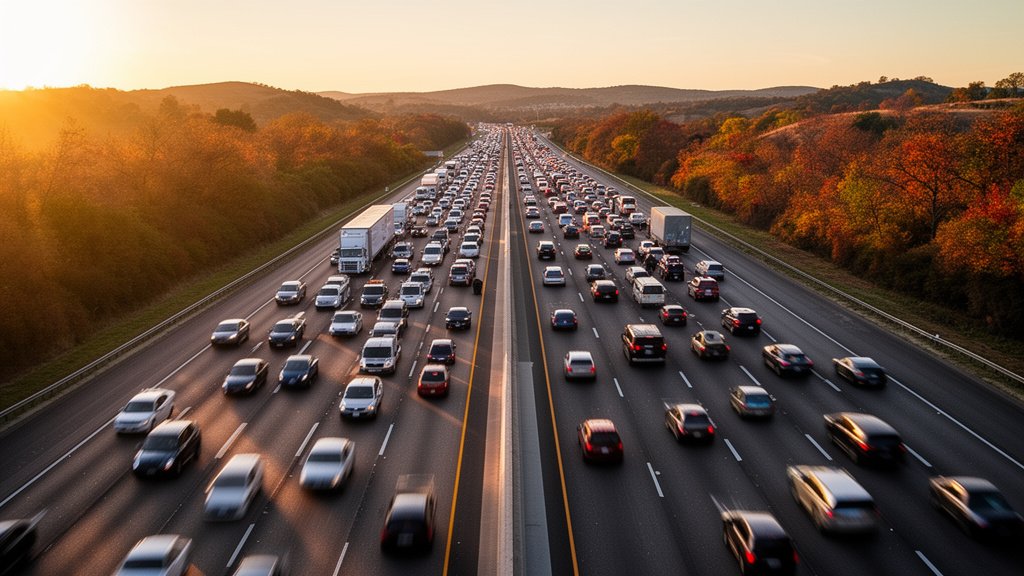
The “best and worst” times to hit the road remain the most critical piece of intelligence for the 81.5 million travelers involved. Based on historical traffic patterns and the current volume projections, the Wednesday before Thanksgiving remains the most volatile time to travel. Heavy congestion typically peaks between 2:00 PM and 6:00 PM as commuters leaving work mix with holiday travelers. For those planning to drive, departing before 8:00 AM on Wednesday—or opting to leave on Thanksgiving Day morning—remains the most effective strategy to avoid the worst gridlock. Return travel is equally pressurized, with the Sunday post-holiday afternoon representing the peak return window. To mitigate stress, travelers are advised to utilize real-time traffic monitoring apps and adjust departure times by 2-3 hours to “bridge” the peak traffic waves.
Secondary Angles: Future-Proofing Holiday Travel
1. The Remote Work Factor: The evolution of the hybrid work model is fundamentally changing the “Wednesday-to-Sunday” travel window. More travelers are extending their trips by working remotely on Monday and Tuesday, effectively smoothing out the historical traffic spikes we once observed.
2. Infrastructure Resilience: The sustained interest in train travel highlights an urgent need for infrastructure investment. As travelers increasingly seek alternatives to highways, the pressure on rail and bus networks will likely require systemic scaling in the coming years.
3. Psychological Shifts: The 0.1% decline might actually represent a shift toward “hyper-local” holidays, where travelers replace long-distance journeys with shorter, more regional experiences to maintain the tradition of Thanksgiving without the heavy price tag of long-haul travel.
FAQ: People Also Ask
Q: What is the single biggest factor causing the 0.1% decline in travel?
A: The primary factor is the combination of persistent inflation and high gas prices, which are forcing families to reconsider the financial feasibility of long-distance holiday trips.
Q: Is it better to drive or take the train for Thanksgiving 2026?
A: If budget and predictability are your priorities, current trends suggest that rail and bus travel are seeing growth due to their ability to bypass highway congestion, though tickets must be booked significantly in advance.
Q: What is the worst time to be on the road for Thanksgiving?
A: The Wednesday afternoon and evening before the holiday, specifically between 2:00 PM and 6:00 PM, remains the most congested period for highway travel.
Q: Should I book my travel early for the 2026 holiday?
A: Yes. Given the rising demand for alternative transport (cruises and trains), booking at least 6-8 weeks in advance is highly recommended to secure favorable pricing and availability.