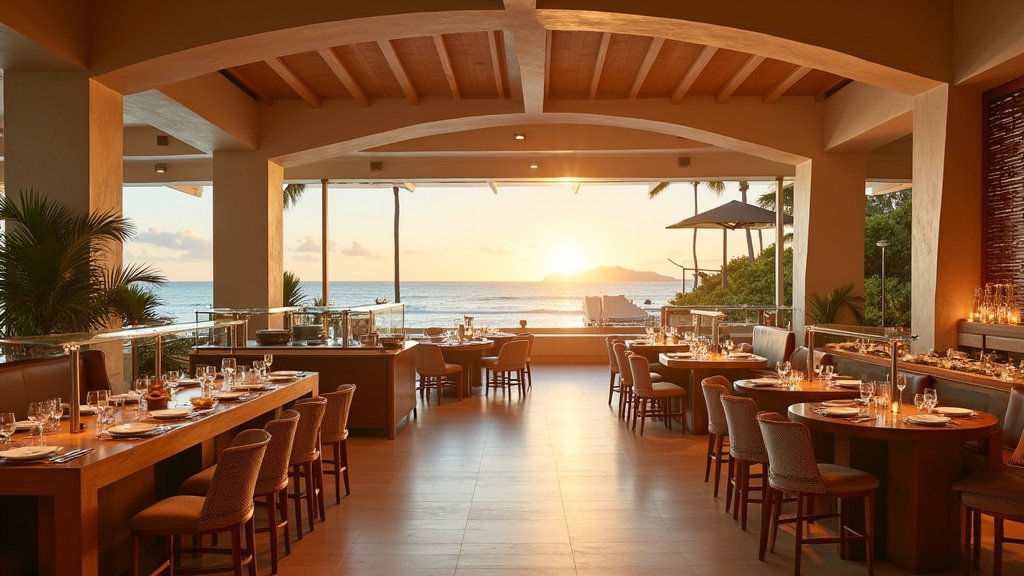
The Sheraton Waikiki has officially transformed its premier oceanfront dining landscape, bidding farewell to the long-standing Kai Market to unveil its successor: Hinahina on the Beach. This strategic rebranding represents a significant shift for the iconic resort, signaling an evolution in its culinary identity that aims to better align with the expectations of the modern traveler. Under the direction of Executive Chef Darren Demaya, the new venue promises a sophisticated yet accessible experience, focusing on coast-inspired cuisine while maintaining the high-volume excellence required for a property of this scale.
The Strategic Pivot: From Kai Market to Hinahina
The transition from Kai Market to Hinahina on the Beach is not merely a name change but a fundamental repositioning of the resort’s primary dining anchor. Kai Market served the Sheraton Waikiki for years as a reliable, high-traffic hub, known for its farm-to-table breakfast and dinner buffets that highlighted local Hawaiian produce. By sunsetting this brand, the Sheraton Waikiki is looking to modernize its aesthetic and culinary narrative. Hinahina on the Beach is designed to capture the essence of the surrounding Pacific, drawing inspiration from the namesake flower and the coastal environment that defines Waikiki. This move allows the resort to refine its menu, introduce more contemporary flavor profiles, and potentially streamline operations to meet the increasing demand for high-quality, destination-style resort dining.
The Chef’s Vision: Darren Demaya
At the helm of this new venture is Executive Chef Darren Demaya, a culinary leader tasked with navigating the complex logistics of resort-scale dining while maintaining a boutique-level quality. Demaya’s approach centers on “coast-inspired” cuisine, a philosophy that prioritizes the bounty of the islands and the surrounding ocean. This involves a rigorous sourcing strategy that emphasizes local ingredients, reflecting the cultural heritage of Hawaii. By placing an emphasis on fresh, coastal-influenced dishes, Chef Demaya is crafting a menu that feels distinctively connected to its location rather than being a generic hotel offering. For the Sheraton Waikiki, having a named executive chef lead this transition provides a sense of accountability and culinary artistry that guests are increasingly seeking in their luxury travel experiences.
Defining the Guest Experience
The guest experience at Hinahina on the Beach remains anchored by the resort’s hallmark breakfast and dinner buffets—a necessity for a property that hosts thousands of transient guests annually. However, the iteration of these buffets is expected to be more intentional, focusing on thematic rotations and curated stations that allow for a more interactive dining experience. The restaurant’s design remains centered on the oceanfront, preserving the prime vistas that have made the Sheraton Waikiki a bucket-list destination for decades. Whether it is the morning light reflecting off the Pacific during the breakfast service or the ambient sunset hues during dinner, the physical location remains the star of the show. The new interior design elements are intended to complement this environment, moving away from the more traditional motifs of the past toward a cleaner, more fluid, and nature-inspired aesthetic.
Secondary Angles: The Evolution of Resort Dining
1. Economic Resilience and Brand Refreshment: The decision to replace a well-known establishment like Kai Market demonstrates the economic necessity of keeping resort facilities fresh. In the competitive Waikiki market, stagnation is a liability. By refreshing the brand, the Sheraton Waikiki encourages repeat guests to return and experience something new, thereby protecting its market share against newer boutique competitors.
2. The Shift in Traveler Expectations: Post-pandemic travel has accelerated the demand for “experiential dining.” Guests are no longer content with standard “hotel food.” They seek narratives, local sourcing, and chef-driven concepts. Hinahina on the Beach is a direct response to this shift, proving that even large-scale resort operations must adopt smaller-scale artisanal values to remain relevant.
3. Operational Continuity vs. Innovation: Balancing the high-volume requirements of a large resort with the need for culinary innovation is the primary challenge for Executive Chef Darren Demaya. The successful transition involves maintaining the operational efficiency of the previous buffet model while elevating the quality of individual components—a balancing act that will likely set a precedent for other major Hawaii resorts looking to update their dining portfolios.
FAQ: People Also Ask
Q: Is Hinahina on the Beach open to the public, or is it exclusively for resort guests?
A: Like its predecessor, Hinahina on the Beach is open to both registered guests of the Sheraton Waikiki and the general public, making it a accessible dining option for those visiting or living in the Waikiki area.
Q: How does the menu differ from the former Kai Market?
A: While still focused on comprehensive breakfast and dinner buffets, the menu at Hinahina on the Beach is specifically characterized as “coast-inspired.” This shift leans more heavily into locally sourced seafood and coastal agricultural products compared to the broader, more traditional fare previously offered at Kai Market.
Q: What is the significance of the name ‘Hinahina’?
A: The name “Hinahina” refers to a species of native Hawaiian plant (often the silversword or beach heliotrope), which is deeply rooted in the local environment and culture, emphasizing the restaurant’s commitment to a sense of place and regional authenticity.