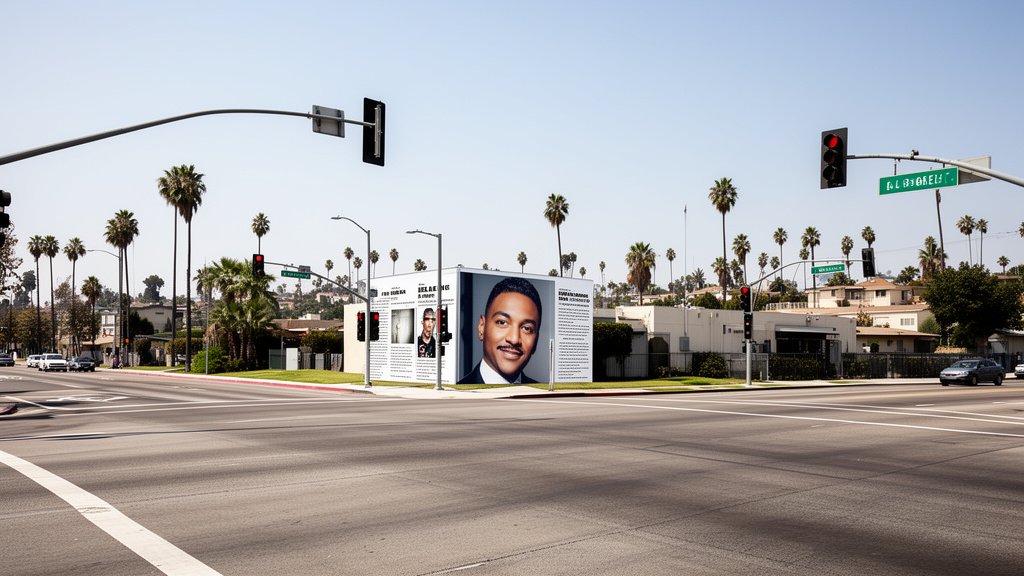
In a legal conclusion that sets a significant precedent for vehicular manslaughter cases, a Los Angeles jury has convicted Nicole Linton, a former registered nurse, of six counts of second-degree murder. The verdict follows the catastrophic August 4, 2022, crash in Windsor Hills, where Linton accelerated her Mercedes-Benz to 130 mph before running a red light, obliterating multiple vehicles at the intersection of La Brea and Slauson Avenues. The tragedy, which resulted in the deaths of six people, including a pregnant woman and her unborn child, sparked widespread outrage and renewed calls for traffic safety reforms across Los Angeles County.
The Mechanics of the Tragedy
On that fateful Thursday afternoon, the intersection of La Brea and Slauson, typically a bustling corridor, became the site of one of the deadliest traffic collisions in recent California history. Prosecution evidence presented during the trial demonstrated that Linton did not brake as she approached the intersection. Instead, data from the vehicle’s event data recorder (EDR) confirmed she accelerated, reaching speeds of approximately 130 mph—more than double the posted speed limit—seconds before the impact. The collision force was so extreme that it sent vehicles flying, ignited a fireball, and scattered debris across a wide radius. Emergency responders described the scene as akin to an explosion, with the initial investigation struggling to immediately identify all victims due to the severity of the wreckage.
The Legal Argument: Murder vs. Manslaughter
The central tension of the trial revolved around the prosecution’s decision to pursue second-degree murder charges rather than the more common vehicular manslaughter charges. The Los Angeles County District Attorney’s office argued that Linton acted with “implied malice,” a legal threshold requiring proof that the defendant consciously disregarded the extreme danger to human life. Prosecutors highlighted that Linton had a documented history of dangerous driving, including numerous prior speeding violations, arguing that she was fully aware of the lethal risks posed by her behavior. By ignoring these risks, the prosecution successfully convinced the jury that her actions constituted murder.
The Defense and the ‘Dissociative State’ Argument
The defense team attempted to mitigate the charges by presenting a complex narrative regarding Linton’s mental state at the time of the incident. Defense attorneys argued that Linton was suffering from an undiagnosed and untreated mental health episode, specifically suggesting she was in a dissociative state that left her incapable of controlling her actions or comprehending the reality of the road. This strategy aimed to portray the event as a tragic medical accident rather than a criminal act. However, jurors ultimately rejected this argument, finding that despite her mental health challenges, she remained legally responsible for the decision to operate a vehicle at such dangerous speeds.
Remembering the Victims
The trial served as a somber reminder of the human cost of the collision. Among the deceased were Asherey Ryan, 23, who was eight months pregnant at the time; her unborn son, Armani Lester; her 11-month-old son, Alonzo Quintero; and her boyfriend, Reynold Lester. Two other victims, Nathesia Lewis and Lynette Noble, were also tragically killed. The families of the victims provided emotional impact statements throughout the proceedings, detailing the profound void left in their lives. The conviction offers a form of judicial closure, though families emphasized that no sentence could rectify the loss of their loved ones.
Secondary Angles of Analysis
1. The Evolution of Vehicular Sentencing: This case marks a shifting trend in how prosecutors handle reckless driving. By successfully securing second-degree murder convictions, the Los Angeles District Attorney’s office has signaled that extreme vehicular negligence—when coupled with a history of dangerous behavior—will be treated with the same severity as violent crime, moving the focus away from ‘accident’ narratives.
2. Mental Health and Professional Liability: The case has sparked a debate within the medical community regarding the intersection of high-stress healthcare professions and personal accountability. While the defense tried to utilize Linton’s career as a nurse to contextualize her mental state, it raised broader questions about how licensing boards and employers monitor the mental health of individuals responsible for public safety, both in their professional and private lives.
3. Intersection Design and Urban Safety: The La Brea and Slauson intersection has become a symbol for a larger, structural failure in urban design. Advocates have used this tragedy to pressure the City of Los Angeles into accelerating the implementation of ‘Vision Zero’ initiatives, arguing that streets designed for high-speed throughput rather than pedestrian and residential safety facilitate these types of high-fatality events.
FAQ: People Also Ask
Q: What is the maximum sentence Nicole Linton faces?
A: With the conviction on six counts of second-degree murder, Linton faces a potential sentence of several decades to life in prison. Sentencing will be determined by the judge based on the totality of the counts.
Q: Did the jury consider the defense’s mental health argument?
A: Yes, the jury was presented with extensive expert testimony regarding Linton’s mental health. Ultimately, the prosecution successfully argued that this did not absolve her of the ‘implied malice’ required for a second-degree murder conviction.
Q: How fast was Nicole Linton driving?
A: Forensic analysis of the vehicle’s event data recorder (EDR) confirmed that Linton reached a speed of 130 mph seconds before the collision occurred.
Q: Where did the collision take place?
A: The collision occurred at the intersection of La Brea and Slauson Avenues in the Windsor Hills neighborhood of Los Angeles.