Governor Gavin Newsom’s narrative blaming federal policy for the stalling of California’s high-speed rail project faces new scrutiny, as records reveal the California High-Speed Rail Authority (CHSRA) failed to procure the necessary rolling stock, regardless of federal funding cuts. While the Governor has frequently pointed to the Trump administration’s 2019 decision to rescind federal grants—often citing the $4 billion figure as the primary catalyst for the project’s stagnation—internal audits and procurement logs indicate that operational missteps within the state agency were already creating significant delays. This discrepancy highlights a growing disconnect between the political rhetoric surrounding the project and the technical reality of its execution.
Key Highlights
- The Procurement Gap: Contrary to the focus on the $4 billion federal funding dispute, the CHSRA failed to meet its internal deadlines for issuing Requests for Proposals (RFPs) for high-speed trainsets.
- Political Framing: Governor Newsom’s assertions regarding federal retribution often omit the agency’s inability to maintain a functional procurement schedule.
- Audit Realities: State audits suggest that the delay in acquiring rolling stock was a compounding factor that predated or exacerbated the impact of the federal grant rescission.
- Infrastructure Reality: Without the procurement of trains, the viability of completed infrastructure segments remains questionable, complicating the project’s timeline and budget management.
Unraveling the High-Speed Rail Stagnation
For nearly a decade, the California High-Speed Rail Authority (CHSRA) has been the centerpiece of the state’s massive infrastructure ambitions—and its most consistent source of political controversy. When Governor Gavin Newsom took office and subsequently leveled accusations at the Trump administration for the cancellation of federal grant funds, the narrative appeared straightforward: federal hostility was the primary blockade to a vision of high-speed transit connecting the Bay Area to the Los Angeles basin. However, as transparency measures and subsequent document disclosures have matured, the reality of the project’s delay has become significantly more nuanced.
The Procurement Deficit
At the heart of the recent findings is the ‘trainset procurement’ phase. High-speed rail systems require specialized rolling stock that must be ordered years in advance due to the complex testing and safety certification processes mandated by the Federal Railroad Administration (FRA) and international standards. Documents recovered through recent oversight show that the CHSRA was significantly behind on its internal schedule to solicit bids for these trainsets.
While federal grant disputes in 2019—specifically the attempted rescission of $929 million in funds—provided a convenient and highly visible focal point for frustration, this event occurred within a context where the state had already missed its own milestones for preparing the procurement pipeline. Had the state been ahead of schedule in its procurement, the arguments for federal obstruction would hold significantly more weight. Instead, the documents paint a picture of a project struggling with internal project management bottlenecks that would have caused delays regardless of the federal fiscal climate.
Historical Context: A Decade of Misalignment
To understand the current impasse, one must look at the project’s history since the 2008 bond measure approval. The California High-Speed Rail Authority has faced a revolving door of leadership, changing project scopes, and aggressive cost estimations that have been repeatedly debunked by the Legislative Analyst’s Office (LAO). The secondary angle here is the inherent complexity of managing a multi-billion dollar, multi-decade megaproject. Political administrations—both Democratic and Republican—have often used the project as a barometer for their own policy efficacy. For Newsom, the rail project represents the state’s climate goals; for critics, it represents administrative bloat. The failure to secure trains is a symptom of this chronic administrative misalignment, where the focus on ‘breaking ground’ often overshadowed the long-lead technical requirements of rail operations.
Economic Impact: The Central Valley Conundrum
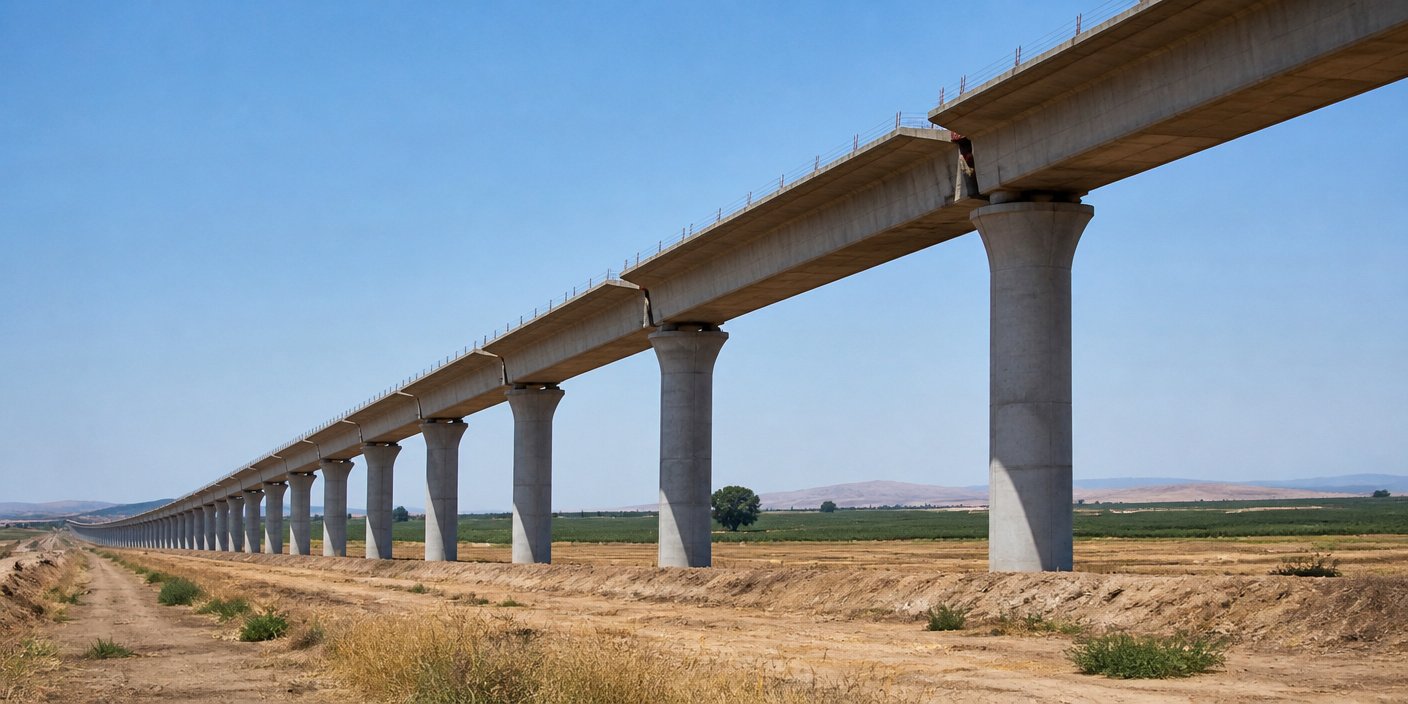
The economic ramifications of this procurement failure are profound, particularly for the Central Valley, where much of the initial construction has focused. Local economies were promised a transit backbone that would integrate regional labor markets and stimulate development. However, incomplete infrastructure—viaducts without rails, and rails without trains—creates a ‘dead capital’ scenario. The capital invested has not yet yielded the economic velocity promised in early environmental impact reports. The failure to purchase trains signifies that the state is paying for the concrete shell of the project but lacks the functional assets to make the system operational. This delay effectively pushes the return on investment (ROI) further into the future, potentially risking the project’s long-term sustainability.
Future Predictions and Federal Relations
Looking ahead, the relationship between the CHSRA and the Department of Transportation has shifted significantly. With renewed federal interest in rail expansion under the current administration, the pressure is on California to demonstrate ‘shovel-readiness’ not just in construction, but in rolling stock. The procurement of trains is no longer just a technical detail; it is now a political imperative. If the state cannot demonstrate a clear, enforceable timeline for train acquisition, future federal funding may be jeopardized, not by political retribution, but by simple project management incompetence. The state must now shift from a defensive posture—blaming external actors—to a transparent, audit-focused strategy that prioritizes the delivery of hardware over the politics of the funding stream.
FAQ: People Also Ask
1. Why does the procurement of trains matter so much?
Rolling stock (the trains) requires custom engineering and safety testing. Buying these takes years. Even if the tracks are finished, the system cannot function without trains that meet federal safety standards, making it the most critical bottleneck for operationalizing the project.
2. Was the Trump administration’s $4 billion cut real?
Yes, the figure is often cited regarding the total impact of federal grant rescissions and withheld funds during that period. However, the $929 million rescission was the specific headline number, and the broader $4 billion figure is often used by proponents to quantify the total economic disruption felt by the project’s long-term financial planning.
3. Is California still building the high-speed rail?
Yes, construction continues, primarily in the Central Valley. The project has shifted to focus on completing an initial operating segment, but it faces ongoing scrutiny regarding cost overruns and final delivery dates.