The Thermal Tipping Point: Adapting to a Warmer West
As the American West experiences an increasing frequency of record-breaking heatwaves, the recreational fishing industry is witnessing a fundamental shift in landscape management. What was once considered an emergency-only protocol—the shuttering of river access due to high water temperatures—has officially become a routine operational procedure for state wildlife agencies. From the storied trout streams of Montana to the alpine rivers of Colorado, the “Hoot Owl” restriction has evolved from an occasional precaution into a seasonal baseline.
The Science of Thermal Stress
To understand why these closures are becoming the norm, one must look at the biological requirements of the Salmonid family, which includes trout and whitefish. These cold-water species thrive in temperatures ranging between 50°F and 65°F. As water temperatures climb toward the 73°F (23°C) threshold, the physiological stress on these fish becomes critical.
At 73°F, the biological equation shifts dramatically: the fish’s metabolic rate accelerates, demanding more oxygen, while simultaneously, warmer water holds significantly less dissolved oxygen. When an angler catches a fish under these conditions, the metabolic output required for the fight often exceeds what the fish can recover from. This leads to a phenomenon known as “delayed mortality,” where fish die hours or even days after being released. State agencies, such as Montana Fish, Wildlife & Parks (FWP) and Colorado Parks and Wildlife (CPW), have invested heavily in real-time sensor arrays to monitor these levels, triggering closures the moment sustained thermal danger is detected.
The ‘Hoot Owl’ Policy Shift
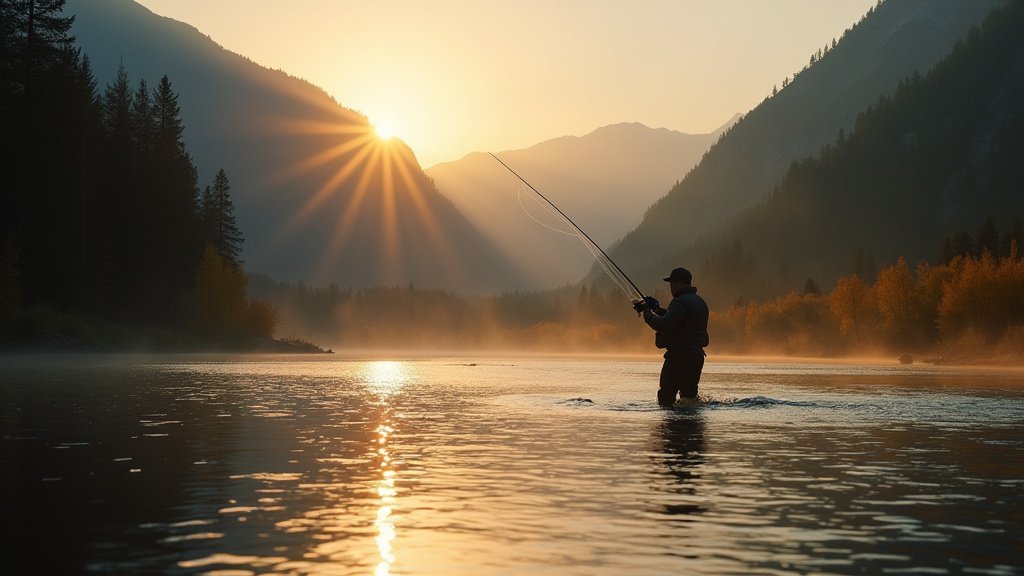
The most prominent management tool now in use is the “Hoot Owl” restriction. This policy limits fishing hours to the morning window, typically ending at 2:00 PM daily. This strategic closure allows anglers to utilize the cool dawn hours—when water temperatures are at their lowest—while protecting fish during the daily heat peak.
This policy represents a delicate balance between two competing interests: the economic powerhouse of the Western fly-fishing industry and the long-term viability of aquatic ecosystems. By mandating these closures, agencies are attempting to avoid a total seasonal shut-down, which would be catastrophic for local economies. However, the frequency of these orders has increased by approximately 30% over the last five years, suggesting that climate volatility is no longer a fringe event but a core variable in annual resource planning.
Economic Ripples in the Outfitter Industry
The economic impact of these closures extends far beyond the rivers themselves. Local fly shops, guiding services, and the hospitality sector in rural towns rely on the peak summer season for the majority of their annual revenue. When rivers like the Madison, Big Hole, or the Colorado River shut down or implement restrictive windows, the ripple effect is immediate.
Many outfitters are forced to pivot their business models. Instead of full-day float trips, guides are transitioning to “half-day dawn patrols,” shifting their entire operational structure to accommodate shorter windows. While this preserves some revenue, it drastically reduces the number of clients a single guide can host per day. Consequently, savvy operators are diversifying their offerings, promoting high-elevation lake fishing where temperatures remain stable, or shifting focus to earlier and later shoulder seasons, effectively attempting to outrun the heat.
Future Outlook: A New Ecological Equilibrium
Looking ahead, the long-term sustainability of Western fishing depends on a complex interplay of habitat restoration and adaptive management. Experts emphasize that simply restricting fishing hours is a reactive measure. Proactive solutions, such as improving riparian buffers, restoring stream connectivity, and incentivizing private landowners to improve water management practices, are becoming the new focus.
Furthermore, the “routine” nature of these closures is forcing a cultural change among anglers. The “catch-at-all-costs” mentality is rapidly being replaced by an ethos of thermal stewardship. The future of the sport may well lie in the ability of the community to accept “no-fish” days as a badge of conservation, ensuring that these iconic species survive the warming trend that defines the 21st-century American West.
FAQ: People Also Ask
Q: What is a ‘Hoot Owl’ restriction?
A: It is a wildlife management order that prohibits fishing on specific river sections during the hottest part of the day, usually restricting activity to between 2:00 PM and midnight, or effectively closing the water during peak heat hours.
Q: At what temperature do most agencies shut down fishing?
A: While regulations vary by state and species, most agencies trigger closures or restrictions once water temperatures reach 73°F (23°C) for several consecutive days, as this is the threshold where trout become highly susceptible to mortality from thermal stress.
Q: Are these closures permanent for the entire summer?
A: Generally, no. They are dynamic restrictions. As soon as water temperatures drop due to cooler nighttime air or precipitation events, agencies will lift the restrictions, though the frequency of these closures has become much more routine in recent years due to prolonged heat events.
Q: Does catch-and-release still kill fish during heatwaves?
A: Yes. In water exceeding 70°F, even a short fight can exhaust a fish to the point where it cannot recover. Research shows that handling these fish in warm water dramatically increases the rate of post-release mortality, which is why total closures are often necessary.