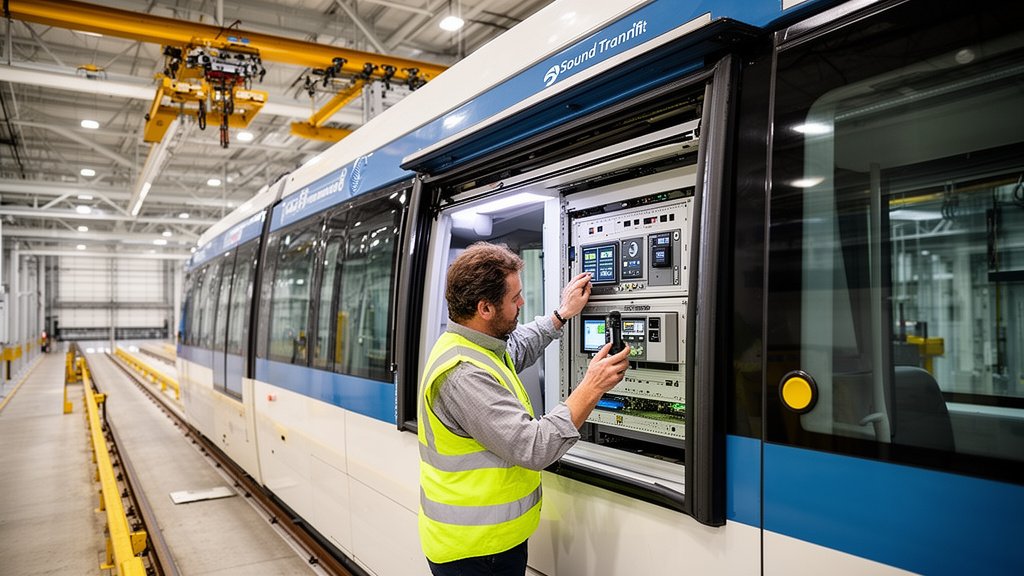
Sound Transit has officially initiated a comprehensive technology retrofit for its legacy Series 1 light rail vehicles, a critical infrastructure move that brings the earliest fleet members up to contemporary operational standards. By implementing the ‘E-Suite’ technology package, the agency is ensuring that its original Kinkisharyo vehicles remain fully compatible with the rapidly expanding Link Light Rail network, safeguarding decades of service life while improving diagnostic precision and passenger communication systems.
Key Highlights
- Fleet Longevity: The ‘E-Suite’ retrofit focuses on the original Series 1 light rail vehicles (LRVs), significantly extending the operational lifespan of the inaugural fleet that has served the Puget Sound region since 2009.
- Hardware Modernization: The project replaces aging, analog-centric electronic systems with modern digital infrastructure, including advanced propulsion controls, communication suites, and internal diagnostics.
- Infrastructure Compatibility: The upgrade ensures older vehicles can seamlessy communicate and operate alongside newer Siemens-built light rail cars as the system continues to extend into new service corridors.
- Reliability Focus: By upgrading the ‘central nervous system’ of these trains, Sound Transit aims to reduce unscheduled maintenance downtime and enhance the overall reliability of the regional transit backbone.
The Engineering Logic Behind the E-Suite Retrofit
When Sound Transit first launched the Link Light Rail system in 2009, the transit landscape was vastly different. The Series 1 fleet, manufactured by Kinkisharyo, was state-of-the-art at the time. However, in the fast-paced world of rail electronics, fifteen years represents an entire generation of technological evolution. The ‘E-Suite’—or Electronic Suite—retrofitting project is a calculated engineering decision to bridge the gap between legacy hardware and the requirements of a modern, high-capacity transit network. As the system scales to include new line extensions, the disparity between the original fleet and the newer Siemens-manufactured units became a point of operational friction. By upgrading the Series 1 cars, Sound Transit is essentially harmonizing its fleet, allowing for greater interchangeability and simplified maintenance logistics.
Technical Architecture and Digital Upgrades
The core of the E-Suite upgrade is the wholesale replacement of proprietary, aging control systems. In the original Series 1 design, various components relied on electronics that are becoming increasingly difficult to source and maintain. The E-Suite initiative replaces these with modular, software-defined systems. This transition is not merely cosmetic; it is fundamental. By moving to modern propulsion controllers and digital communication interfaces, the agency gains real-time data monitoring capabilities that were previously unavailable. Maintenance crews can now pull granular diagnostic reports directly from the vehicles, moving from a reactive ‘break-fix’ model to a proactive, predictive maintenance cycle. This reduction in downtime is critical for a network that sees high daily ridership and requires high availability during peak hours.
Integrating Legacy Systems into a Modern Network
A primary challenge for growing transit agencies is ensuring that old rolling stock can communicate with newer signaling and safety systems. As the light rail network expands, the requirements for Train Control and Management Systems (TCMS) have evolved. The E-Suite project serves as a crucial integration layer. Without this update, the Series 1 vehicles would struggle to handshake with the newer signaling infrastructure deployed on expansion lines, potentially creating bottlenecks where older trains would need to operate with reduced performance or speed restrictions. This retrofit effectively ‘future-proofs’ the assets, allowing a 2009-era train to perform with the digital efficiency of a unit rolling off the factory floor today.
Economic Impact and Lifecycle Management
From a fiscal perspective, the E-Suite retrofit is a triumph of asset lifecycle management. Purchasing entirely new light rail vehicles is a multi-billion dollar capital expense with long lead times for procurement, manufacturing, and testing. Retrofitting existing vehicles allows Sound Transit to maximize the value of its original capital investment. By extending the useful life of the Series 1 cars by another 15 to 20 years, the agency avoids the significant upfront costs of early fleet replacement, freeing up capital to be allocated toward network expansion and station development. It is a sustainable approach, recycling the chassis and primary structural components while merely upgrading the ‘brain’ and the ‘nervous system’ of the trains to meet modern standards.
Passenger-Facing Improvements
While the E-Suite project is largely invisible to the average commuter, the operational benefits manifest in the passenger experience. Modernizing the communication systems means clearer automated announcements, more reliable real-time passenger information displays, and enhanced safety features. Furthermore, the increased reliability of the propulsion and braking systems leads to smoother acceleration and deceleration, contributing to a more comfortable ride. As these retrofitted cars are reintroduced into the active rotation, regular riders should notice fewer ‘train swaps’ or delays caused by technical faults, resulting in a more predictable and consistent daily commute across the entire Link system.
FAQ: People Also Ask
1. Why is Sound Transit retrofitting the Series 1 trains instead of just buying new ones?
Retrofitting is a cost-effective strategy to extend the useful life of existing, structurally sound assets. Replacing the entire original fleet would cost significantly more and create logistical challenges in procurement and decommissioning, whereas the E-Suite project maximizes the agency’s initial investment.
2. What exactly does the ‘E-Suite’ upgrade include?
‘E-Suite’ refers to the comprehensive replacement of the train’s electronic systems, specifically targeting propulsion control, internal diagnostics, communications, and safety hardware that is becoming obsolete or difficult to support.
3. How long will these retrofitted trains stay in service?
While official estimates vary based on maintenance, the E-Suite upgrade is designed to extend the reliable operational life of the Series 1 fleet by approximately 15 to 20 years, ensuring they remain a viable part of the transit network well into the future.
4. Will the appearance of the train change significantly for riders?
The exterior will remain largely the same, maintaining the iconic look of the original Link light rail vehicles. The changes are almost entirely internal (hardware and software), meaning riders will experience the upgrade primarily through increased reliability, better communications, and fewer service disruptions.