Key Highlights
- Recent Tragedy: Four individuals have died and one remains missing at Panther Beach within the last six months, marking a severe spike in fatal incidents at the site.
- Geographical Hazards: The location, part of the Coast Dairies State Park, is plagued by aggressive rip currents, sneaker waves, and unstable cliff faces, which are often underestimated by tourists.
- Safety Gap: Unlike more populated beaches in Southern California, this remote stretch lacks permanent lifeguard towers, making rescue operations difficult and time-consuming.
- Public Awareness: Officials are urging visitors to respect signage and avoid water contact, citing the disparity between the beach’s ‘Instagrammable’ appearance and its underlying physical risks.
The Rising Toll at California’s Hidden Coastline
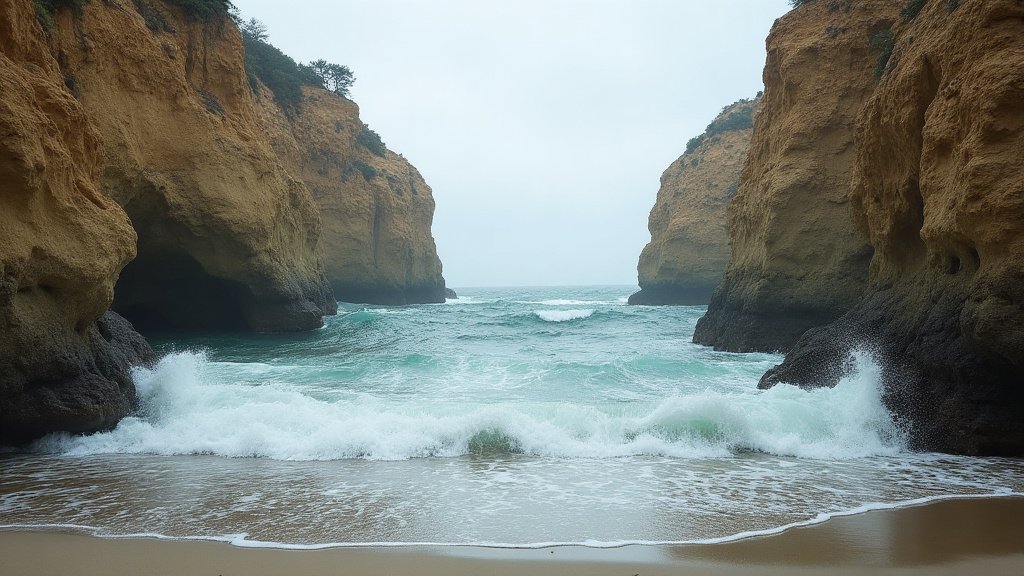
The allure of Panther Beach—a stunning stretch of sand nestled beneath towering sandstone cliffs in Santa Cruz County—has long drawn photographers, nature enthusiasts, and tourists. However, the serene aesthetic hides a lethal reality. In the last six months alone, local search and rescue teams have responded to a disturbing pattern: four confirmed fatalities and one ongoing missing person case. This cluster of tragedies has forced California State Parks and the Santa Cruz County Sheriff’s Office to reassess public safety strategies at a location that has increasingly become a ‘black spot’ for coastal emergencies.
The Deceptive Beauty: Why the Coastline Kills
To the untrained eye, the water at Panther Beach may appear calm or inviting on a sunny day. However, oceanographers and local maritime safety experts emphasize that the geography of the Coast Dairies State Park is inherently treacherous. The beach is exposed to the open Pacific Ocean, meaning it is subject to powerful, unpredictable swells.
One of the primary killers at Panther Beach is the rip current. These strong, localized currents can pull even strong swimmers away from the shore within seconds. Compounding this risk are ‘sneaker waves’—sudden, large surges of water that can wash up unexpectedly high onto the sand, catching beachgoers off guard. When visitors are swept into the ocean, the cold water temperatures of Northern California quickly lead to hypothermia, severely limiting the time window for a successful rescue.
Furthermore, the geology of the area poses a secondary risk. The cliffs that frame Panther Beach are made of soft, unstable sandstone. These formations are prone to erosion and unexpected collapses, adding a layer of danger for hikers or those seeking shelter near the cliff base. The combination of unpredictable ocean dynamics and unstable topography makes this one of the most hazardous stretches of shoreline in the state.
The ‘Social Media Effect’ and Public Misconceptions
The increase in foot traffic at Panther Beach is not accidental; it is heavily fueled by social media trends. As the location gained popularity on platforms like Instagram and TikTok for its rugged beauty and secluded feel, it attracted a demographic that often lacks knowledge of Northern California ocean safety.
Unlike many beaches in Southern California that are groomed for tourism and equipped with permanent lifeguard infrastructure, Panther Beach is relatively wild. There are no lifeguards stationed on the sand to monitor water conditions or intervene when someone is caught in a current. This creates a significant safety gap: by the time an emergency call is placed to the Santa Cruz County Sheriff’s Office or the local Fire Department, it may already be too late for a successful rescue operation. Authorities have noted that many visitors arrive unprepared, often ignoring warning signs or venturing out when conditions are clearly unsafe, influenced by the perception that the beach is a recreational paradise rather than a dangerous, unpatrolled environment.
Authorities Respond: A Call for Caution
The response from California State Parks has been multi-faceted. Officials have increased patrols in the area and have bolstered warning signage, clearly outlining the risks of swimming and the instability of the cliffs. However, state agencies are quick to point out that they cannot prevent every tragedy. The onus of responsibility, they argue, must shift to the visitor.
Safety advocates are now calling for a more aggressive public education campaign. They suggest that potential visitors to Coast Dairies State Park should check the National Weather Service (NWS) coastal forecasts before arriving. A high surf advisory, which might seem trivial to a casual tourist, is a life-or-death warning at a location like Panther Beach. Emergency responders are also advocating for improved cellular connectivity in the area, as the remote nature of the beach currently hampers the speed with which 911 calls are relayed.
FAQ: People Also Ask
Q: Why are there no lifeguards at Panther Beach?
A: Panther Beach is part of a remote, less-developed state park area. The California State Parks department prioritizes lifeguard services at high-density, easily accessible beaches. Remote coastal locations like Panther Beach do not have the infrastructure or budget to support permanent, full-time lifeguard staffing.
Q: What is a ‘sneaker wave’ and how dangerous is it?
A: A sneaker wave is a sudden, unexpectedly large surge of water that can travel much further up the beach than preceding waves. They are dangerous because they can sweep people off their feet, trap them against cliffs, or drag them into the ocean without warning. They are a known, persistent hazard along the Northern California coast.
Q: Is it illegal to swim at Panther Beach?
A: While it is not strictly illegal to enter the water, authorities strongly advise against it due to the severe risks. The area is generally marked with warning signs. Visitors are encouraged to enjoy the beach from the safety of the sand and to remain well away from the shoreline when surf conditions are high.
Q: What should I do if I see someone struggling in the water?
A: Do not enter the water to attempt a rescue, as you are likely to become a victim yourself. Immediately call 911. If possible, throw a flotation device if one is available and keep eyes on the person in the water to direct emergency responders when they arrive.