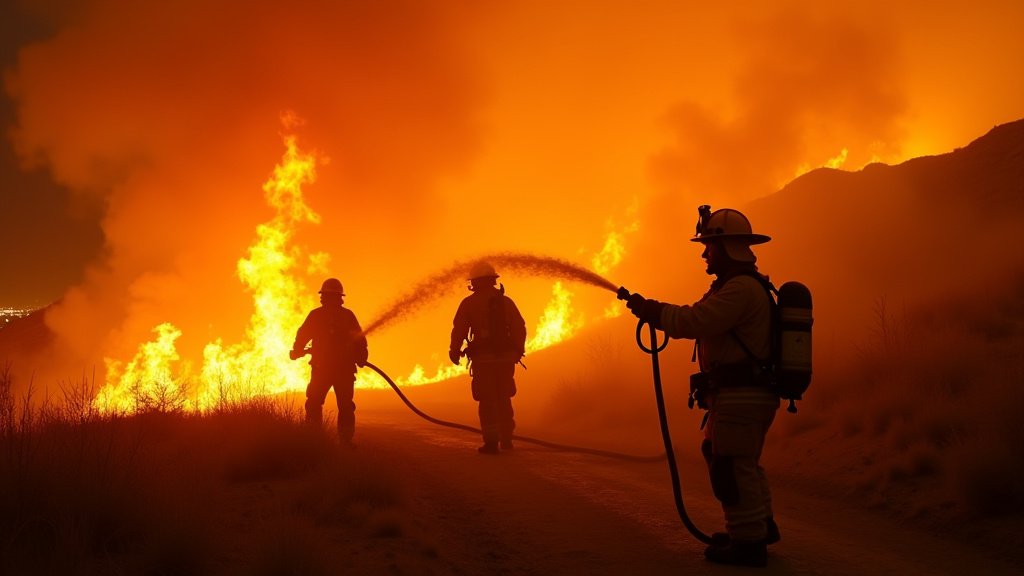
A fast-moving wildfire erupted in Los Angeles County on Tuesday, prompting immediate evacuations in several communities as firefighters battle to contain the blaze. The cause of the fire is currently under investigation.
Key Highlights:
- A significant wildfire has broken out in LA County.
- Evacuations are in progress for affected residents.
- Emergency services are on the scene, working to suppress the flames.
- The cause of the ignition is under active investigation.
- Air quality may be impacted in surrounding areas.
Firefighters Battle Aggressive Blaze Amidst Shifting Winds
The “Incipient Fire,” as it has been dubbed by incident commanders, ignited this afternoon in the Santa Susana Mountains, rapidly spreading due to dry conditions and unpredictable wind patterns. As of 5 PM PST, the fire had consumed an estimated 500 acres and was exhibiting extreme fire behavior, prompting the Los Angeles County Fire Department (LACFD) to issue mandatory evacuation orders for residents in the communities of Chatsworth and parts of Simi Valley. Evacuation centers have been established at local community centers and schools, with Red Cross volunteers on hand to assist displaced families.
Tactical Response and Air Support
Over 300 firefighting personnel are currently engaged in suppressing the fire, supported by a fleet of air tankers and helicopters dropping water and retardant. Incident Command established a unified command post at the intersection of Sesnon Boulevard and Tampa Avenue, coordinating efforts between LACFD, Ventura County Fire Department, and the U.S. Forest Service. “The terrain is challenging, and the winds are making our job incredibly difficult,” stated LACFD Chief Michael Miller during a press briefing. “Our primary focus is on life safety and protecting structures in the path of the fire. We are deploying all available resources to get a handle on this situation.”
Community Impact and Safety Precautions
As smoke blankets the region, health officials are advising residents, particularly those with respiratory conditions, to stay indoors and minimize outdoor activity. The Los Angeles Unified School District has announced the closure of several schools in the affected areas for the remainder of the week as a precautionary measure. Authorities are urging the public to stay clear of the fire zones to allow emergency crews unimpeded access and to follow all evacuation orders promptly. Information regarding the status of the fire, evacuation zones, and road closures is being disseminated through official county emergency alert systems and social media channels.
Investigating the Ignition Source
While the immediate priority is containment, investigators from LACFD and the Los Angeles Police Department (LAPD) Arson Unit have begun preliminary work to determine the cause of the wildfire. Early speculation pointed towards a possible electrical equipment malfunction or a discarded cigarette, but officials stressed that no definitive cause has been established. The investigation will involve a thorough examination of the fire’s origin point and interviews with potential witnesses. The dry vegetation and high temperatures this year have created a tinderbox environment across Southern California, making such incidents a significant concern for public safety officials.
Secondary Angles Explored
Historical Context: This region has a history of significant wildfires, with past incidents like the 2018 Woolsey Fire serving as stark reminders of the destructive potential of large-scale blazes in the Santa Monica Mountains. Understanding past fire behavior and community preparedness is crucial for current response strategies.
Economic Ramifications: Beyond the immediate costs of firefighting and damage to property, large wildfires can have lasting economic impacts on the region, affecting tourism, real estate values, and agricultural output. The disruption to local businesses and infrastructure also contributes to economic strain.
Climate Change Influence: Experts continue to analyze the role of climate change in exacerbating wildfire conditions. Extended drought periods, rising temperatures, and altered weather patterns contribute to increased fuel loads and create environments ripe for explosive fire growth, posing long-term challenges for land management and public safety.
FAQ: People Also Ask
What are the mandatory evacuation zones for the LA County wildfire?
Mandatory evacuation orders are currently in effect for residents in Chatsworth and specific areas of Simi Valley. Residents are advised to check the official Los Angeles County Emergency Information website or contact their local authorities for the most up-to-date information on evacuation boundaries.
How can I stay informed about the wildfire status?
Official updates are being provided through the Los Angeles County Fire Department’s social media channels, the county’s emergency alert system (e.g., NotifyLA), and local news outlets. It is crucial to rely on verified sources for information.
What should I do if I am under an evacuation order?
If you are under an evacuation order, gather essential items, secure your home if time permits, and leave the area immediately via the designated evacuation routes. Proceed to a designated evacuation center or a safe location away from the fire.
What is being done to combat the fire?
Firefighting efforts involve a multi-agency response with hundreds of personnel on the ground, supported by air tankers and helicopters. The focus is on containment, protecting structures, and ensuring public safety.
When will the fire be contained?
Containment timelines are highly dependent on weather conditions, particularly wind speed and direction, and the effectiveness of suppression efforts. Incident commanders will provide updated containment estimates as the situation evolves.