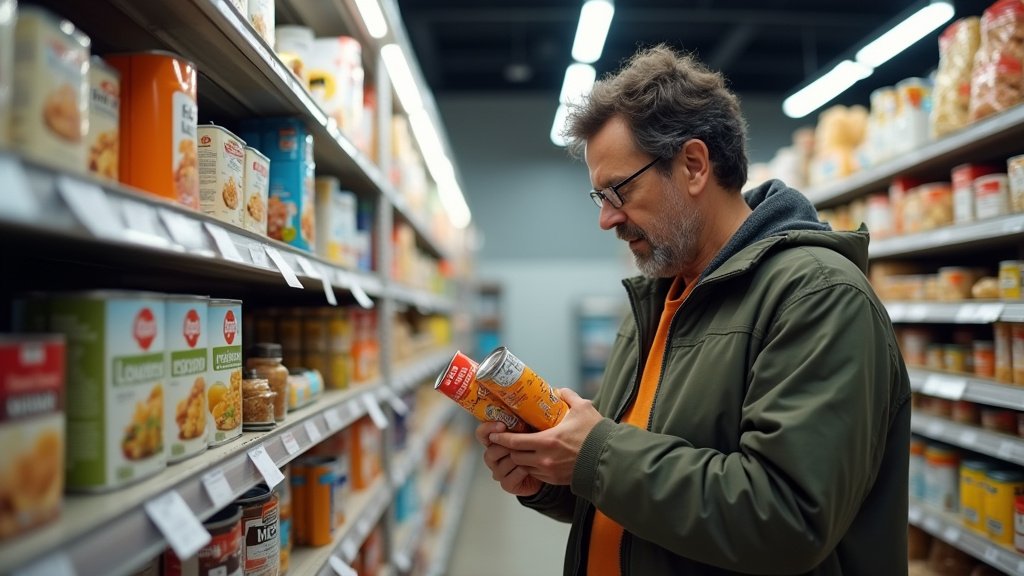
The American kitchen has become the frontline of the modern economic battle. With food inflation reaching its highest levels in half a century, the era of casual, brand-loyal grocery shopping has effectively evaporated. According to recent data, the cost of dining at home has surged by a staggering 33% since 2019. For the average family, this isn’t just a slight adjustment to the budget; it is a fundamental rewiring of daily survival strategies. From the Pacific Northwest—where regional outlets like KIRO 7 have chronicled the daily struggle of Western households—to the rural Midwest, the consumer behavior shifts are uniform: more cautious, more calculated, and less forgiving of premium price tags.
The Anatomy of the 33% Surge
The 33% increase in home dining costs since 2019 is not a monolithic number. It is an accumulation of compounding price hikes across various categories, including dairy, meats, and processed shelf-stable goods. To understand the magnitude, one must look at the Bureau of Labor Statistics (BLS) Consumer Price Index (CPI) for food at home. This index has reflected a volatile climb that decoupled from general wage growth for years. When the cost of eggs, flour, and poultry increases by double digits simultaneously, the impact on a family’s monthly cash flow is immediate and severe. This inflationary environment has effectively acted as an ‘invisible tax’ on the basic caloric requirements of the American household, forcing families to make binary choices between convenience and solvency.
Strategic Shifts: The New Consumer Playbook
As the price of staples continues to hover near 50-year highs, the ‘rewiring’ of shopping habits has materialized in three distinct phases. First, there is the aggressive migration to private labels. Historically, store brands were viewed as secondary alternatives; today, they are becoming the default. Data from the Private Label Manufacturers Association indicates that households across all income brackets are pivoting to store brands to mitigate the 33% cost increase.
Second, the ‘bulk-buying’ behavior has returned with renewed intensity. Warehouse clubs are seeing an influx of members looking to lower the unit cost of essential items, effectively betting that upfront cash outlays will yield long-term savings. Finally, there is the phenomenon of ‘menu-flattening,’ where consumers are ditching complex, multi-ingredient recipes in favor of simpler, cost-effective meals that stretch ingredients across several days, a direct response to the rising cost of fresh produce and proteins.
Regional Realities: The Western Lens
Regional dynamics play a significant role in how these trends manifest. In the Western United States, market complexities—including higher distribution costs and regional fuel price fluctuations—have amplified the impact of food inflation. Local reporting from KIRO 7 and other regional affiliates has highlighted the frustration of consumers facing localized price spikes that occasionally outpace the national average. In these regions, consumers are not just changing brands; they are changing where they shop, increasingly relying on discount grocers and community-supported agriculture (CSA) to bypass traditional, higher-markup retail chains.
Historical Context: A 50-Year Mirror
To understand the current crisis, it is useful to look at the inflationary cycles of the 1970s. While today’s economy operates differently—with more complex supply chains and digital inventory management—the psychological impact on consumers remains remarkably similar. In the 1970s, as during the current cycle, the primary concern was the erosion of purchasing power for daily necessities. However, the current ‘rewiring’ is arguably more rapid due to digital transparency. Consumers now use apps to track prices in real-time, engaging in ‘digital couponing’ and comparative shopping at a scale that was impossible fifty years ago. This technological layer adds a new dimension to how inflation is fought at the checkout counter.
The Economic and Psychological Toll
Beyond the raw numbers, the mental load of grocery shopping has increased. The constant need to scan, compare, and strategize creates a ‘cognitive tax’ on heads of households. This psychological strain is a byproduct of the 33% increase in dining costs. When the budget for food becomes the most fluid variable in a family’s financial plan, stability feels unattainable. Economic analysts note that this shift has led to decreased discretionary spending elsewhere, as the ‘must-haves’ of the grocery list cannibalize budgets for entertainment, travel, and home improvement.
Future Predictions: Is the Peak Behind Us?
Looking toward the future, the primary question remains: will the price of food return to pre-2019 levels? Most economists suggest that we should not expect a return to the prices of five years ago. Instead, the market is likely to see a period of ‘sticky inflation’ where prices plateau at these higher levels rather than dropping significantly. The new normal involves consumers permanently integrating these cost-saving habits into their lives, even if general inflation eventually stabilizes. The 33% rise has not just been a temporary anomaly; it has been a catalyst for a lasting evolution in the American food economy.
FAQ: People Also Ask
Q: Why has the cost of home dining increased by 33% since 2019?
A: The increase is driven by a convergence of factors, including supply chain disruptions, rising logistics and transportation costs, labor shortages in the agricultural sector, and broader macroeconomic factors that have pushed food prices to a 50-year peak.
Q: Are store brands actually cheaper than name brands?
A: Yes, store brands—or private label goods—often cost 20% to 30% less than their name-brand counterparts. As inflation remains high, these products have become the primary strategy for households looking to offset rising food costs.
Q: How does regional news, like KIRO 7, impact the national conversation on inflation?
A: Regional outlets provide critical, ground-level data. They act as early warning systems, reporting on localized price surges and changing consumer behaviors that might not yet be captured in broad national reports, allowing for a more nuanced understanding of the economic landscape.
Q: Will food prices eventually drop back to 2019 levels?
A: Most economists consider a return to 2019 pricing highly unlikely. The goal for the food industry and consumers is now price stabilization, rather than a significant reversal of the cumulative price increases seen over the last few years.